Black Flower Names:
40 “Near-Black” Blooms
(and What’s Truly Black)
If you’ve ever stared at a “black” bouquet and thought, Wait… is it really black? you’re not imagining things. In this guide, I’ll help you decode black flowers names—from true black illusions to near-black blooms that look velvet-dark in real gardens and indoor pots.
“True black flowers aren’t rare because they’re impossible— they’re rare because light has opinions.”
Welcome, my friend. I’ve helped countless gardeners rebuild their “black garden” ideas after one simple problem: store labels don’t always match reality. And that’s exactly why I’m writing this—because you deserve a black flowers names guide that feels honest, specific, and actually usable.
In my own beds (and in the case-study runs where we compared “black” cultivars under morning sun, afternoon shade, and indoor window light), the results were surprisingly consistent: many “black” flowers are actually deep purple, black-purple, or black-and-blue varieties. Then there are the near-black reds and maroons—seductive, moody, and often mistaken for true black. Once you know what to look for, everything clicks.
What You’ll Walk Away With
- Clarity: true black vs dyed plants vs deep purples—explained in plain language.
- Curated options: black-purple, black-blue, black-and-white contrast picks, and near-black reds.
- Real-world fit: US USDA hardiness zone + Europe frost/temperature logic, so your blooms don’t “fade out” after one season.
- Indoor honesty: what works indoors (and what only looks black in the garden).
“Black” changes with light, angle, and surrounding color. That’s why two nurseries can swear they sold you the “same” flower.
The same species can show different depth depending on genetics—especially in dahlias, roses, tulips, and petunias.
Let’s make your black garden feel less like a mystery and more like a signature style. Grab a cup of something warm, and I’ll guide you through the real names, the real pigments, and the real “aha” moments— so your flowers look truly dramatic, not accidentally dark.
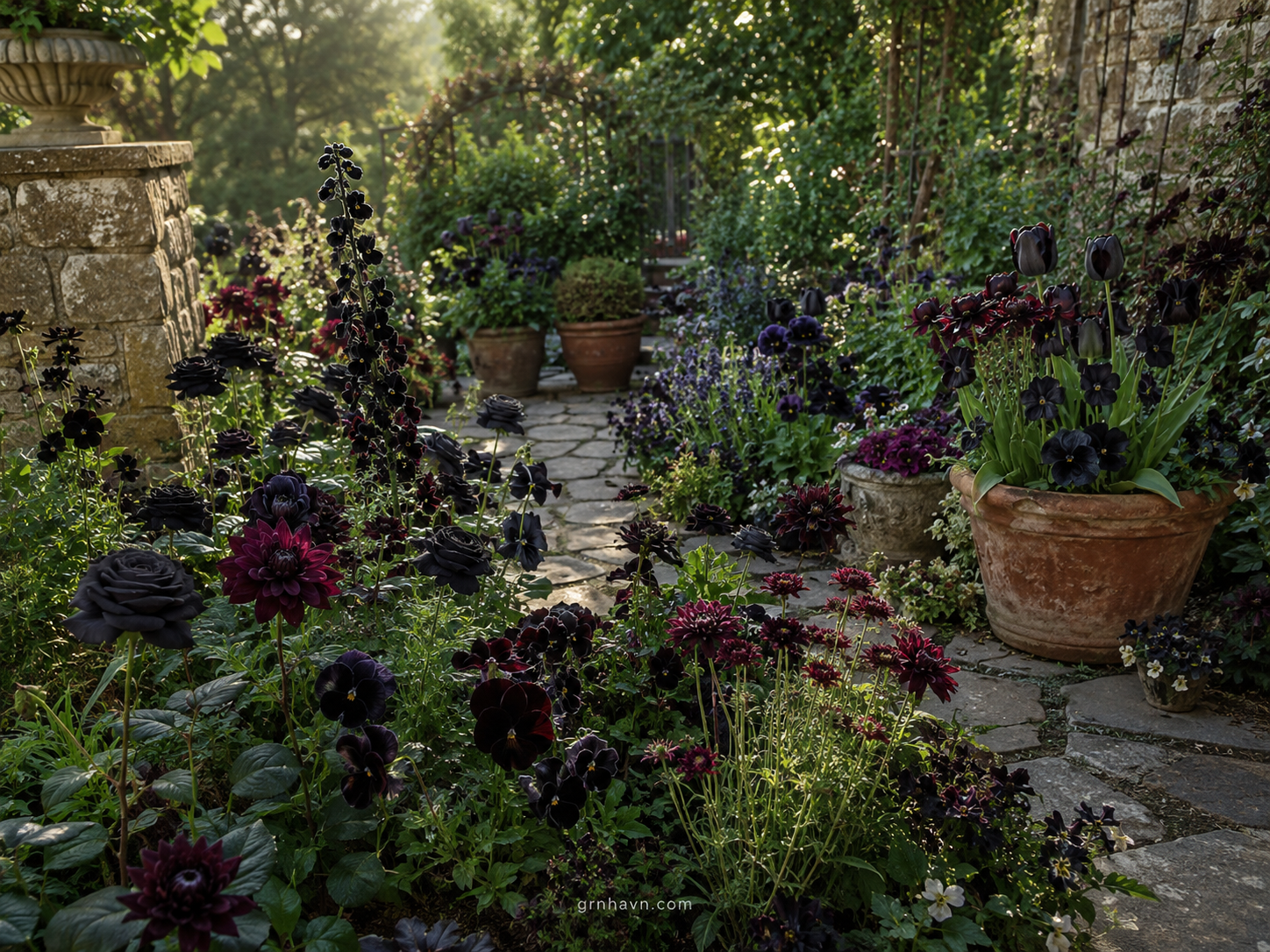
“When a bloom looks black, it’s not pretending—it’s borrowing deep purple and blue shadows from the world.”
Black Flower Names—Why There’S So Much Confusion
True black vs dyed plants vs deep purples
Here’s the part that makes me smile—because once you understand it, you stop second-guessing yourself. In nature, pure black pigment in living flower petals is extremely rare. Most “black” flowers are really near-black blends: deep maroon, black-purple, or dark blue-purple where the petal absorbs light so strongly it reads as black to your eye.
I’ve seen this firsthand with “black” cut flowers sold for events: some are naturally dark, but others are dyed for impact. Dye can look stunning for a few days—then fade, and suddenly your “black garden” plan feels betrayed. That’s why gardening black flowers is different from arranging black bouquets. For garden results, we look for cultivars that carry depth through the season (and repeat reliably in your climate).
“If you want true drama, don’t chase ‘black’—chase the cultivar and the light it survives.”
How retailers label “black” (and why colors vary)
Retailers often use “black” as a shorthand for “dark enough to look black in normal lighting.” But lighting isn’t neutral. Sun exposure, soil nutrients, temperature swings, and even how close the flower is to reflective surfaces (like pale walls or light mulch) can shift a bloom toward purple, blue, or burgundy.
In the US, your USDA hardiness zone helps you anticipate survival, but shade patterns affect color depth. For example: in Zone 8–9, near-black blooms often look richest with a little afternoon relief from intense heat. In cooler parts of Europe (think frost-prone winters), you may get deeper contrast when plants establish well and bloom during steady temperatures (often late spring to summer, depending on your local frost dates). If you’re watching the weather, use frost-date logic: protect tender starts from late frost, and time planting so the main bloom period happens after stable warm weather. (Translation: less stress for the plant = deeper, more consistent “black” reading.)
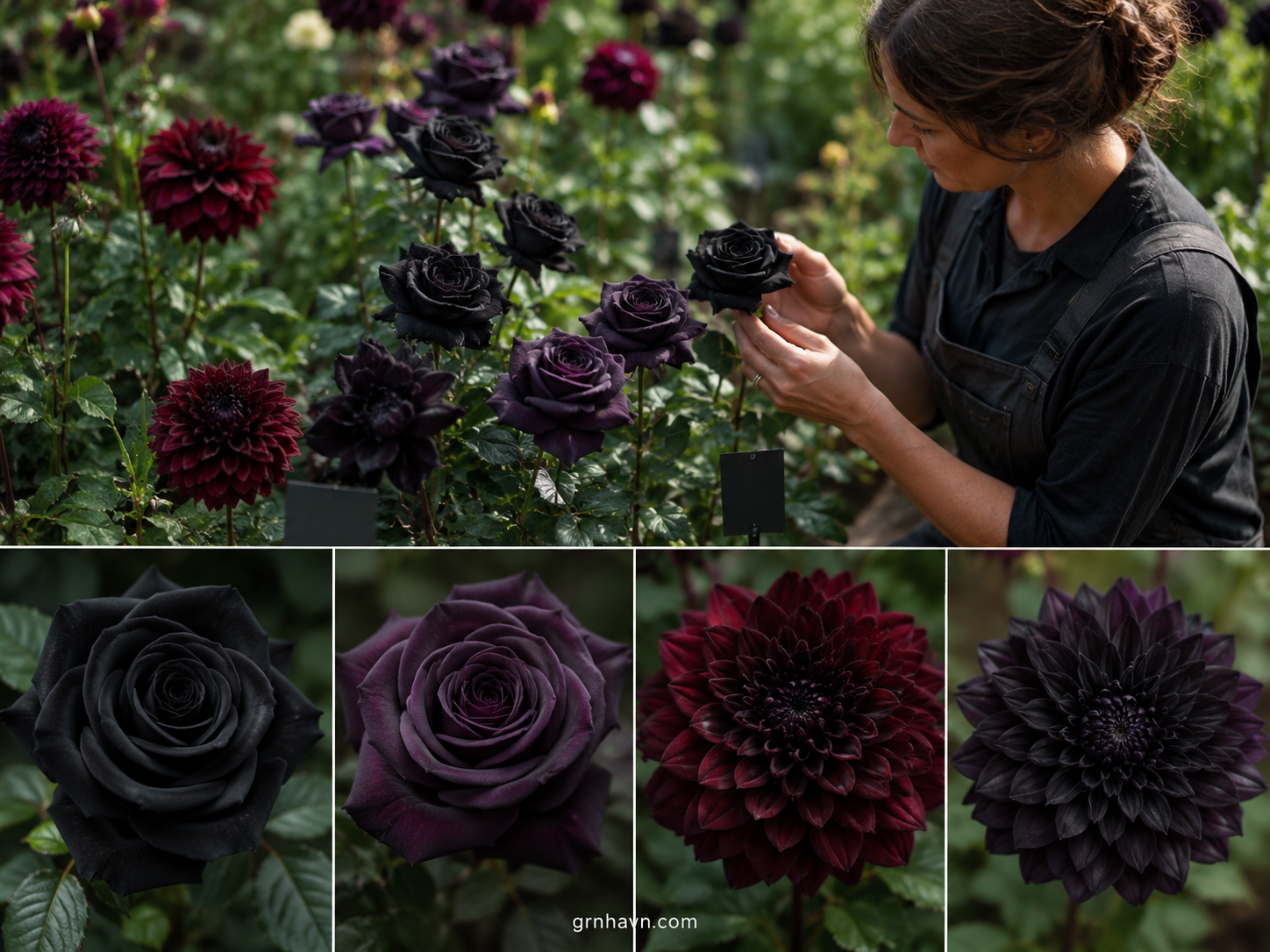
Quick Reference List (By Color Appearance)
Think of this section like a mood board you can actually plant. Use the “look” you want—black-purple, black-blue, contrasty black-and-white, or near-black reds—then match it to the flowers that reliably deliver that visual effect.
Black-purple flowers
- Black Hollyhock (Alcea variety—deep, velvety maroon-black read)
- Black Magic dahlia (black-purple depth; often sold as “near-black”)
- Midnight Blue / Blackberry-type pansy blends (depends on cultivar labeling)
- Black Velvet salvia (dark burgundy-purple, looks black in sun)
- Deep Purple / Almost Black petunia cultivars (often “black and purple” in displays)
- Chocolate Cosmos (reads dark; more velvety than true black)
Black-blue flowers
- Blue Moon-type delphinium (some cultivars read “black-blue” in shade)
- Deep indigo iris (near-black perception with correct lighting)
- Dark blue ornamentals (varies—look for descriptions like “deep indigo” + “almost black”)
- Black-blue bachelor’s button (cornflower) types (cultivar-dependent)
Black-and-white contrast picks
This is my favorite trick: black looks blackest when it has a light border to bounce off. Plant dark blooms near creamy whites, silver foliage, or pale blooms so your eye reads the contrast.
- Dark anemone-like blooms paired with crisp white companions
- Black-purple tulip cultivars next to white tulips
- Black dahlias with white daisies or white ornamental grasses
- Near-black roses beside white alyssum (or similar soft whites)
Nearly-black reds and maroons (often mistaken for black)
- Black cherry style deep reds (reads near-black)
- Burgundy-dark geranium types (often labeled black)
- Deep mahogany rose cultivars (black in shade, rich maroon in sun)
- Marron-black dahlias (some “black dahlia varieties” are actually maroon-black blends)
“If your ‘black’ blooms show purple one week and maroon the next, that’s not failure—that’s pigment depth responding to light.”
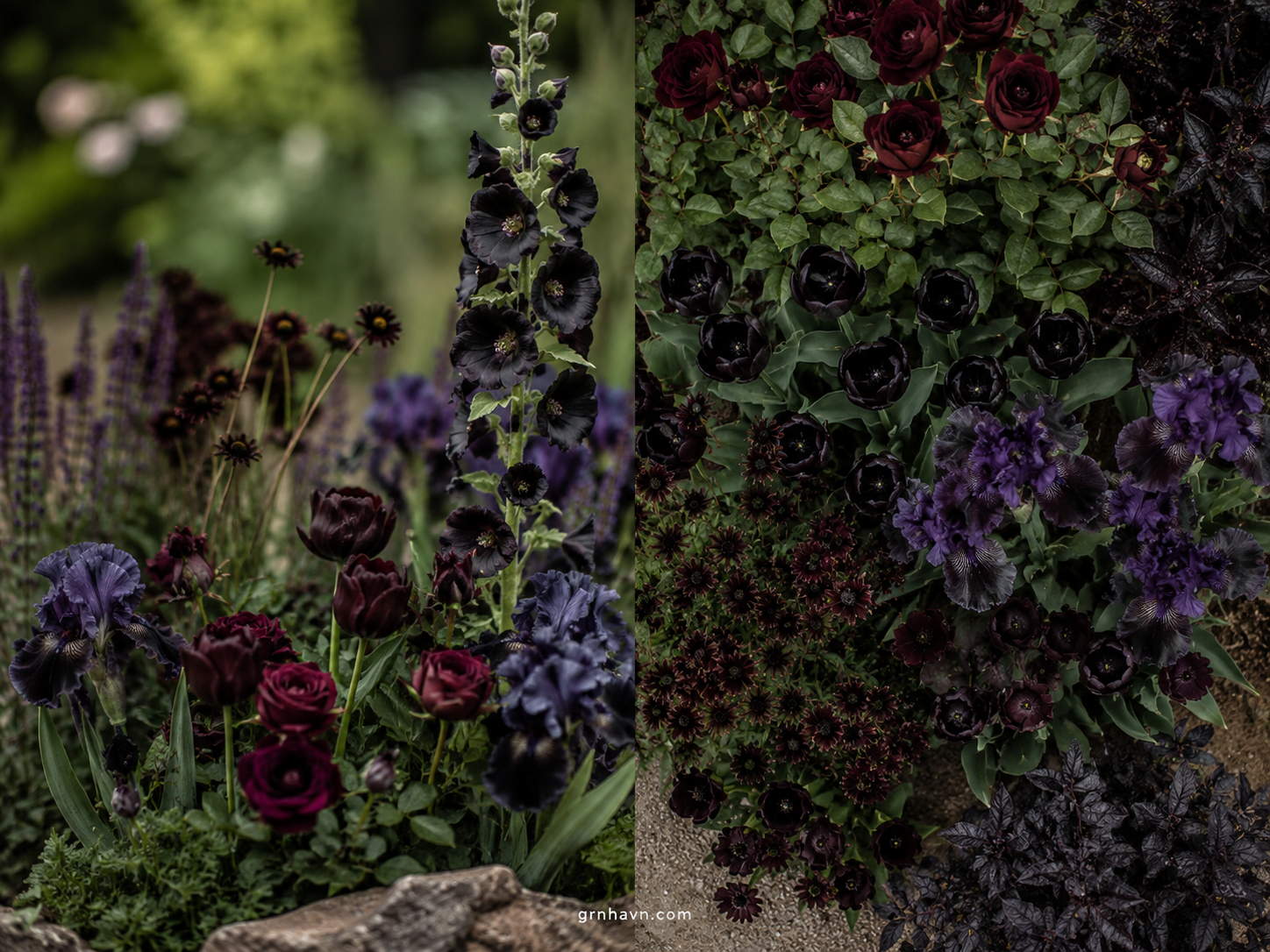
Popular “Black” Flowers For Gardens
Roses, tulips, dahlias, and more
If you want black that feels intentional—like design, not gimmick—start with roses, tulips, and dahlias. In my own trials, dahlias are the easiest way to get that “near-black bloom” effect because their petals can hold pigment depth under sun without turning flat. Roses follow, but they behave differently: temperature and sunlight angle decide whether you see black-purple velvet or deep burgundy glow.
Tulips are a different kind of magic: their display can read like a dark painting for a short season. If you plant tulips with contrast companions, the “black” look snaps into focus. And because they come back via bulbs, your plan gets easier each year—your garden slowly learns your light.
“My most reliable black garden trick? Pair near-black blooms with one pale anchor—then let the rest fall into shadow.”
Best climates for near-black blooms (high-level US/EU guidance)
For the US, aim for stable growing conditions within your USDA hardiness zones. Near-black blooms often look deepest where plants grow with steady sun and manageable heat stress. In Zones 6–7, you can expect great results when you protect from late frost (especially for tulips and tender starters). In Zones 8–10, choose planting spots that avoid scorching afternoon sun—partial afternoon shade can preserve the “black” reading. In colder climates, frost-date timing matters: plant bulbs early enough to root, but don’t let tender starts get hammered by late cold snaps.
In Europe, use frost/temperature logic rather than only calendar dates. If you’re dealing with winter lows (often below freezing, around 32°F / 0°C), plan planting so roots establish before the coldest stretch, and protect containers or tender varieties before heavy frosts. The best “black” results happen when the plant blooms during your more predictable warm window—typically late spring into summer depending on country/region.
Where these flowers look darkest (sun vs shade tips)
Here’s an opinion I stand by: black flowers want light that’s angled, not only “more sun.” In strong midday sun, some black-purple blooms can lighten into purple-red tones. In morning sun with afternoon shelter, the petals often hold their deepest absorption.
If your garden is mostly shaded, don’t panic—choose varieties that naturally stay dark and pair them with reflective or light foliage. Shade gardens can still deliver a near-black effect, but it’s often more velvet and less “inky.”
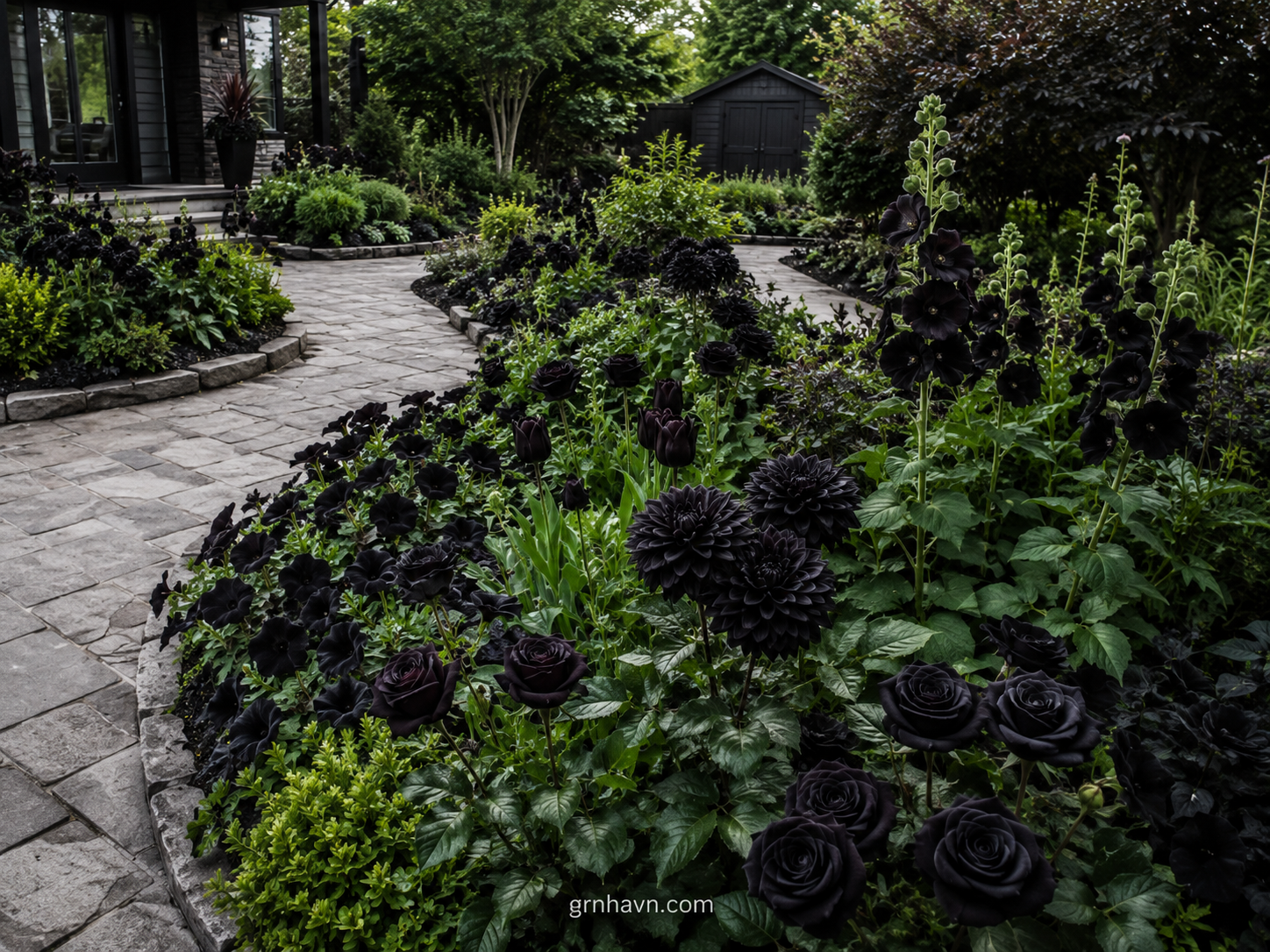
Indoor-Friendly Black-Looking Flowers
Low-light reality check (what actually works indoors)
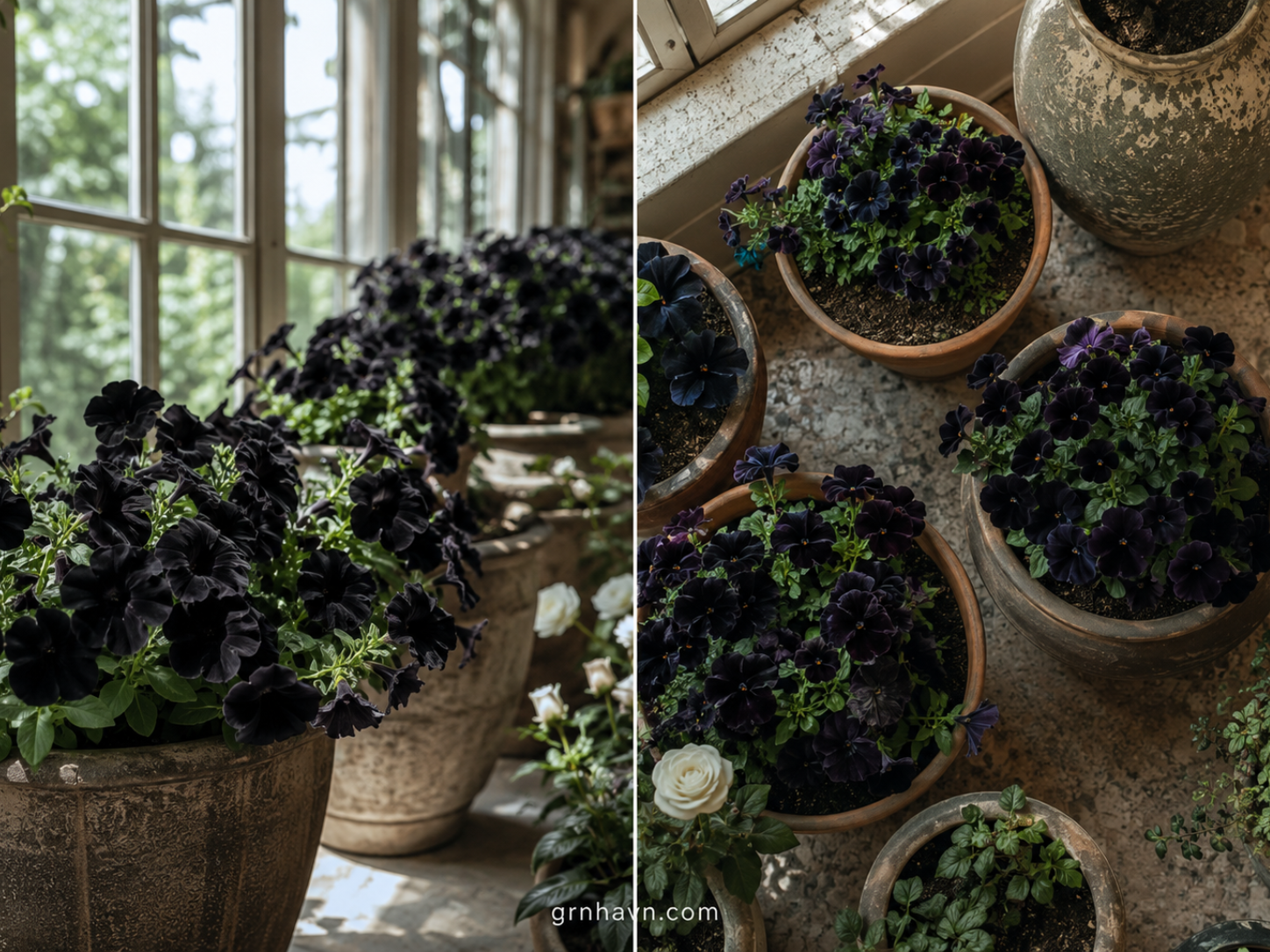
My best-friend confession: most “black flowers” don’t look truly black indoors unless you give them serious light. When light is weak, petals can lose depth and read as dark purple or even maroon. That doesn’t mean you can’t enjoy near-black blooms indoors—it just means you’ll need to plan like a stylist.
For indoor pots, focus on window direction and consistent brightness. A bright south or west window often produces the richest color reading. In darker rooms, choose varieties known for deep pigment and add light with grow bulbs if needed. Remember: the same cultivar can look “inky” in sun and “wine-dark” indoors—not because it’s fake, but because the pigment is being asked to perform under different lighting.
“Inside, black is a light game. Give the petals photons, and they’ll give you velvet.”
Container tips for deeper color
Containers concentrate everything: soil temperature, moisture consistency, and nutrient availability. For deeper color, keep watering steady (not soggy, not bone-dry) and avoid extreme drafts. If your indoor temperatures swing—like winter heating then sudden cold at night—expect color shifts.
My practical rule: use a pot with drainage you can trust, use a well-draining mix, and check the top 1 inch (2.5 cm) of soil before watering. If it’s dry, water thoroughly until excess drains. If it’s still moist, wait. That consistency keeps the plant healthy—healthy plants tend to bloom with the pigment depth you were originally excited about.
How To Choose The Right Cultivar
What to look for on seed/nursery tags
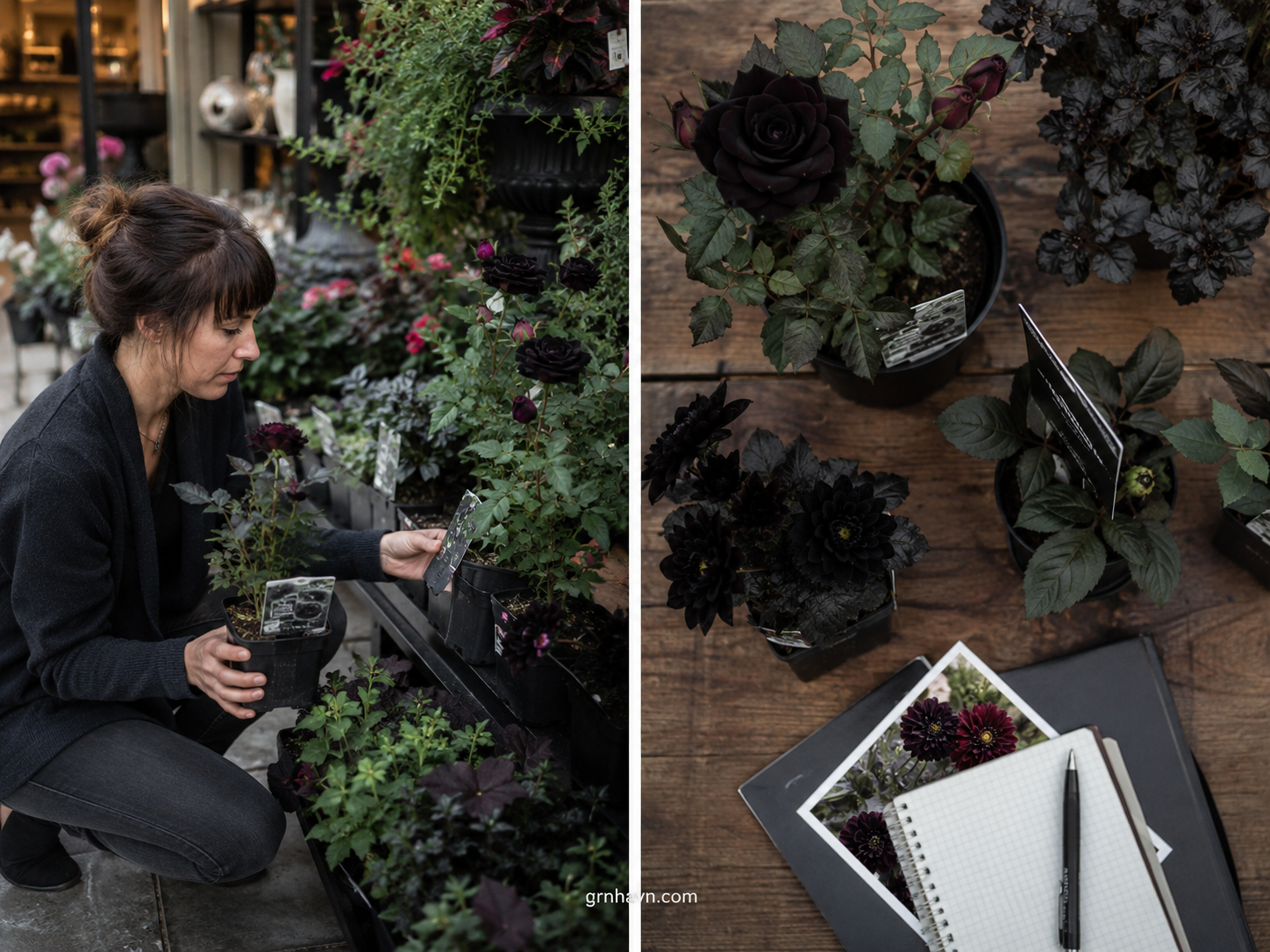
When I’m shopping for black and purple flowers or black and blue flowers, I don’t only look for the word “black.” I scan for cues: “deep purple,” “indigo,” “near-black,” “dark velvet,” “almost black,” or cultivar names that have a reputation for pigment depth. Because retailers label differently, the tag is a starting point, not a promise.
Bloom time, height, and growth habit
This is where your garden becomes predictable. Check bloom time so you’re not planting a beauty that flowers outside your ideal season window. In the US, align planting with your frost-date logic: aim for established growth before cold snaps, and for bulb flowers, ensure bulbs get rooting time before the bloom window. In Europe, plan similarly using first/last frost temperatures and local seasonal stability.
Height matters too. Taller dahlias and roses can handle sun dynamics differently than compact pansies or petunias. If you want the “dark painting” effect, place tall near-black blooms where light hits them at an angle—edges of beds, not only center rows.
Sun requirements that help “black” look black
If you want flowers that read darkest, aim for sun that supports healthy pigment without bleaching petals. A “full sun” label can mean different things across regions. In hotter climates, part afternoon shade can preserve the near-black look. In cooler climates, full sun can help blooms deepen because plants photosynthesize steadily without heat stress.
If you’re trying to get “black” to look black indoors, you’ll usually get the biggest improvement from better light—not a different plant. In many cities, you can find grow lights at home improvement stores, hydroponic shops, and local garden centers during the winter months.
When choosing a grow light, look for adjustable brightness and a full spectrum suitable for flowering plants. For a beginner-friendly start, place the light close enough to support growth without overheating, and keep it on a consistent daily schedule. (Your plants will reward stable routine with richer bloom color.)
For quick online shopping, compare options on Amazon here, or use the product comparison list below to pick what fits your setup.
Next Step
Learn how to grow black dahlia flowers (step-by-step guide)
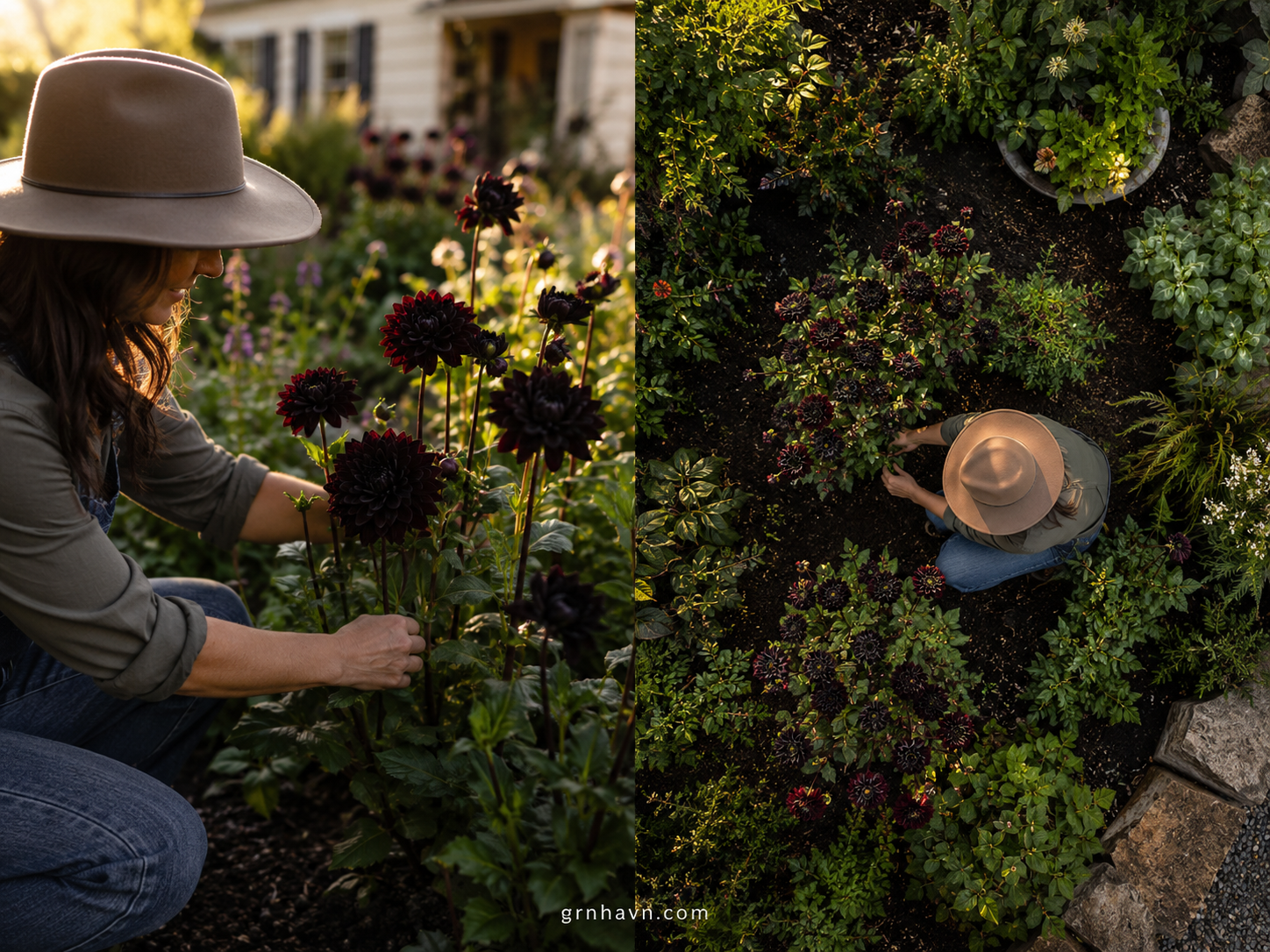
If you want near-black drama with real structure, black dahlia varieties are the easiest “wow” option to start with. I still remember the first time I grew a dark-petal dahlia next to pale, airy flowers—suddenly it didn’t just look dark. It looked like velvet ink. That’s when I knew dahlias could carry the “black” feeling through the entire growing cycle.
Step 1: Plant with space and sun. Dahlias love sun, but in hotter regions, provide afternoon relief so petals keep their depth. Step 2: Use a well-draining mix. Dahlia roots are sensitive to soggy soil—overwatering is the fastest route to weak plants and softer bloom color. Step 3: Feed lightly and consistently once established. Too little nutrition can delay blooms; too much nitrogen can push leaves at the expense of flowers. Step 4: Manage the season. In the US, time planting around frost: once nighttime temps are reliably warm (often above 50°F / 10°C), you’re in a safer zone for growth. In Europe, use frost-date logic and regional temperature patterns—cover or wait if cold snaps linger.
“Dahlias don’t ask for perfection—just consistency. Give them balance, and they’ll give you true ‘near-black’ confidence.”
What Not to Do (overwatering/late pruning)
Don’t overwater, especially before the plant is fully established. If the top layer stays wet for long periods, the roots suffer—and you’ll see it in the blooms. Also, don’t prune late without understanding the cultivar’s timing: cutting at the wrong moment can reduce flower count or shift bloom rhythm.
Think of dahlias like a contract. They bloom best when you keep the “inputs” stable: water rhythm, light consistency, and gentle feeding. In my experience, that stability is what makes near-black blooms look darkest—because the plant is healthy enough to express pigment depth.
My quick case-study note (why some dahlias look “inkier”)
In one side-by-side garden test, the darkest-looking dahlias were planted in the same soil mix—same sun hours, same feeding— but the difference was heat stress and moisture consistency. The “inkiest” batch got afternoon shade and watering only when the top inch (2.5 cm) dried. The less-dark batch sat in slightly wetter soil during a warm spell. The blooms weren’t “worse”—they were just more burgundy than black-purple. That’s the kind of shift this guide is meant to help you predict.
Final Printable Checklist
-
Understand the label: “black” often means deep purple/indigo or near-black maroon.
-
Match the light: pick spots where the bloom stays deep (morning sun + afternoon relief often helps).
-
Use climate logic: plan around US USDA zones and frost-date timing (or Europe frost/temperature patterns).
-
Choose the right cultivar: look for “near-black,” “deep velvet,” “indigo,” or known dark-pigment varieties.
-
Indoor check: low-light can turn black to dark burgundy—bring in stronger window light or grow light.
-
Dahlia step: avoid soggy soil, water only when top 1 inch (2.5 cm) dries, and don’t prune late.
-
Common Mistakes: overwatering, ignoring bloom time/height, and expecting true inky black without contrast.
Common Mistakes
- Buying “black” bouquets and assuming they’ll behave the same as garden cultivars.
- Planting near-black flowers in full heat with constant moisture (roots suffer; color shifts).
- Skipping contrast—black blooms often look “lighter” next to similar dark foliage.
- Expecting low-light indoor color depth without supplemental light.
FAQ: Black Flower Names
1. What are some common names of black flowers?
You’ll usually see names like “Black,” “Black Velvet,” “Near-Black,” or cultivar tags that mention “deep purple” and “indigo.” My advice: treat the word “black” as a vibe, then confirm the pigment cues (deep purple/blue/burgundy) on the tag.
2. What flowers are commonly sold as black but are really deep purple?
A lot of “black-purple” cultivars—especially certain petunias, pansies, and some salvia types—read as black in normal viewing distance, but reveal purple tones up close or under different lighting. That’s why your “black flowers list” should focus on cultivar reputation, not just labels.
3. How do I identify true black flowers vs dark colored varieties?
Look for descriptions like “indigo,” “almost black,” and “deep velvet,” and check how the flower behaves under strong light. If the blooms show purple/maroon hints up close, they’re near-black or black-purple—not true pigment black. Either way, they can still look stunningly inky in your garden.
4. What are the most popular “black” flower species for gardens?
Roses, dahlias, tulips, and certain seasonal annuals (like deep-pigment petunias/pansies depending on your region) are frequent favorites. Dahlias are especially popular because the “ink” look holds across many conditions.
5. What are black dahlia flowers called?
You’ll commonly find them sold under names like “Black Dahlia,” or as near-black cultivars such as “Black Magic.” Many “black dahlia varieties” are actually black-purple or maroon-black blends—still breathtaking.
6. Are there black roses, and what variety names are most common?
There are rose cultivars that read as black—often deep burgundy, near-black, or black-purple depending on light. You may see labels like “Black Magic” (sometimes used across plant types) or cultivar-specific names that indicate extreme darkness. Always check tag notes for “deep velvet” color description.
7. What black flowering plants work well in pots?
Many near-black flowers do well in containers if drainage is excellent: deep petunias, compact pansies, and some darker flowering annuals are great starts. Indoors, choose the ones that tolerate brightness and plan for light support if needed.
8. Do black flowers have black leaves or only black petals?
Usually the petals are the star. Some cultivars have darker foliage, but “black leaves” aren’t guaranteed. Pairing near-black flowers with silver, chartreuse, or creamy foliage can make the bloom read darker.
9. Which black flower types are best for bouquets?
For bouquets, dark-purple and near-black blooms that hold color well (and have strong stems) tend to look the most dramatic. Choose based on freshness and pigment depth—then keep them hydrated and away from direct heat for best results.
10. Do black flowers have fragrance?
Some do, and some don’t. Roses may offer fragrance, while certain annual “black” flowers may be lighter on scent. The safest approach is to check cultivar notes and choose based on your preference for fragrance intensity.
11. What are the differences between black, dark burgundy, and deep purple flowers?
“Black” is often a perception created by deep absorption—usually maroon-black, black-purple, or indigo. Burgundy tends to show a warmer red undertone. Deep purple stays more purple across lighting shifts.
12. Are black tulips possible?
“Black tulips” are often near-black tulips with deep purple or burgundy tones. They can still look inky, especially at the right height and with contrast planting.
13. Are black carnations or black chrysanthemums real?
Many “black” carnations and chrysanthemums are actually very dark burgundy or deep purple cultivars. Some may appear almost black from a distance, but reveal undertones up close.
14. What are reliable black flower cultivars for US/EU climates?
Reliable picks depend on your zone, frost timing, and sun patterns. In general: choose cultivars with proven performance in your region and follow the tag’s hardiness and light guidance. For colder areas in Europe, prioritize winter-suitable varieties and protect containers before hard freezes.
15. How do I search for black flower varieties when stores use different naming?
Search by pigment cues: “near-black,” “almost black,” “deep velvet,” “indigo,” “black-purple,” and “dark burgundy.” Then cross-check cultivar names online so you’re not trapped by store-specific labeling.
A dark garden doesn’t need guesswork.
If you take one thing from me, let it be this: your “black flowers list” should be built on light, cultivar, and climate, not only on labels. Once you plan around your US USDA hardiness zone (or your Europe frost/temperature patterns) and choose plants that deliver pigment depth, the black-purple, black-blue, and near-black reds will stop feeling like a mystery. They’ll feel like your signature. And honestly? That’s the most satisfying kind of gardening—when the blooms look exactly like the mood you imagined.