Black Dahlia Flowers: Complete Care Guide
If you’ve ever fallen a little in love with those near-black petals—then watched them fade into something softer—you’re not imagining things. This guide is my best-friend, come-closer walkthrough for Black Dahlia Flowers grown both outdoors and in indoor pots: timing, light, watering, feeding, and the fixes that help you chase the darkest blooms.
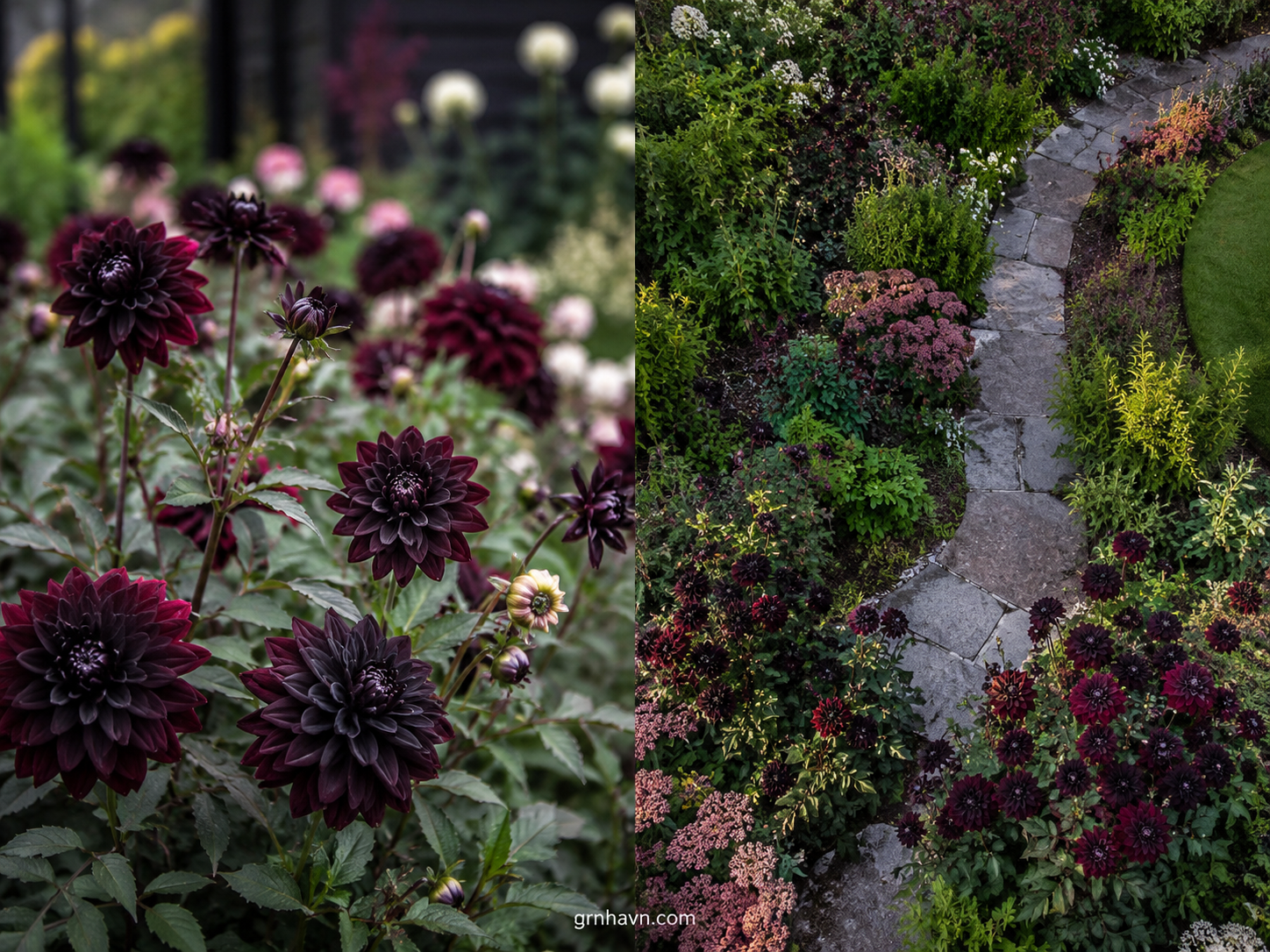
“When your dahlias finally darken, it feels like the garden is whispering back.”
Black Dahlia Flowers are one of those rare garden joys that look almost unreal—velvet, dramatic, and a little mysterious. I still remember the first time I grew a near-black variety in my own containers: the color was beautiful… then it softened after a hot stretch. That moment taught me the real truth: dark blooms aren’t “luck.” They’re a careful blend of timing, light, soil drainage, and the kind of watering rhythm that keeps tubers healthy instead of stressed.
My Promise (And What I’Ll Guide You Through)
By the end of this post, you’ll know exactly how to set up your outdoor bed or indoor pots for the deepest purple/mahogany-to-black look— plus what to do when buds stall, petals fade, or pests show up. I’ll share what I’ve seen work across climates using frost-date logic and hardiness zones.
Quick Facts
What Makes Dahlias Look “Black”?
Let’s be gentle (and honest) about the romance: most “black” dahlias are not true black the way a black marker is black. What you’re seeing is usually a deep mix—deep purple, mahogany, and sometimes burgundy tones that appear nearly black in full contrast lighting. In my garden, the “blackness” shows up strongest when the plant is healthy, sun-warmed, and not fighting wet feet.
“Dark petals are rarely one color—they’re a mood created by light, plant strength, and timing.”
Deep purple/mahogany tones vs true black
True black is extremely rare in living flowers. For dahlias, nurseries often label “black” varieties when the overall effect reads as near-black at a distance.
Up close, you’ll often see purple undertones at the edges of petals, and a richer brown-red in the centers.
That’s why two people can grow the “same” variety and swear they got different results: sun intensity, temperature swings, and watering stress change how those pigments hold and display.
If your flowers look “less black,” think like a gardener first: check your light and drainage before you blame the variety. In containers, especially indoors, inadequate light can cause buds to open softer and fade faster. The goal is not just growth—it’s steady, sun-driven strength.
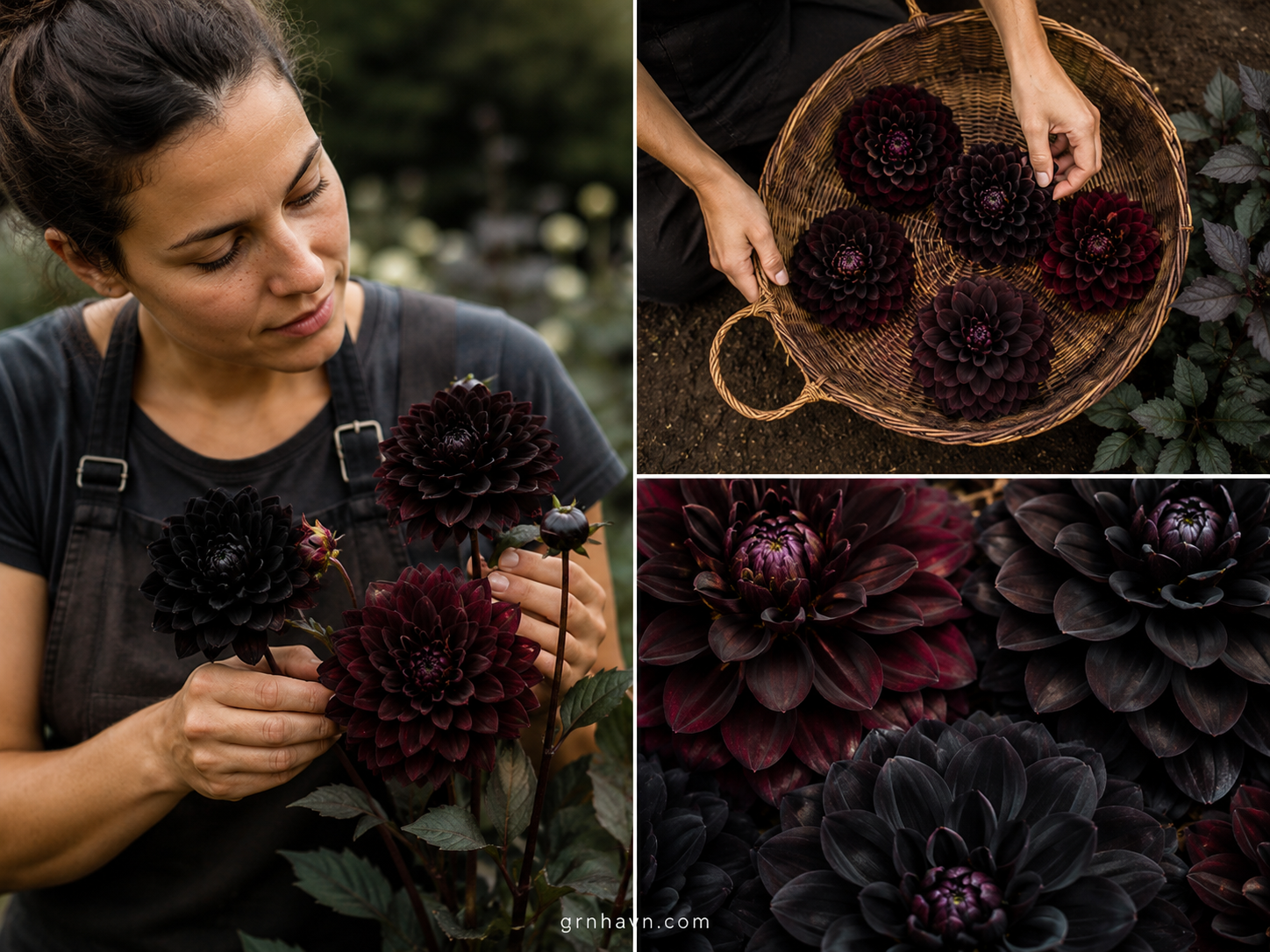
Black Dahlia Flowers—Best Options
When people ask me how to grow black dahlias, I always start with the same question: do you want “near-black” with a purple sheen—or “dark and burgundy” that turns almost wine-like under shade? Different dark dahlia varieties read differently depending on your sunlight angle and your summer heat. In cool regions (Europe with cooler summers, or US zones where nights cool quickly), the color can look deeper and richer. In hotter climates, you may need a slightly more consistent watering rhythm to prevent the petals from looking “washed” or brownish.
“Pick the right dark tone first—then your care becomes a lot simpler.”
What To Search For at Nurseries (variety label tips)
In nursery labels or online listings, look for wording like “dark,” “nearly black,” “burgundy,” “deep purple,” or “maroon” alongside dahlia type (cactus, decorative, dinnerplate forms, etc.).
If you see a range like “black/purple,” it’s usually a good sign you’ll get that cinematic contrast.
Also pay attention to flower form: larger, high-contrast blooms often read darker because more petals create deeper visual layers.
My opinion, from experience: don’t chase only the darkest label—chase the best match for your conditions. If you’re growing indoors, prioritize varieties that perform well in containers and are known for sturdy stems. If you’re outdoors, full sun dahlias can reward you with truly dramatic near-black displays—especially when you protect tubers from soggy soil.
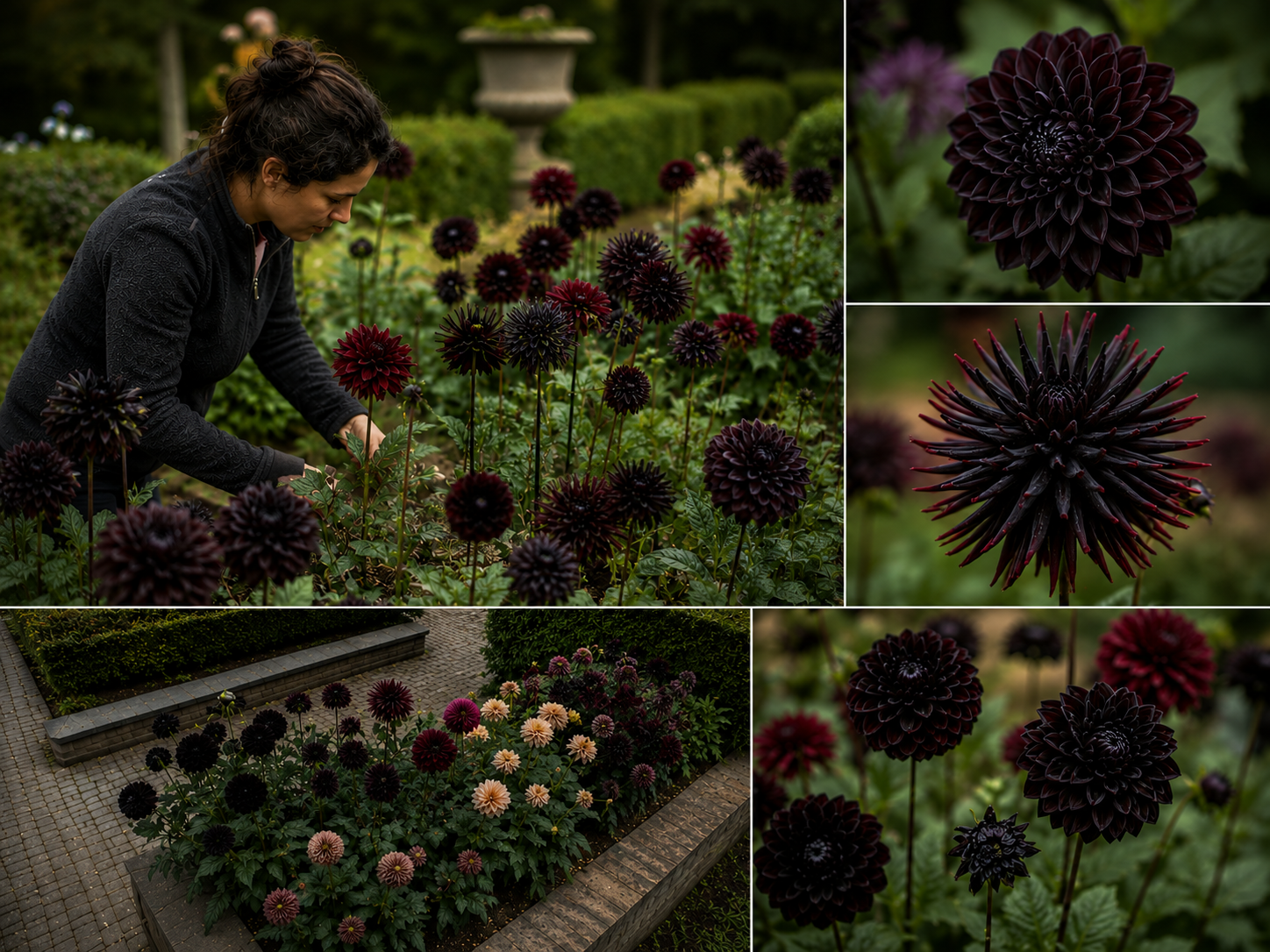
Growing Black Dahlias Outdoors
Outdoor growth is where black dahlias can truly shine—when the sunlight is consistent and the ground behaves. I’ve seen near-black blooms arrive like clockwork once tubers are planted at the right moment for their climate, then watered with restraint. Your job isn’t to “force” blooms; it’s to avoid stress and help each stage happen on schedule.
“The deepest color comes from steady conditions, not frantic effort.”
Planting Location + Sunlight
For darkest blooms, aim for full sun dahlias: typically 6–8 hours of direct sun.
If your summers are extremely hot, a little afternoon relief can help prevent droop—but too much shade dulls the “black” effect.
For US timing, use frost-date logic: wait until the soil has warmed and the risk of frost is truly over.
For many gardeners, that’s when daytime highs stay comfortably above ~60°F (15°C).
In Europe, local spring soil temperature still matters—if nights are cold and damp, start tubers in a protected spot first, then move outward gradually.
Soil Prep + Drainage
Dahlias want moisture, but they hate soggy roots.
Mix in compost for structure, then prioritize drainage—especially for dark dahlia varieties that may be grown in heavier soils.
A simple test: after watering, the soil should not stay wet for days.
If water pools, you’ll need to lighten the mix (add grit, improve beds, or plant on a slight mound).
Tubers that sit wet often lead to rot, and rot is the fastest way to lose your season’s color.
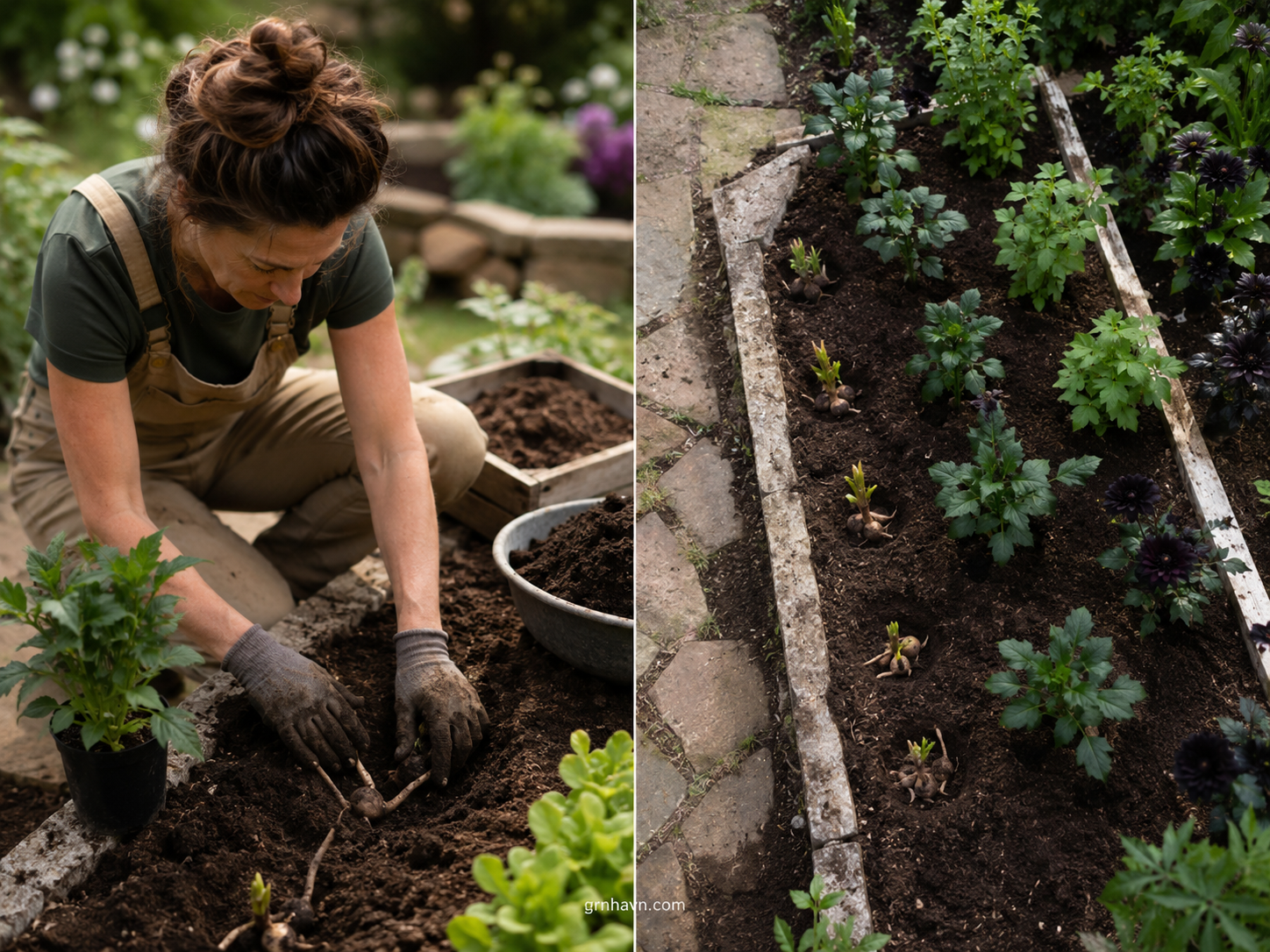
Planting Tubers (Timing And Depth Basics)
Plant tubers after danger of frost and when soil is workable.
A common guideline: plant about 4–6 inches (10–15 cm) deep depending on tuber size and soil temperature.
If your soil stays cold, shallower planting with protection can help; if your soil warms fast and drains well, normal depth works beautifully.
Leave space for airflow—crowding encourages mildew later.
Growing Black Dahlias Indoors
Growing in pots is possible—and honestly, it’s my favorite way to get close enough to watch color deepen from day to day. But indoors, the enemy is usually one thing: not enough light combined with watering that’s “a little too kind.” The fix is a routine that feels calm, not chaotic: a bright setup, careful watering, and a pot that drains like it means it.
“Indoor dahlias don’t need more attention—they need the right attention.”
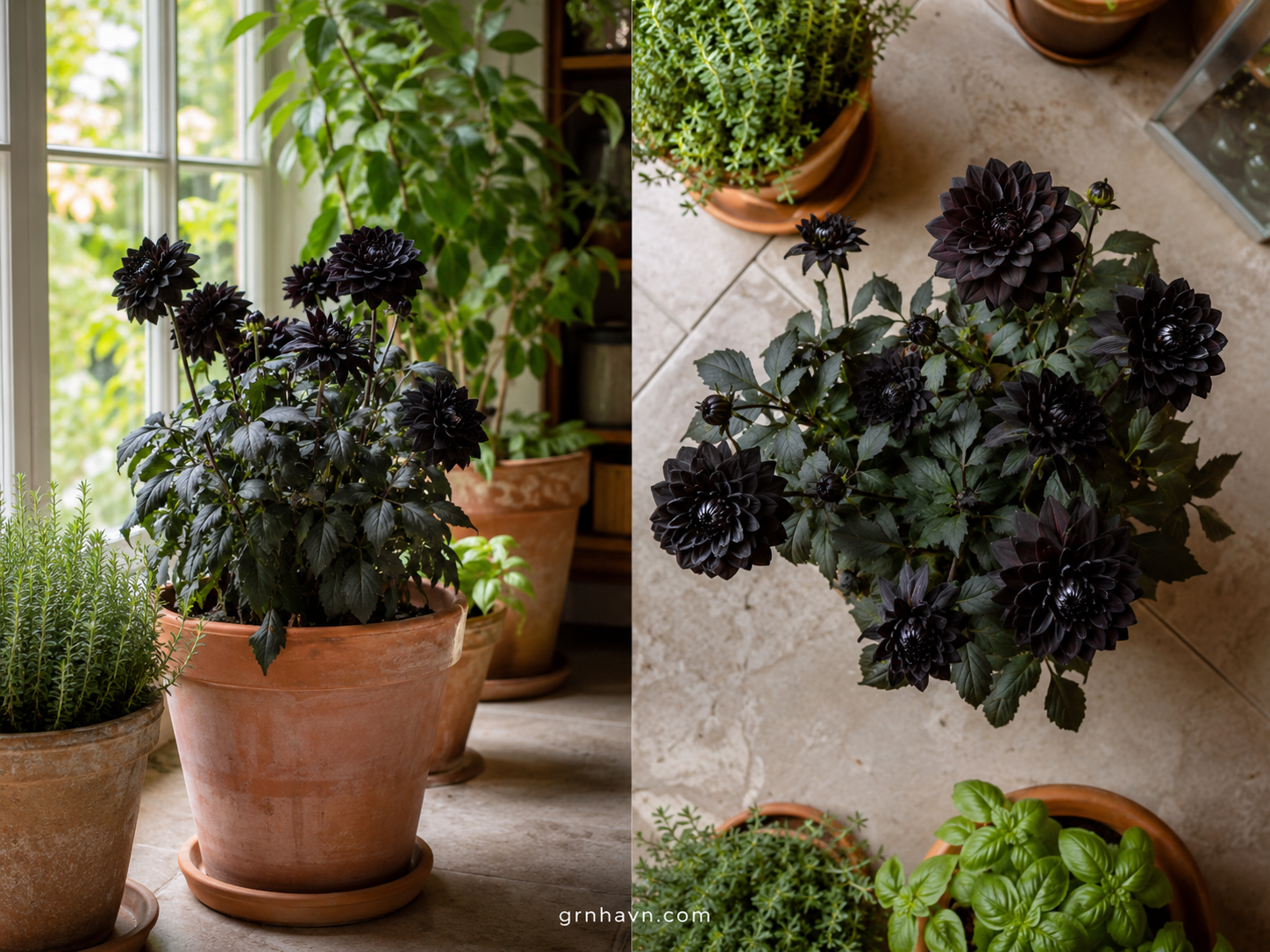
Best Pot Size + Drainage
For many black dahlia flowers, a pot around 12–16 inches wide (30–40 cm) works well for container strength.
The exact size depends on variety size, but bigger is usually better for roots and moisture stability.
Drainage holes are non-negotiable.
If water collects in the saucer, empty it after watering.
You want the soil to be evenly moist, then to dry slightly on top before the next watering.
Light Setup (window vs grow light)
A bright window can work, but it must be genuinely sunny.
Aim for several hours of direct sun if possible.
If your light is weak (short winter days in northern Europe, or cloudy periods in many US regions), a grow light makes “dark” outcomes far more consistent.
In my own trials, stable light output helps buds open with stronger pigmentation—especially for near-black and burgundy-leaning types.
In most cities you can find basic grow lights at home improvement stores, garden centers, or online retailers with plant sections. If you’re in Europe, check major garden/outdoor retailers plus reputable online plant shops—especially those that mention “full spectrum” for flowering plants.
Beginner tip: choose a grow light that matches your container size (and keeps leaves from stretching too far). Look for adjustable height and a “full spectrum” (or bloom-capable) description so you’re not stuck with only leafy growth.
For quick, hassle-free options, jump to Amazon for a curated set like LED grow light for flowering plants, or use the comparison link below.
Watering & feeding for darker color
Dark blooms are picky about one thing: balance. Too much water dulls color and increases rot risk; too little can stress the plant and cause buds to open tired or fade sooner. I think of watering like pacing a story—steady beats, no rushing, no dramatic pauses that leave tubers thirsty for too long.
“When you water with intention, the petals respond with depth.”
Water schedule basics
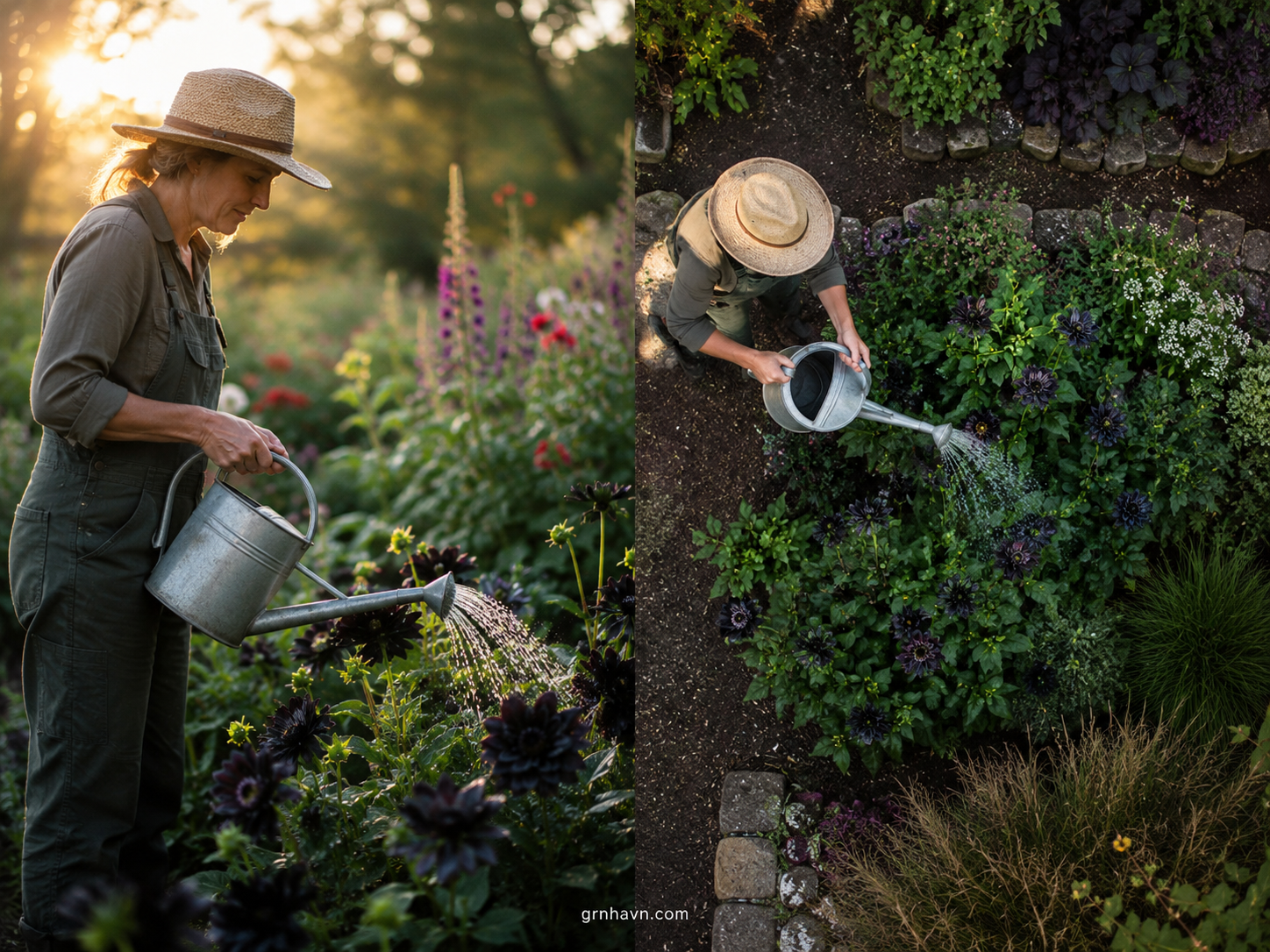
Outdoors, water deeply when the top few inches begin to dry.
In ground, this might be roughly once or twice a week depending on rainfall and heat.
In containers, it’s often more frequent—containers dry faster, especially in full sun dahlias.
A helpful check: poke 2 inches (5 cm) into the soil.
If it feels dry at that depth, water.
If it’s still damp, wait.
Temperature matters too: in hotter spells (above ~80°F / 27°C), you may water more often, but still avoid soggy soil.
Fertilizer approach (what helps blooms)
Feed dahlias with a balanced approach: encourage growth first, then shift to bloom support.
Many growers benefit from a fertilizer that’s not overly high in nitrogen once buds form.
In my experience, consistent feeding from early growth through flowering supports stronger stems and more reliable bud development—both of which help dark dahlias express their pigments.
Always follow label directions and avoid overfeeding, which can lead to lush foliage at the expense of blooms.
Maintenance
Maintenance is where your effort becomes invisible. When you stake thoughtfully, improve airflow, and deadhead at the right moment, your dahlias spend energy on flowers—rather than fighting stress. I’ve watched “almost-black” blooms become truly dramatic simply because the plant stayed comfortable and airy.
“A little airflow is a love letter to your dahlias.”
Staking and airflow
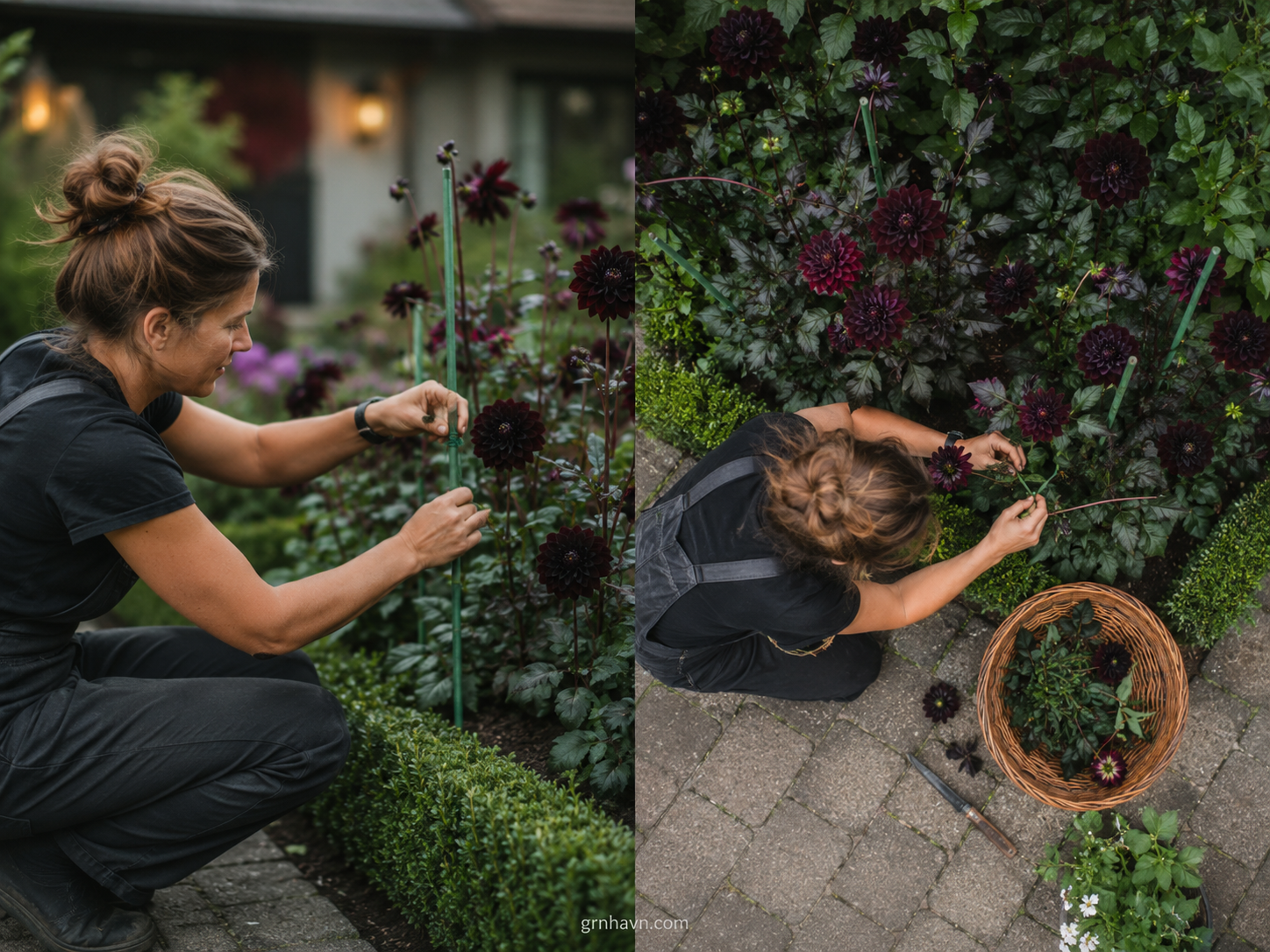
Dark dahlia varieties often grow strong stems, but taller types can still bend under bloom weight.
Stake early (before stems flop) to avoid root disturbance.
Then aim for airflow: spacing matters outdoors, and indoors you may need to rotate pots so light and airflow stay even.
Deadheading & bloom encouragement
Deadheading can encourage more blooms if done consistently.
Remove spent flowers just above a healthy pair of leaves or buds (depending on growth).
With dahlias, patience matters: some varieties bloom in waves, so don’t panic if the plant slows briefly.
Problems & Fixes
The fastest way to lose dark color is not just bad luck—it’s a small problem that grows quietly. In my case studies, the winning pattern is always the same: catch issues early, adjust watering, improve airflow, and respond to the specific culprit.
“Trouble doesn’t mean failure—just a signal to change one variable.”
Common pests
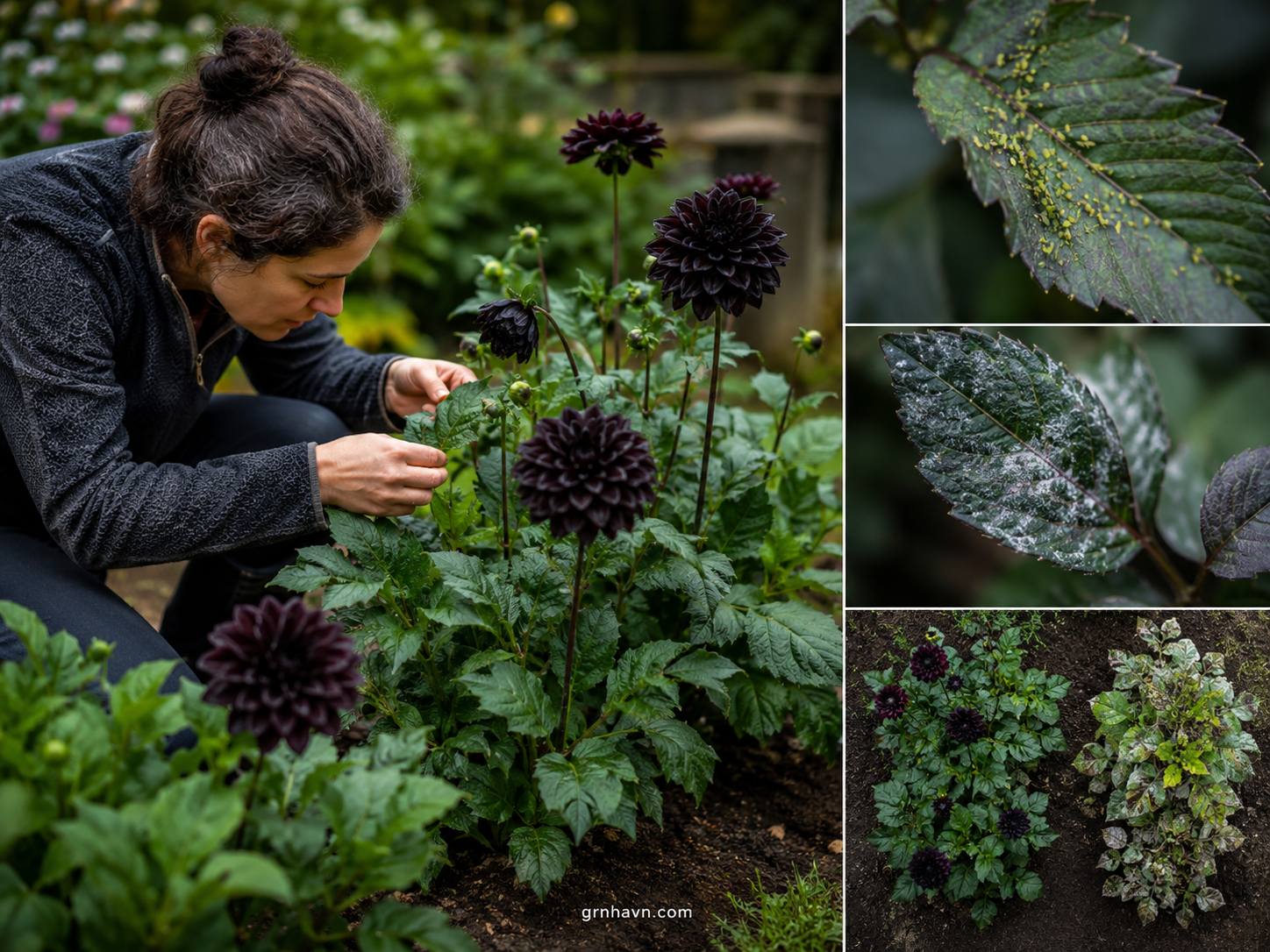
Watch for aphids, slugs, and other garden nibblers.
Indoors, check undersides of leaves and new growth.
Outdoors, consider hand-checking after warm evenings and using barriers or targeted control if needed.
Mildew and rot prevention
Powdery mildew often shows up when leaves stay wet or airflow is limited.
Avoid overhead watering when possible, water at the base, and give plants space.
For rot, the biggest fix is drainage plus careful watering—especially in containers and in cool, damp climates.
Why blooms fade
Color fading usually traces back to inconsistency: not enough sun, too much water, or temperature stress during bud opening.
If blooms fade, check your light setup first (especially for indoor dahlia in pots), then review watering depth and frequency.
Remember: dark dahlias want steady comfort—not wet cycles and not drought stress.
Many gardeners find pest solutions at neighborhood garden centers, hardware stores, or local nurseries—especially slug and insect control products. If you’re shopping online, look for retailers that clearly list the target pest and safe-use instructions for ornamentals.
Beginner selection tip: choose a method that matches the pest you actually see (for example, slug protection for outdoor beds or targeted treatments for aphids). Avoid “spraying everything” blindly—start with the smallest effective action.
For a quick, hassle-free comparison, you can browse Amazon for something like slugs and aphids control for garden ornamentals below.
Next Step
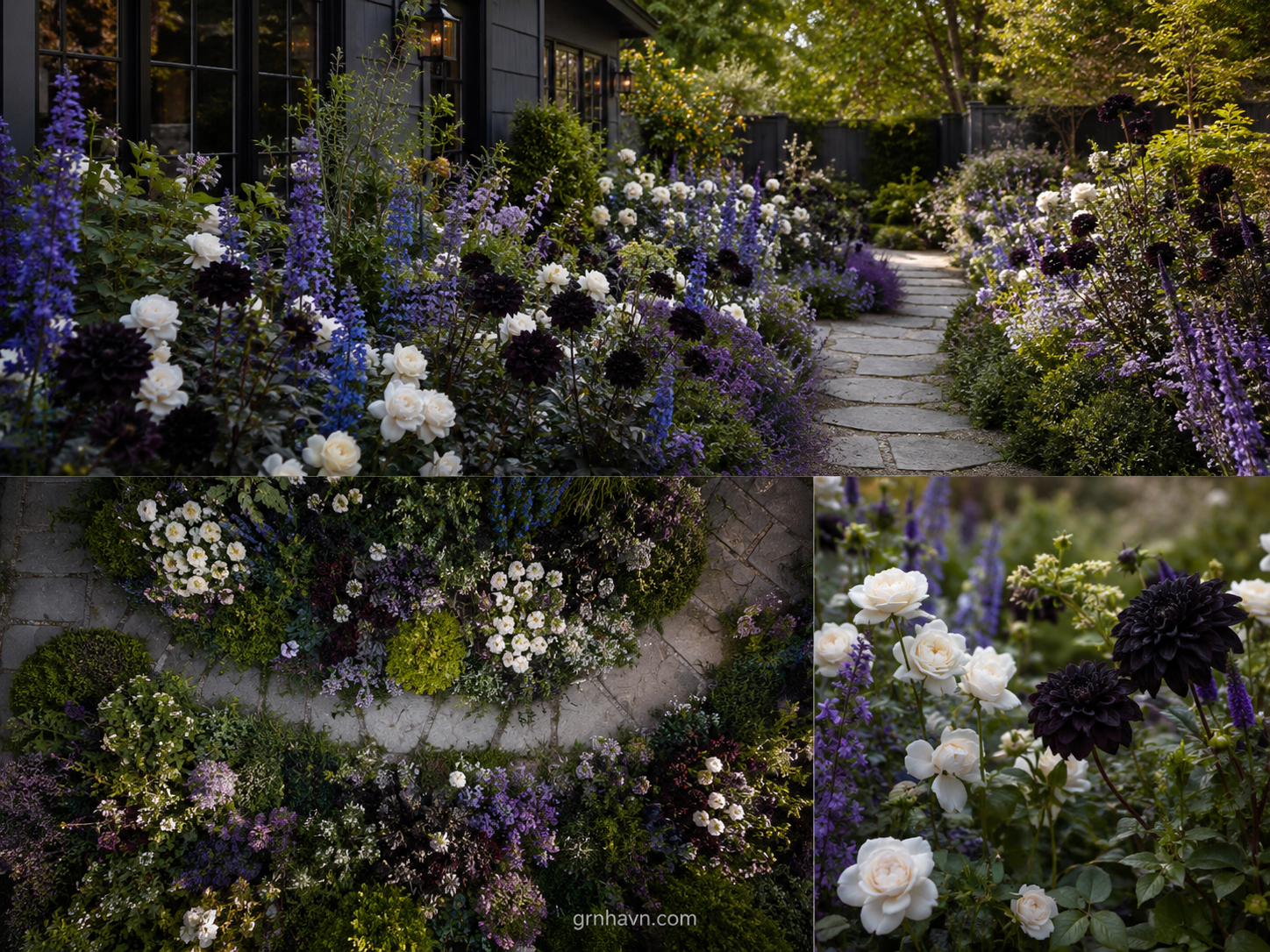
Once your black dahlia flowers are thriving, the fun part begins: pairing them so the darkness looks intentional instead of accidental. I like to treat near-black petals as a “jewel tone” in the garden—something that deserves complementary colors, not competition.
“Dark blooms look best when the rest of the palette knows when to whisper.”
Pair black blooms with purple/blue/white flower schemes
For a dreamy, cinematic scheme, pair with purple and blue blooms for depth—then add white flowers for highlights that make the black petals look even richer.
If you’re working in containers, repeat your “light color” accent (like white alyssum or small-flowering companions) around the pot edges to brighten the whole composition.
Outdoors, place lighter blooms slightly in front or around the main cluster so your darkest dahlia flowers read clearly from pathways.
Practical opinion: if you want the “black” look from a distance (balcony viewing, garden walks), include at least one pale or cool-toned companion nearby. That contrast makes the near-black petals appear deeper without needing perfect conditions every single day.
Final verdict
If you want the darkest blooms, don’t chase perfection—chase the essentials: sun that’s strong enough, drainage that’s trustworthy, and a watering rhythm that protects tubers. I’ve seen people grow black dahlias “by accident” and still get great results, but I’ve also seen the fade happen when one variable slips. Your best outcome comes from consistency: plant on time for your frost logic (US USDA hardiness zones or Europe frost timing), feed thoughtfully, and troubleshoot early.
What Not to Do (Overwatering/Late Pruning)
I’ll say it plainly: overwatering is the quickest path to rot and faded blooms. If your dahlias are in heavy soil or indoor pots without reliable drainage, water less than you think you should at first. Another common issue is late pruning—waiting too long can remove buds you wanted later in the season.
“Dark flowers don’t forgive sloppy routines, but they do reward calm consistency.”
Use this mindset: if the plant looks stressed, don’t just add more water or more fertilizer. Adjust the basics—light, drainage, and timing—then watch what improves.
🖨 Print This Checklist
Black Dahlia Flowers Indoor & Outdoor Care Checklist
- Light: Aim for full sun outdoors (about 6–8 hours). Indoors, prioritize strong window light or a grow light.
- Timing: Plant tubers after frost risk passes using frost-date logic (and USDA hardiness zone guidance where relevant).
- Drainage: Ensure excellent drainage to prevent tuber rot—especially in indoor dahlia in pots.
- Watering rhythm: Water when the top ~2 in (5 cm) dries; avoid constant wet soil.
- Feeding: Feed consistently; shift toward bloom support once buds form (avoid heavy nitrogen after flowering begins).
- Spacing & airflow: Keep airflow steady to reduce mildew risk.
- Staking: Stake early if stems bend so roots aren’t disturbed later.
- Deadheading: Remove spent blooms to encourage additional flowering waves.
- Troubleshoot early: Inspect for pests and adjust watering immediately if leaves or buds look stressed.
- Color maintenance: If blooms fade, check sun first, then watering consistency, then temperature stress during bud opening.
Tip: For the darkest look, think “steady comfort”—not frantic changes.
FAQ
Can you grow black dahlia flowers indoors?
Yes—absolutely. The key is treating indoor dahlia in pots like a mini environment: strong light, reliable drainage, and a gentle watering rhythm. If your window is weak, a grow light helps keep blooms deeper and more consistent.
What is the best pot size for dahlias?
Commonly, 12–16 inches (30–40 cm) wide works well for many varieties. Larger pots help roots stay stable and make watering less “spiky.” Always choose pots with drainage holes.
How do I plant dahlia tubers for dark flower varieties?
Plant after frost risk passes and soil temperatures are safer. Plant roughly 4–6 inches deep (10–15 cm) depending on tuber size. Prioritize drainage and avoid overwatering during the earliest weeks.
How much sun do dahlias need to look as dark as possible?
For many growers, 6–8 hours of direct sun outdoors helps the near-black effect look strongest. Indoors, the brightest available window—or supplemental grow light—supports darker pigmentation.
When do black dahlias typically bloom?
Usually in mid-summer through fall, depending on your climate and when you plant. With proper timing and warm temperatures, blooms often start once plants establish and buds form reliably.
How often should you water dahlias in containers vs in-ground?
Containers often need watering more frequently because they dry faster. Check top soil dryness (around 2 in / 5 cm). In-ground watering is usually less frequent but should be deep when needed—always avoiding soggy soil.
What fertilizer helps produce deep, dramatic blooms?
A balanced fertilizer approach works best—steady feeding without overdoing nitrogen after bud formation. Consistency supports healthy stems and reliable flowering, which lets dark dahlia varieties show their pigment.
Should I deadhead dark dahlias?
Yes, deadheading spent blooms often encourages more flowers. Remove faded blooms promptly and leave the healthy foliage structure intact to keep the plant productive.
What pests commonly attack dahlias?
Aphids are common, and outdoor gardens may see slugs or other nibblers depending on local conditions. Indoors, inspect regularly—especially leaf undersides and new growth.
How do I prevent powdery mildew on dahlias?
Improve airflow, avoid wetting leaves, water at the base, and don’t overcrowd. If mildew starts, address quickly with better spacing and watering discipline.
Do black dahlias need staking?
Some do—especially taller or heavier-blooming types. Stake early to prevent bending and root disturbance. Airflow also improves when stems are supported.
What temperatures are safest for dahlias in the US/EU?
Dahlias prefer warmth and consistent growing conditions. Use frost-date timing in the US and local frost/temperature logic in Europe. As a general guide, avoid cold, damp soil and plant when daytime temps and soil warmth are safely improving.
How do you overwinter dahlia tubers?
In colder zones, lift tubers after foliage dies back and frost risk has passed, then store them in a cool, dry, frost-safe place. In warmer zones, some gardeners can overwinter in-ground with protection—only if local conditions allow.
Why do some “black” dahlias fade over time?
Common reasons include insufficient sun, inconsistent watering, temperature stress during bud opening, or general plant stress. Improve drainage and light first, then refine your watering schedule.
What companion plants look best with black or near-black blooms?
Pair black and burgundy flowers with purples, blues, and whites for contrast. Light-colored companions make dark petals read deeper and more cinematic.