How Often Should You Fertilize Indoor Plants?
(Seasonal Schedule)
If you’ve ever stared at a fertilizer label thinking, “Okay… but how often?”—you’re in the right place. I’ll share a simple seasonal fertilizer schedule for indoor plants, how to adjust it for your light, and the exact signs that tell you to feed more or feed less.
“Fertilizing isn’t a calendar chore—it’s a conversation your plant is having with you.”
When people ask me how often to fertilize indoor plants, I always smile—because the real answer
isn’t “once a month” or “every two weeks.” It’s about the rhythm your plant is already living:
light, temperature, and the season your home is mimicking. In my own collection (and in the homes I’ve helped
over the years), the happiest indoor plants are rarely the “most fed”—they’re the most correctly timed.
Here’s what we’ll do together: you’ll get a simple seasonal fertilizer schedule for houseplants that works across
the US and Europe, plus easy adjustments based on your windows (bright, medium, or low light).
I’ll also show you what “weekly” on labels really means for beginners, and how to recognize the difference
between a plant that needs a little support… and one that’s already getting too much.
You’ll Leave With A Schedule You Can Trust.
- A seasonal fertilizer schedule you can follow with confidence (US + EU timing).
- Clear “more or less” signs: weak growth, pale leaves, and fertilizer burn.
- Smart dosing guidance for both liquid and slow-release fertilizers.
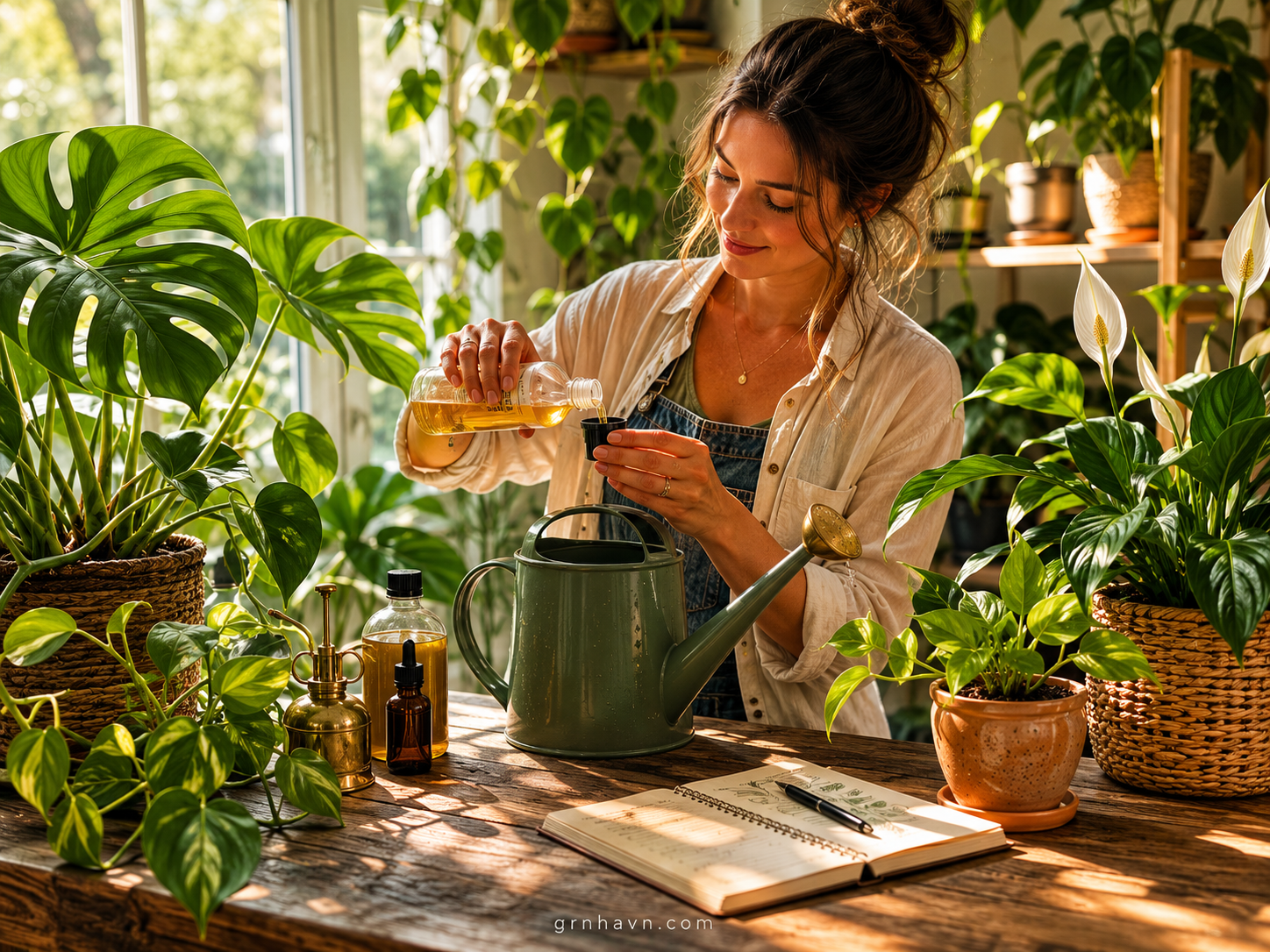
Table of Contents
- How Often to Fertilize Indoor Plants (Quick Answer) Start here
- Seasonal Feeding Guide (US/EU) Month-by-month feel
- How Light Affects Fertilizer Frequency Bright vs low-light
- Liquid vs Slow-Release Schedules What “weekly” means
- Fertilizer Signs: Do You Need More or Less? Read the plant
- Indoor Plant Fertilizing Safety Moist soil & stress rules
- Conclusion Make it easy
How Often to Fertilize Indoor Plants (Quick Answer)
Here’s the calm truth: most indoor plants do best when fertilizing follows their growth speed. If your plant is actively growing—new leaves unfurling, stems getting longer, and that fresh green color you only see during “real life” plant season—then it’s ready for feeding. For most homes, that usually means about every 4–6 weeks in medium light, and every 2–4 weeks in brighter light. In low-light rooms, you’re often safest at once every 6–10 weeks, or even pausing during the dim months.
I learned this the hard way while helping a client with a beautiful peace lily. She had followed a label’s “weekly” suggestion to the letter—but her home had a north-facing window and cloudy winters. The result? Tender new growth that stalled, and leaf tips that browned like the plant was waving a small white flag. We backed off, adjusted for light, and suddenly the plant looked… relieved.
“Feed when the plant is ready. Fertilizer should support growth—not force it.”
Active growth vs low-light months
Think of indoor plants like they’re running a slow home-weather station. Bright windows act like “spring” even if it’s cold outside. Low light acts like “winter” even if it’s warm inside. So instead of memorizing dates alone, use a simple rule: fertilize more when light is stronger and growth is visible, and reduce when light fades and growth slows.
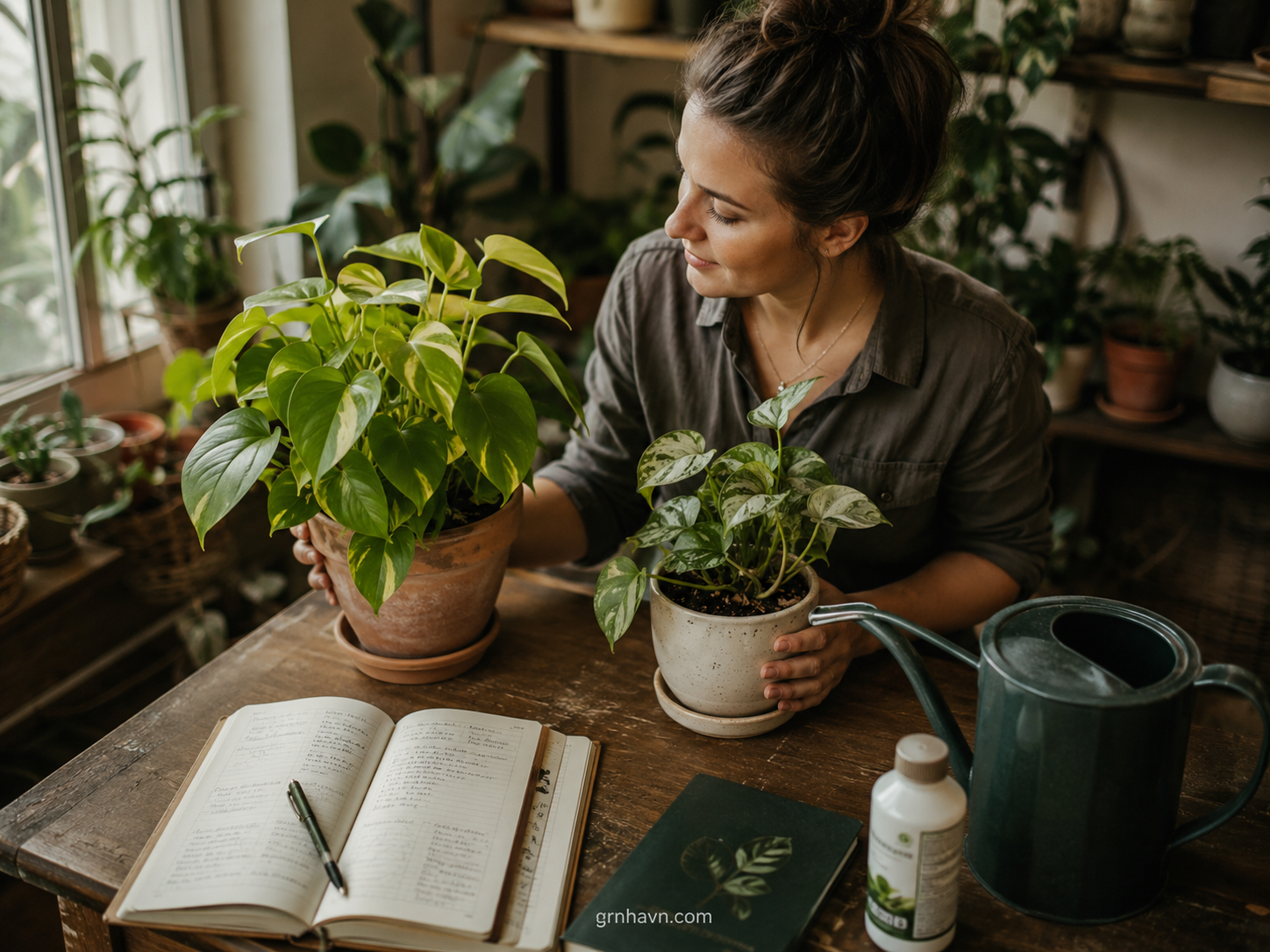
Seasonal Feeding Guide (US/EU)
Seasonal fertilizing is where your plant starts to feel “understood.” In the US, I use a blend of USDA hardiness zone timing and the moment your home’s light begins to lengthen. In Europe, I still anchor to frost/temperature logic, but I translate it into what matters indoors: how quickly your indoor daylight ramps up and how fast it drops back down.
Practical starting points: US late winter through early summer usually becomes your “feed window,” while late summer onward becomes “slow down.” If you’re in a warmer zone or coastal climate, the “active” stretch can last longer. In colder regions, your feeding window tends to shrink—and that’s okay. Your goal is not to force growth; it’s to match the pace your plant is already choosing.
“The calendar is loud. Your plant is listening.”
Spring and early summer feeding
When days noticeably lengthen and temperatures rise, start feeding again. For most houseplants, think every 4 weeks at first, then adjust to every 2–3 weeks if the plant is growing fast and your light is strong. If you’re in US zones roughly 7–10, you can often begin earlier; in 3–6, wait until indoor light is clearly improving. For Europe, if you’re near milder coastal conditions, you may start sooner; for colder interiors, plan for a later “ramp-up.” As a light-based simplification: once your plant is consistently pushing new leaves, you’re in the right season.
Late summer adjustment
Late summer is often the gentle turning point. Growth might continue, but fertilizer sensitivity increases if light starts easing. I recommend shifting from “more frequent” to “more measured.” If you were feeding every 2–3 weeks, ease back toward every 4–6 weeks. If your plant sits close to a window that still looks bright, you can keep a steady rhythm—but still avoid “weekly” thinking. Fertilizer is not a stimulant; it’s nutrition. When the plant’s metabolism slows, extra salts can build up.
Fall and winter: reduce or pause feeding
In fall and winter, most indoor plants experience weaker light. Even if your room stays cozy at, say, 68–72°F (20–22°C), the daylight may be too low for strong new growth. This is when I reduce to either very light doses every 6–10 weeks or pause entirely for slower growers. A common “fix” I give: if you must fertilize, switch to a lower concentration and only when the plant shows real signs of life. If your plant is doing nothing—no new leaves, no growth—then feeding is just extra work for its roots.
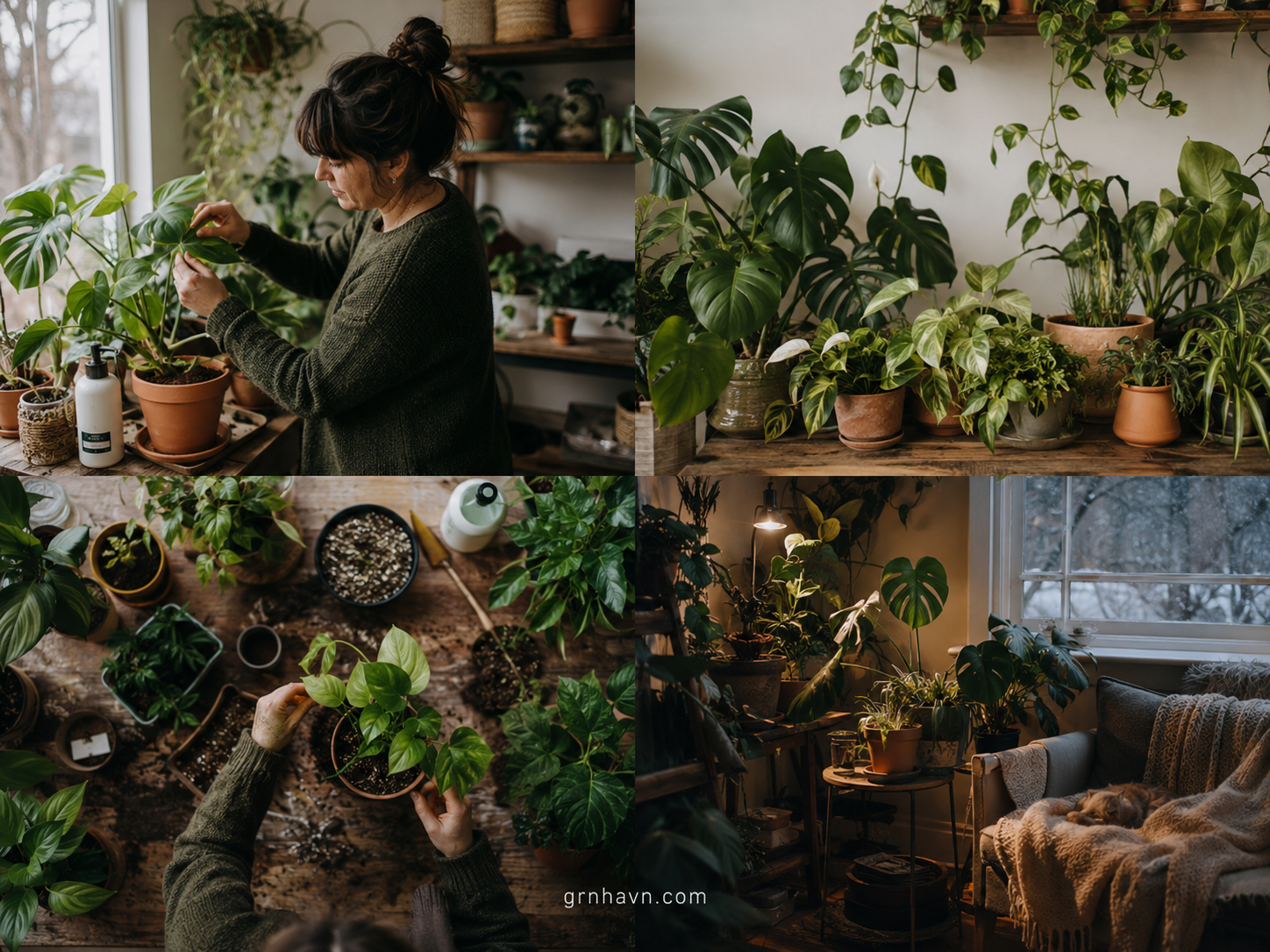
How Light Affects Fertilizer Frequency
If you only remember one thing from this whole post, make it this: your fertilizer schedule should mirror your light schedule. Two plants can be the same species, same pot size, same soil… and still need different feeding. The difference is usually where they sit.
In my experience, bright-window plants can tolerate a higher feeding cadence because they’re using nutrients. Medium-light plants are “steady users”—they need consistent, gentle nutrition. Low-light plants are often “slow processors”—give them too much and the salts can linger. I’ve seen this pattern in pothos, philodendrons, and even hardy succulents grown indoors under dim corners.
“Light is the engine. Fertilizer is just the fuel you add when the engine is running.”
Bright light windows
If your plant sits in a bright spot—often near an east/west window with steady daylight— you can usually fertilize every 2–4 weeks in active seasons. In winter, still reduce: switch toward every 6–10 weeks or pause if growth stalls. Watch for leaf color and new growth. If it looks fresh, that’s your plant telling you it can use the feed.
Medium/low light rooms
Medium light usually means “feed a little, not often.” Think every 4–6 weeks during spring/summer, and every 8–10 weeks in fall/winter (or pause). Low light is the gentle discipline zone. I typically avoid frequent feeding there: once every 8–12 weeks at most in dim months, and only at reduced strength if you do it. If you’re unsure, start lighter. It’s easier to add a little later than to reverse fertilizer stress.

Liquid vs Slow-Release Schedules
The type of fertilizer changes “how often,” because it changes how quickly nutrients become available. Liquid fertilizers act fast—so they usually need more careful spacing. Slow-release granules act gradually—so they can work with a longer routine.
When beginners ask me about frequency, I often see the same mistake: they take the label literally without adjusting for indoor light and growth speed. That’s why “weekly” can become “too much” inside homes that don’t match outdoor sun levels.
“A label is a starting point. Your plant’s light is the referee.”
What “weekly” on labels really means for beginners
If a fertilizer says “use weekly,” it’s often written for outdoor plants or ideal indoor conditions. In real indoor homes, especially medium/low light, you’ll usually do better with reduced frequency and reduced dose. A beginner-friendly approach: start with 1/2 strength and feed every 4–6 weeks. If your plant is growing strongly in bright light, you might move closer to every 2–3 weeks. If growth is slow, stay gentle—your plant will thank you with calmer, steadier growth.
How to schedule slow-release granules
Slow-release granules typically cover weeks to months, depending on product formulation and your watering pattern. The schedule is simpler: apply once per “active season” and adjust based on how fast your plant is growing. For many indoor growers, that means one application in spring (or early summer if your light ramps late), and possibly another in mid/late summer—but only if growth is clearly active. If your plant sits in low light, I’d usually skip the second application.
You can usually find a reliable liquid houseplant fertilizer or slow-release granules at a local garden center, nursery, or home improvement store—especially in spring and early summer when customers are restocking. If you want a quick baseline, look for “balanced” formulas meant for foliage/houseplants rather than aggressive bloom-only mixes.
My beginner tip: choose one style and master the rhythm. If your windows are bright and your plant grows steadily, a diluted liquid schedule can be easier to fine-tune. If your lighting is inconsistent, slow-release granules can be more forgiving. Either way, start at a lower concentration than the label suggests and adjust after you see leaf color and growth.
For hassle-free online shopping, jump to the Amazon options for a well-rated houseplant fertilizer comparison, or use the guide links below to pick the best match for your light and plant type.
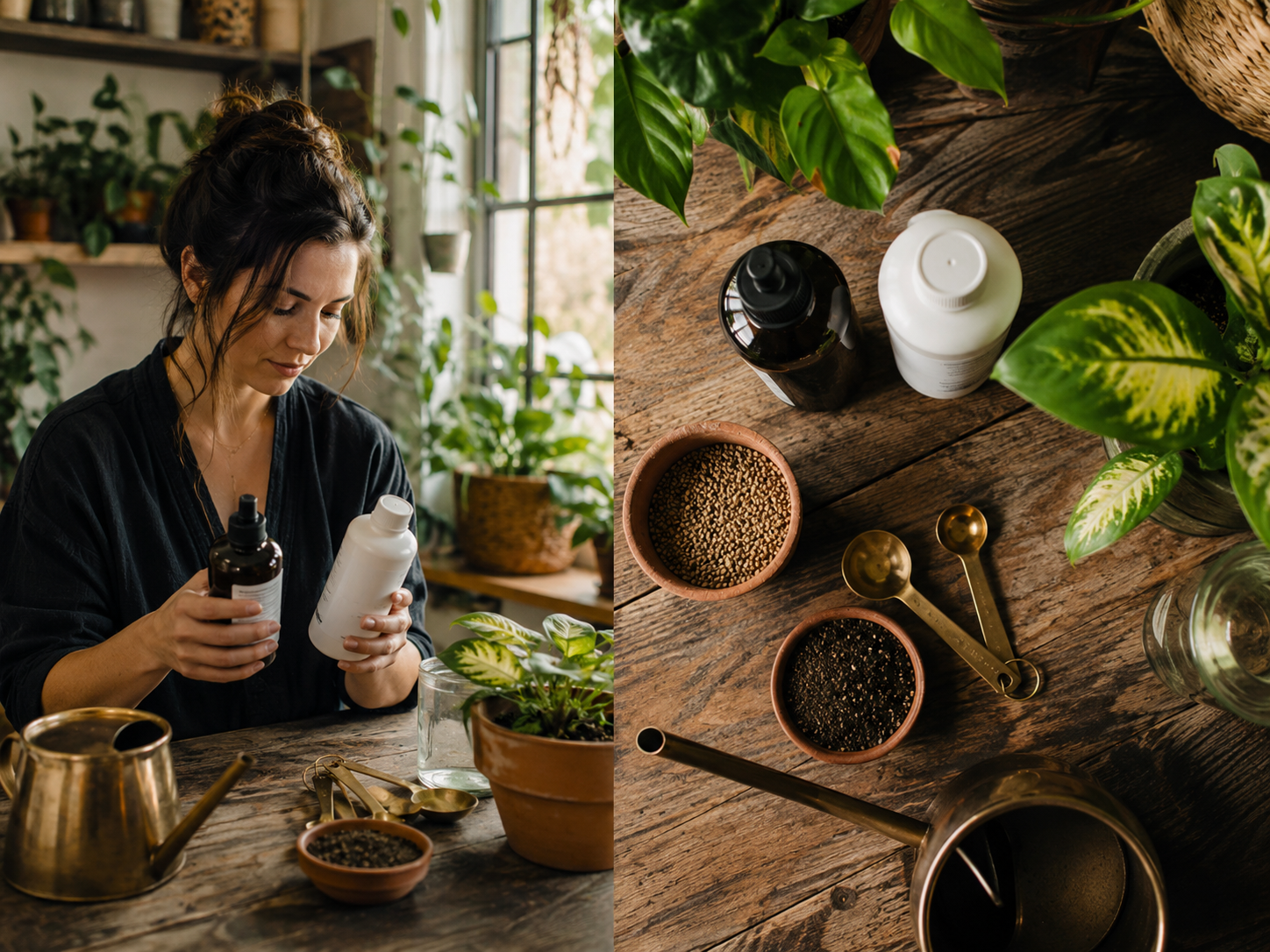
Fertilizer Signs: Do You Need More or Less?
This is the part I love most—because your plants are honest. The trick is learning their language. If you fertilize and nothing changes for weeks, either the light isn’t supporting growth… or your plant is already at its limit. If you fertilize and things suddenly look worse, you may have overshot.
In real homes, I see two common patterns: one where plants look hungry (slow, pale, underpowered), and another where they look stressed (browning tips, crusty edges, stunted growth). The good news? These are manageable with small adjustments.
“Your plant won’t need you to guess for long—if you watch the signals.”
Pale leaves / weak growth
Pale leaves, weak new growth, or a plant that seems stuck in “one leaf at a time” mode can suggest it’s not getting enough nutrition for its light level. Before you jump to more fertilizer, check two essentials: light quality (are there more shadows now?) and watering consistency (is the soil staying too dry or too soggy?). If the plant is in stable medium/bright light and the leaves are clearly paler than usual, then a gentle feeding increase can help—think slightly more frequent or slightly stronger dosing (not a sudden label-maximum leap).
Fertilizer burn signs (tips, edges, stunted growth)
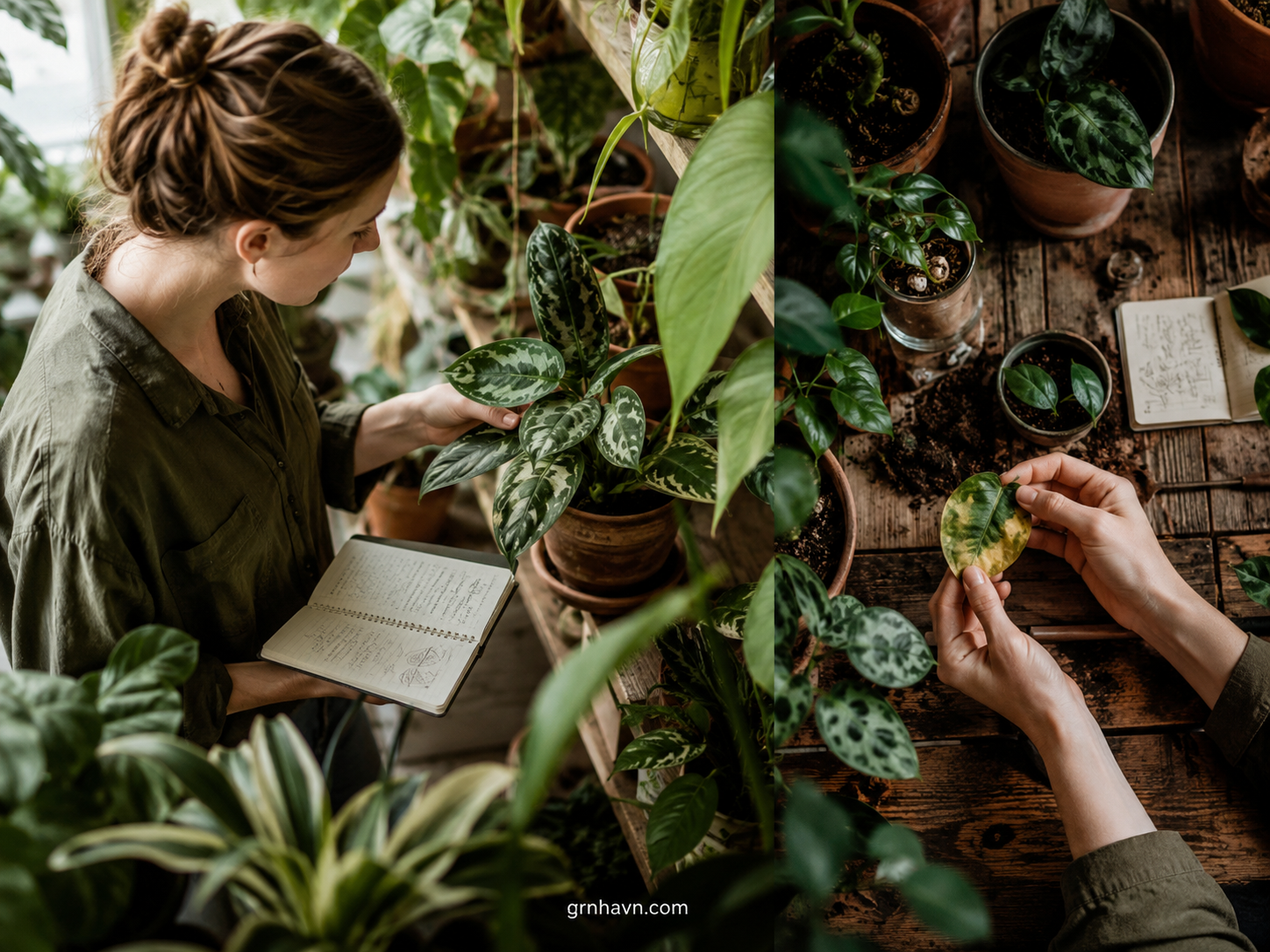
Fertilizer burn often shows up as browning tips or scorched edges, sometimes accompanied by stunted or oddly slow growth. If you notice crusty residue on the soil surface or the plant looks “tired” after feeding, reduce feeding immediately. In many cases, a thorough watering that helps flush excess salts from the root zone can restore balance. (And yes, your plant can recover—just don’t keep adding more “support” while it’s stressed.)
Indoor Plant Fertilizing Safety
Safety is where the “best-friend” mindset really matters. Most fertilizer problems aren’t because the plant is fragile— they’re because the timing is off. The safest rule I follow: fertilize thoughtfully, avoid root stress, and treat your indoor conditions like a different environment than the label assumes.
If you’re ever unsure, remember this: a plant can handle less fertilizer more easily than it can handle stressed roots from overfeeding or feeding at the wrong time. We want nutrition to feel like a gentle invitation, not a sudden push.
“Gentle timing is the quiet superpower of healthy indoor plants.”
Feed on slightly moist soil
Fertilize when the soil is slightly moist—not bone dry, not dripping wet. This helps prevent root stress and reduces the chance of fertilizer salts concentrating at the root edges. If you just watered and the soil is still wet, wait a bit. If your plant is bone dry, water first, then fertilize later after it settles. It’s a small habit that protects your plant’s energy.
Avoid fertilizing stressed plants (dry/wilt/heat)
Don’t fertilize a plant that’s actively struggling: wilting from dryness, browning from heat exposure, or recovering from a stressful relocation (like moving to a new room). The plant needs stability first. Once conditions are steady and you see normal leaf posture and consistent light, then you can resume a careful feeding plan. This is especially important in seasonal transitions—when indoor temperature swings can be sharper, even if it “feels warm.”
Conclusion
If you want the simplest answer to how often to fertilize indoor plants, let it be this: fertilize during active growth, reduce when light fades, and adjust using signs. Your seasonal schedule should be flexible enough to match your home’s light—because indoor plants don’t follow outdoor calendars.
Here’s what I’d do if I were walking into your space today: check where your plants sit, decide whether you’re in a bright/medium/low-light situation, and choose a feeding cadence that supports growth without overwhelming the roots. Then, watch for the truth in the leaves. Pale and slow? You may need slightly more. Browning tips or crusty soil? Back off and let the plant reset.
What Not to Do (so you don’t accidentally undo your progress):
• Don’t fertilize on “autopilot” during winter low-light weeks.
• Don’t overwater just to “help” fertilizer—moist soil is enough.
• Don’t keep feeding after you spot burn signs.
• And don’t wait until pruning is “perfect” to start thinking about plant recovery—feed should support next growth, not stress it.
“When you match fertilizer to light, your indoor garden starts to breathe again.”

Final Verdict
Over the years, the most successful indoor plant setups I’ve seen weren’t built on “more care”—they were built on right-timed care. A seasonal fertilizer schedule works best when it follows your windows, not the internet. Use gentle doses, watch growth speed, and treat signs like messages. If you do that, your plants won’t just survive— they’ll feel steady, bright, and beautifully alive.
Printable Checklist
- Bright light? Feed more often in spring/summer; reduce in fall/winter.
- Medium/low light? Reduce frequency—think every 6–10+ weeks in dim months.
- Growth check: If you see no new growth, pause or switch to very light dosing.
- Soil timing: Fertilize on slightly moist soil, not bone dry or soggy.
- Label reality: “Weekly” is not automatically “right” for your indoor light.
- Watch signs: Pale/weak growth may mean gentle extra feeding.
- Burn signs? Tip browning, edges, stunted growth = reduce and consider flushing.
- Seasonal logic: US USDA zone + light ramp; Europe frost/temperature translated indoors.
- Safety: Don’t fertilize stressed plants (dry/wilt/heat/recent relocation).
- Consistency: Choose a liquid or slow-release approach and keep your routine steady.
Tip: For A4, keep your browser print margins default and select “Fit to page” if needed.
Frequently Asked Questions
1. How often should I fertilize indoor plants?
I recommend starting with the simplest rhythm: every 4–6 weeks in active seasons for medium light, and every 2–4 weeks for bright windows. In low-light rooms, go slower—often every 6–10+ weeks or pause in winter when growth slows. The “right” answer is always tied to visible growth and your light level.
2. Should I fertilize indoor plants in winter?
Usually, only lightly—or not at all. Winter indoor light is often too weak for robust nutrient uptake, even when temperatures are comfortable. If your plant still grows, feed sparingly (reduced dose, longer spacing). If growth stops, pause and focus on consistent light and watering.
3. How do I adjust fertilizer frequency for low light?
Reduce frequency and dose. Low-light plants drink slowly, and extra fertilizer salts can linger. A gentle guideline: move from “every 4 weeks” to “every 8–12 weeks,” and only feed when you see some signs of life.
4. Does the fertilizer type change how often I feed?
Yes. Liquid fertilizers are usually more frequent (but often at lower strength). Slow-release granules can cover a longer period, meaning you fertilize less often—often once in spring and possibly once again mid/late summer if growth is active.
5. Can I fertilize indoor plants every week?
I’d only consider weekly feeding in rare cases—typically bright, stable light and actively growing plants—using a diluted dose. For most homes, weekly is too aggressive and can cause burn or stalling growth.
6. What if my plant stops growing—should I still fertilize?
If your plant truly stops growing, fertilizing usually won’t “restart” it. Instead, reduce or pause feeding and check light first. Nutrients can’t be used well without enough light-driven energy.
7. How do flowering houseplants’ fertilizer schedule differ?
Flowering plants often want stronger nutrition during bud-forming seasons, but still only when light supports growth. Feed a bit more during active blooming months, and reduce after flowering or when days shorten.
8. Do succulents and cacti need fertilizer?
They need far less. In most homes, fertilize sparingly during spring/summer only—if at all in winter. Use a cactus-friendly fertilizer and stay conservative to avoid salt buildup.
9. Do I fertilize right after watering or before?
Prefer slightly moist soil—so fertilize after watering only when the soil isn’t soggy. If the soil is bone dry, water first; if it’s still wet, wait a little. This protects roots and improves uptake.
10. How soon after repotting can I start fertilizing again?
Usually wait a few weeks to a month, depending on the soil mix. Fresh potting mixes often contain nutrients, and roots need time to settle before you add more. Once you see stable growth, you can begin with a gentle schedule.
11. Should I fertilize during extreme heat or cold indoors?
Skip feeding during stress. If your plant is too hot/cold, it’s not using nutrients well. Let conditions stabilize, then return to your light-based routine.
12. What are signs my indoor plant needs fertilizer?
Pale leaves, weak growth, and slower development compared to its usual pace can indicate it needs a nutritional boost. But always confirm the light and watering basics first—fertilizer can’t replace sunlight.
13. What are signs my indoor plant is getting too much fertilizer?
Browning tips/edges, crusty soil residue, salt buildup, and stunted growth are classic signs. Reduce feeding, consider flushing if salts accumulate, and give the plant a “breathing period.”
14. How do I create a fertilizer schedule for multiple plants?
Group plants by light level and growth speed. Bright-window plants get the most consistent feeding; medium plants feed less; low-light plants feed the least or pause. Adjust each group based on signals from the leaves.
15. Should I fertilize herbs indoors differently than ornamentals?
Often yes. Herbs benefit from steady, appropriate nutrition, but you’ll want to be mindful of the product type and dose. Use herb-friendly options and avoid overfeeding—healthy leaves come from consistent light, not heavy fertilizer.