How To Dose Fertilizer For Plants—iIndoor + Garden Without The Guesswork
If you’ve ever stared at a fertilizer label and thought, “Is this too much… or not enough?”, you’re not alone. Let me walk you through fertilizer dosing like a best-friend: clear, label-first, and safe for both USDA-style seasons and Europe’s frost logic. That way your plants get stronger—never burned.
“The secret to lush growth isn’t more fertilizer—it’s the right dose, at the right moment, for your plant.”
How to dose fertilizer for plants is one of those topics that looks intimidating until you realize it’s actually a conversation between three things: your plant, your label, and your season. I’ve helped indoor collectors and backyard gardeners alike—especially the ones with olives, figs, and container herbs—who were tired of guessing. In real life, the winning approach is simple: start low, feed with intention, and learn what “too much” looks like on your specific leaves.
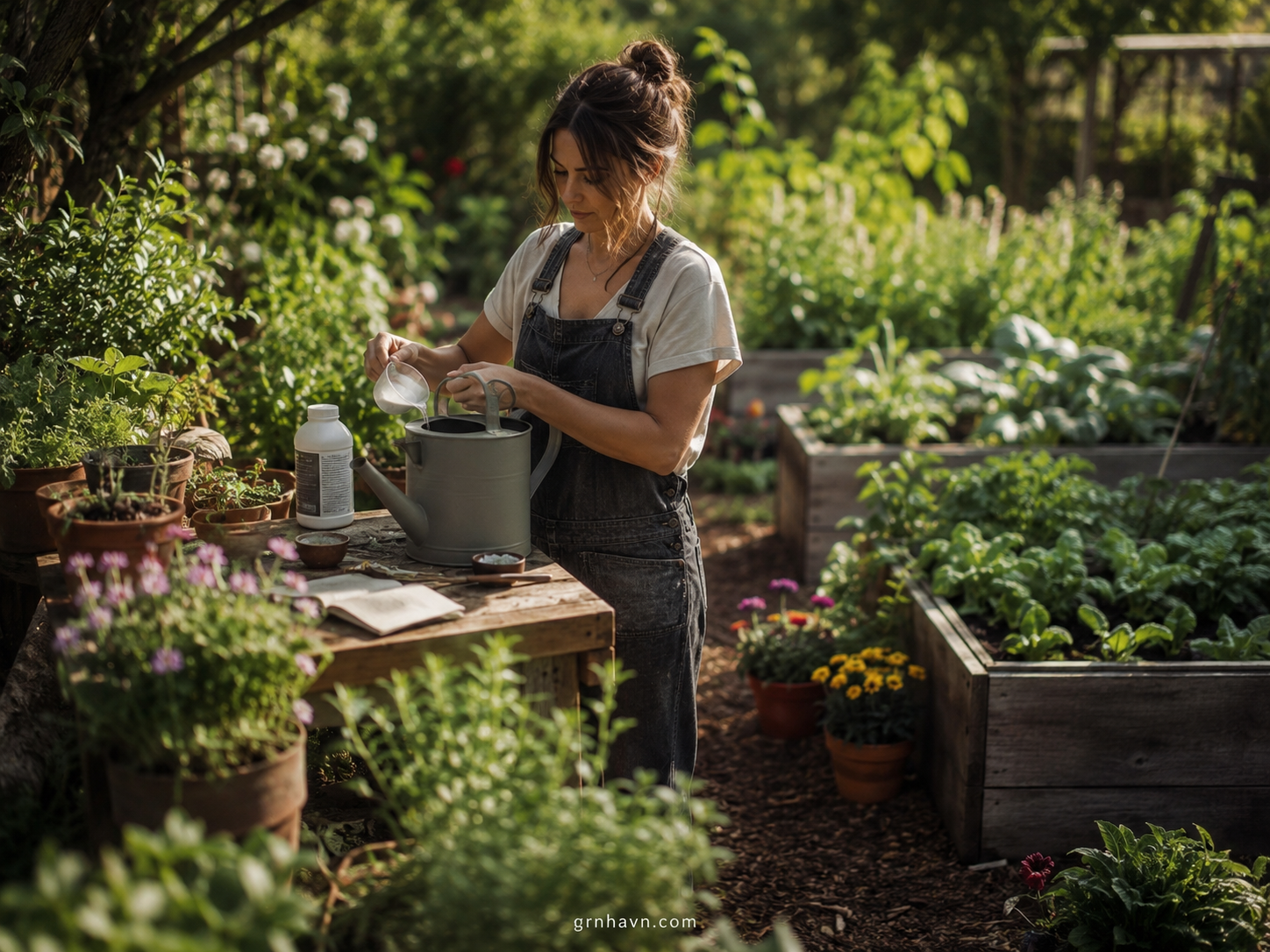
Promise from grnhavn.com
By the time you finish this guide, you’ll be able to read NPK meaning on any bottle, translate “tablespoons per gallon” into your own setup, and choose a dosing rhythm that fits USDA hardiness zones (or your local frost-date reality in Europe). You’ll also learn how to spot under-feeding vs fertilizer burn in pots—so you can adjust fast and keep your plants thriving.
Why Correct Fertilizer Dosing Matters
I’ll be honest: most fertilizer problems start long before the label. They start when we treat “plant food” like a one-time fix. But plants are living systems—so dosing is more like pacing a playlist than turning the volume up. When you nail the dose, you’ll see steady leaf color, consistent growth, and that confident “healthy posture.” When you don’t, your plant will tell you—sometimes quickly, sometimes painfully.
Over-fertilizing vs under-fertilizing: Overdoing it can stress roots and cause fertilizer burn, while under-dosing often shows up as pale leaves, slow growth, or a “stuck” look that makes you think nothing is working. The tricky part is that both can appear similar at first—especially in pots where nutrients and salts build up.
“The healthiest feeding plan feels boring—in the best way—because it’s consistent and correctly measured.”
Here’s what I’ve seen with container plants again and again: a few “extra” doses lead to salt buildup on the soil surface, then sudden brown leaf tips, yellowing, or leaf drop. It doesn’t mean you failed—it means your plant is reacting to excess salts and nutrient imbalance. That’s why fertilizer dosing isn’t just about “how much fertilizer to use.” It’s about how often, and how well your soil drains.
If you’re in the US, think in terms of USDA hardiness zones and when growth naturally speeds up. If you’re in Europe, use frost-date logic and temperature consistency—plants don’t care about calendars, they care about conditions. Feed when they’re ready, not when we’re impatient.
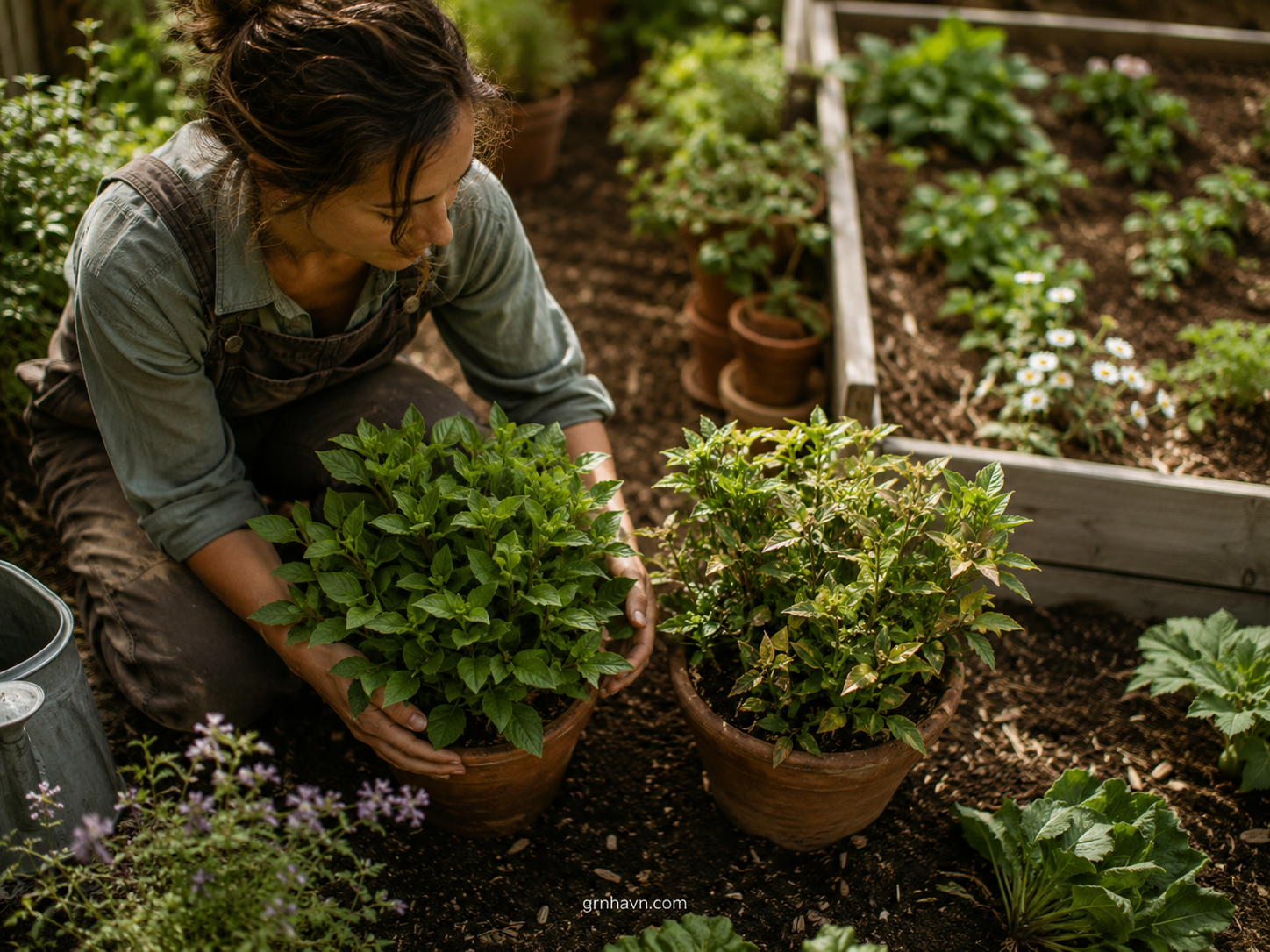
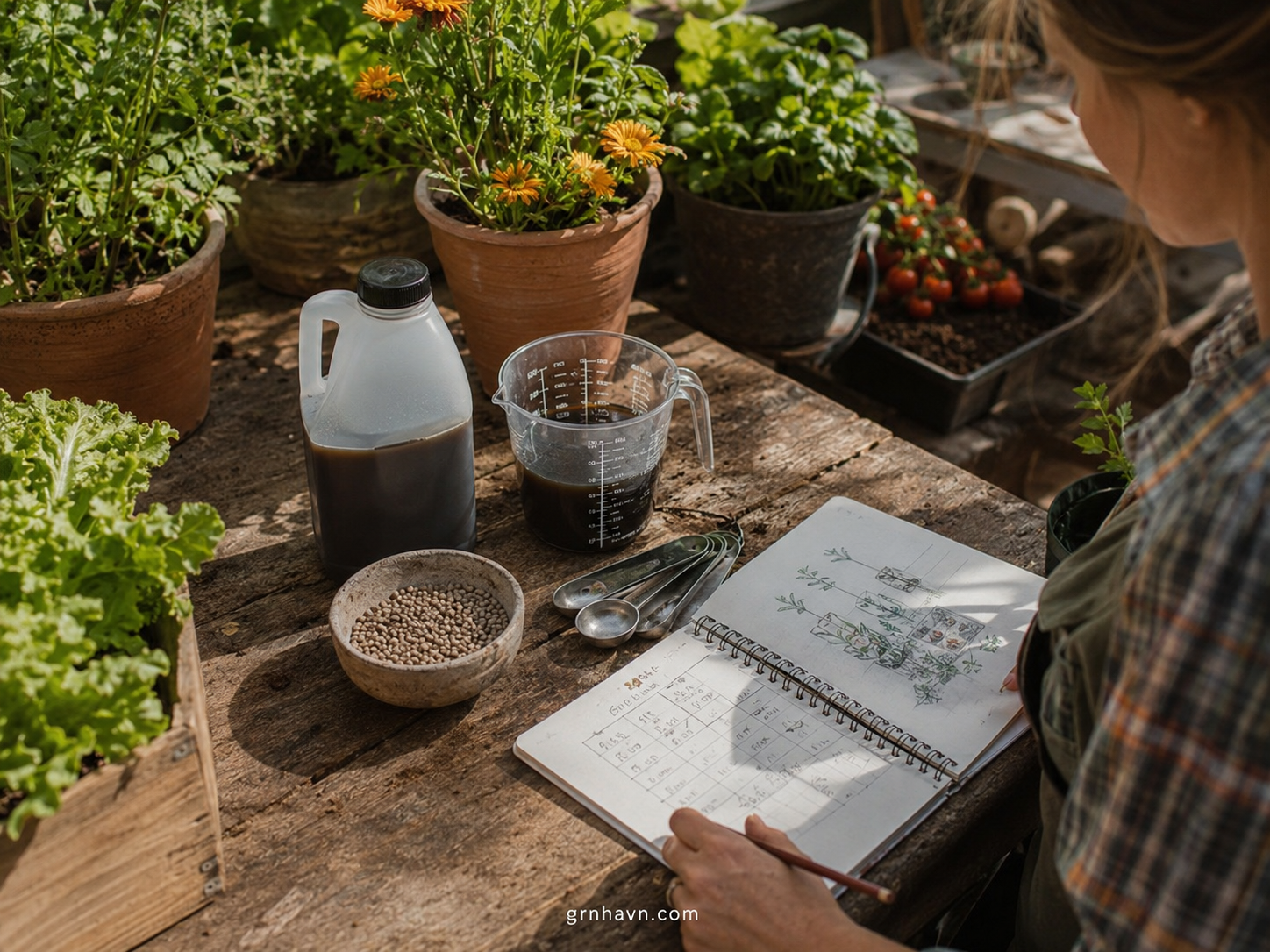
For measuring fertilizer accurately, you’ll usually find dosing tools locally at a garden center, hardware store, or nursery. If you shop online, choose tools designed for mixing and measuring, not random kitchen guesswork.
My beginner-friendly tip: pick a set with clear markings (mL and cups/spoons) so you can follow either “ml/L” or “tablespoons per gallon” labels without mental math. Small accuracy upgrades prevent big leaf heartbreak.
For fast, hassle-free online shopping, check the curated picks and comparisons below on Amazon.
Fertilizer Basics (NPK + Micronutrients)
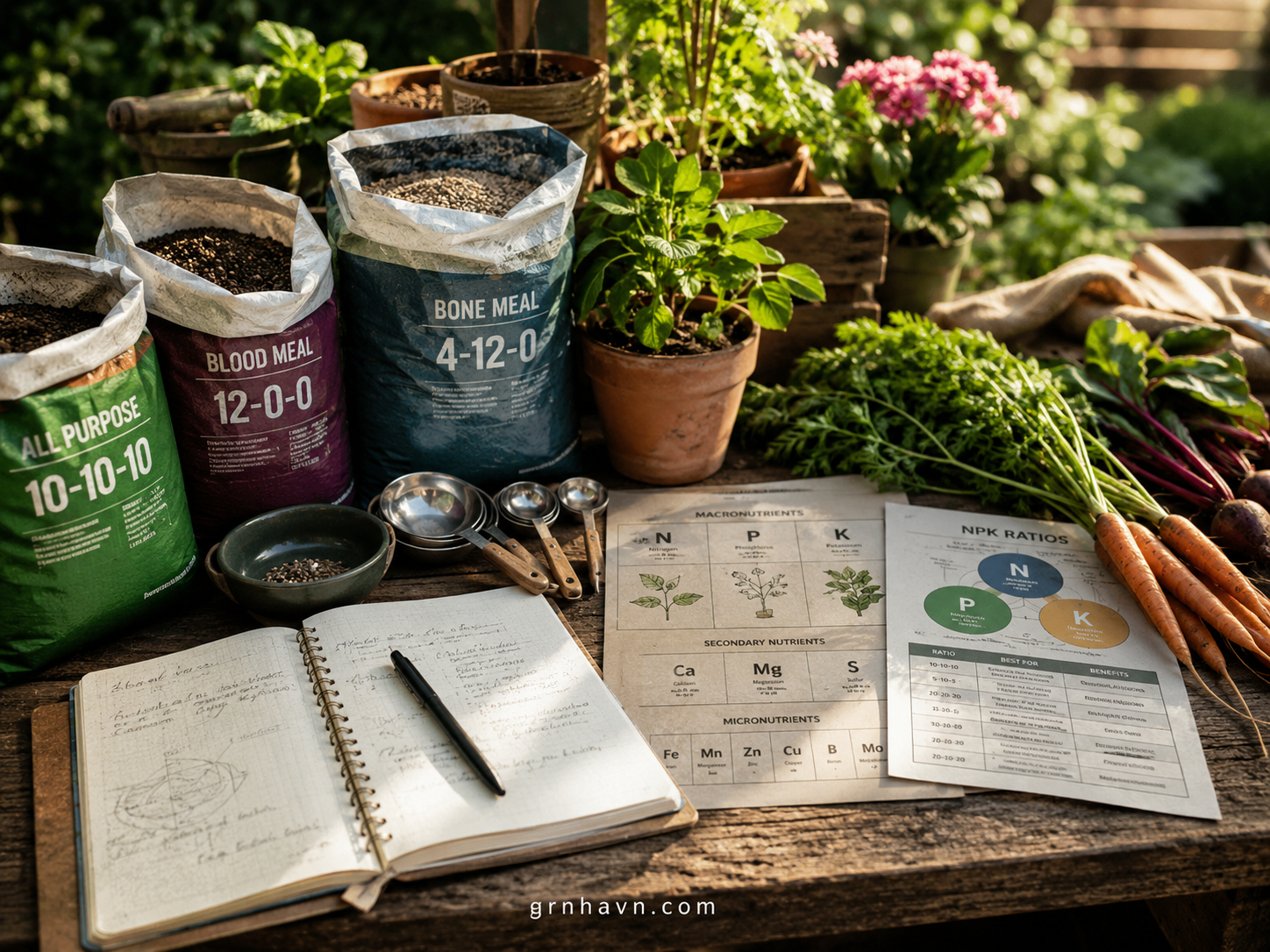
If fertilizer labels feel like a secret code, you don’t need to memorize everything—just learn how to ask the right question. The key that unlocks fertilizer dosing is the NPK number set: three values that tell you the main nutrient balance. And once you understand it, you’ll naturally learn how to fertilize plants based on what they’re trying to do right now.
What N-P-K means (Nitrogen, Phosphorus, Potassium):
N supports leafy growth (think green, lush, vigorous stems). P helps roots and flowering/fruiting energy (especially early establishment). K supports overall resilience and systems—water regulation, stress tolerance, and general plant “power.”
“When the label makes sense, dosing stops being scary—it becomes a skill you can repeat.”
Balanced vs high-nitrogen fertilizers: Balanced fertilizers (often around 3-3-3, 4-4-4, etc.) work well when a plant needs steady nutrition. High-nitrogen blends can be great when you want stronger foliage—but go too heavy, and you may get “leafy but not fruitful,” plus a greater risk of stress in containers.
Why micronutrients matter (iron, magnesium, zinc): NPK feeds the big headline nutrients, but micronutrients handle the quiet details. Iron helps prevent chlorosis (yellowing), magnesium supports chlorophyll, and zinc plays a role in growth hormones. That’s why many modern fertilizers include trace minerals—especially helpful when your soil isn’t naturally rich.
Step 1 — Identify Plant Type and Growth Stage
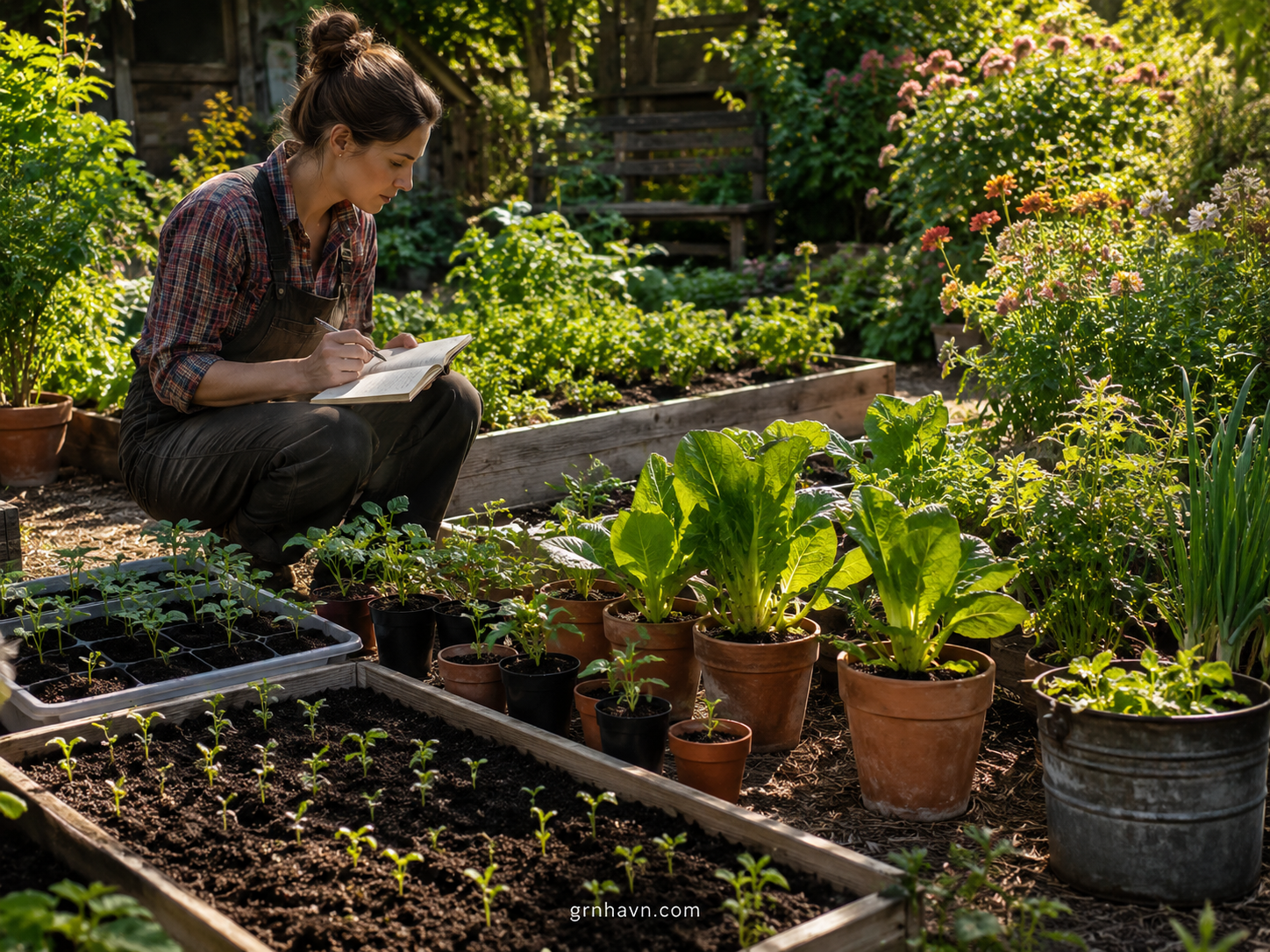
Here’s the most comforting truth: fertilizer dosing becomes easier the moment you stop treating every plant like it’s the same. Indoor plants live in a world of stable temperatures, steady light (sometimes), and slower seasonal swings. Garden plants experience real changes—day length, cooling nights, and dormancy cues. Your job is to feed based on where the plant is in its story, not where you are in your calendar.
Indoor foliage vs flowering plants:
Foliage-forward plants (like many houseplants and olive-adjacent companions) often benefit from steady nitrogen and balanced nutrients during active growth. Flowering plants (or fruiting herbs) usually need more support during bud formation—often shifting toward higher P/K or a bloom-friendly formula.
“A fertilizer bottle can’t see your plant—so you have to be the translator.”
Seedlings, newly repotted plants, and active growth: After repotting, roots are busy rebuilding. I typically avoid strong feeding immediately—especially in fresh potting mixes that may already contain starter nutrients. Seedlings are delicate: start low, observe leaf color, and increase only when growth proves it’s ready.
Seasonal feeding: spring/summer vs fall/winter: In the US, many gardeners track growth by USDA hardiness zones and temperature. In Europe, use frost-date logic and temperature consistency. When light drops and growth slows (often late fall into winter), reduce feeding. Overfeeding dormant-ish plants is a fast route to problems.
Step 2 — Choose the Right Fertilizer Type
The best fertilizer is the one that matches your plant’s life—and your life. Because the truth is, dosing is easier when the fertilizer form fits your routine. Over the years, I’ve found that gardeners do best when they pick a method they can consistently apply. Consistency is what prevents both underfeeding and “oops, I got carried away.”
Liquid fertilizers (water-soluble):
Liquids are perfect when you want control. Mix with water, feed at the label’s rate, and you’ll usually see quicker nutrient responses. For indoor plants, liquid feeding paired with regular light conditions can work beautifully—just dilute correctly and don’t force growth when days shorten.
Slow-release granules/pellets:
Granules/pellets are for folks who prefer “set a rhythm and relax.” They release nutrients over time, which can reduce dosing mistakes. However, in containers they can still build salts—so don’t ignore leaching/watering habits.
“Your plant doesn’t need a miracle—just a steady, measured offering.”
Controlled-release options:
These sit between liquid and slow-release granules. They can be excellent for gardens and larger containers where you want stable feeding. Always follow the label’s “when to apply” guidance.
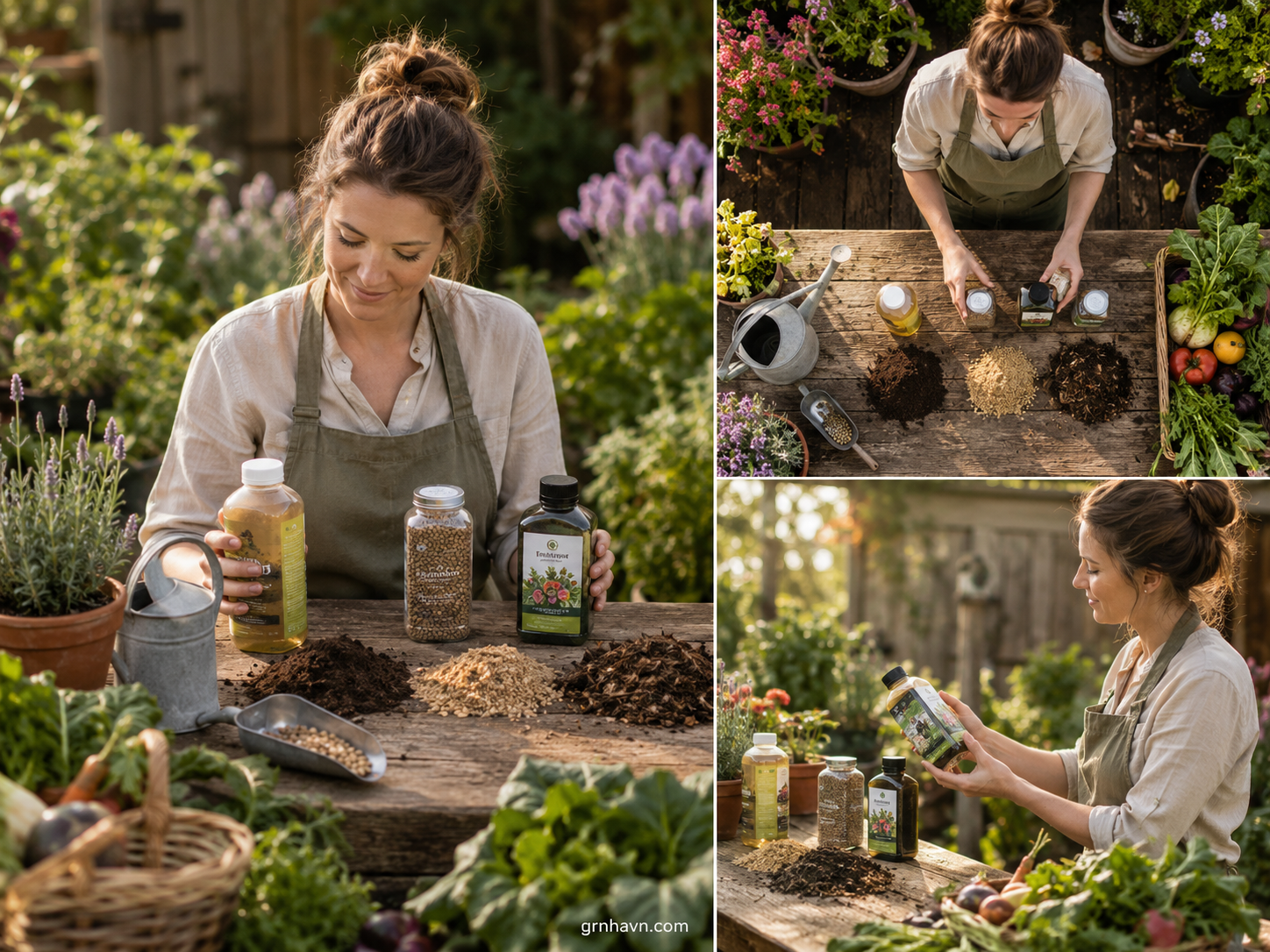
Organic fertilizers for home gardens and containers:
Organic options can be wonderful, but they’re not “automatically harmless.” Organic nutrient release depends on temperature, soil biology, and moisture. That means dosing still matters—just with a different pace.
Step 3 — Read the Label (US/EU Units)
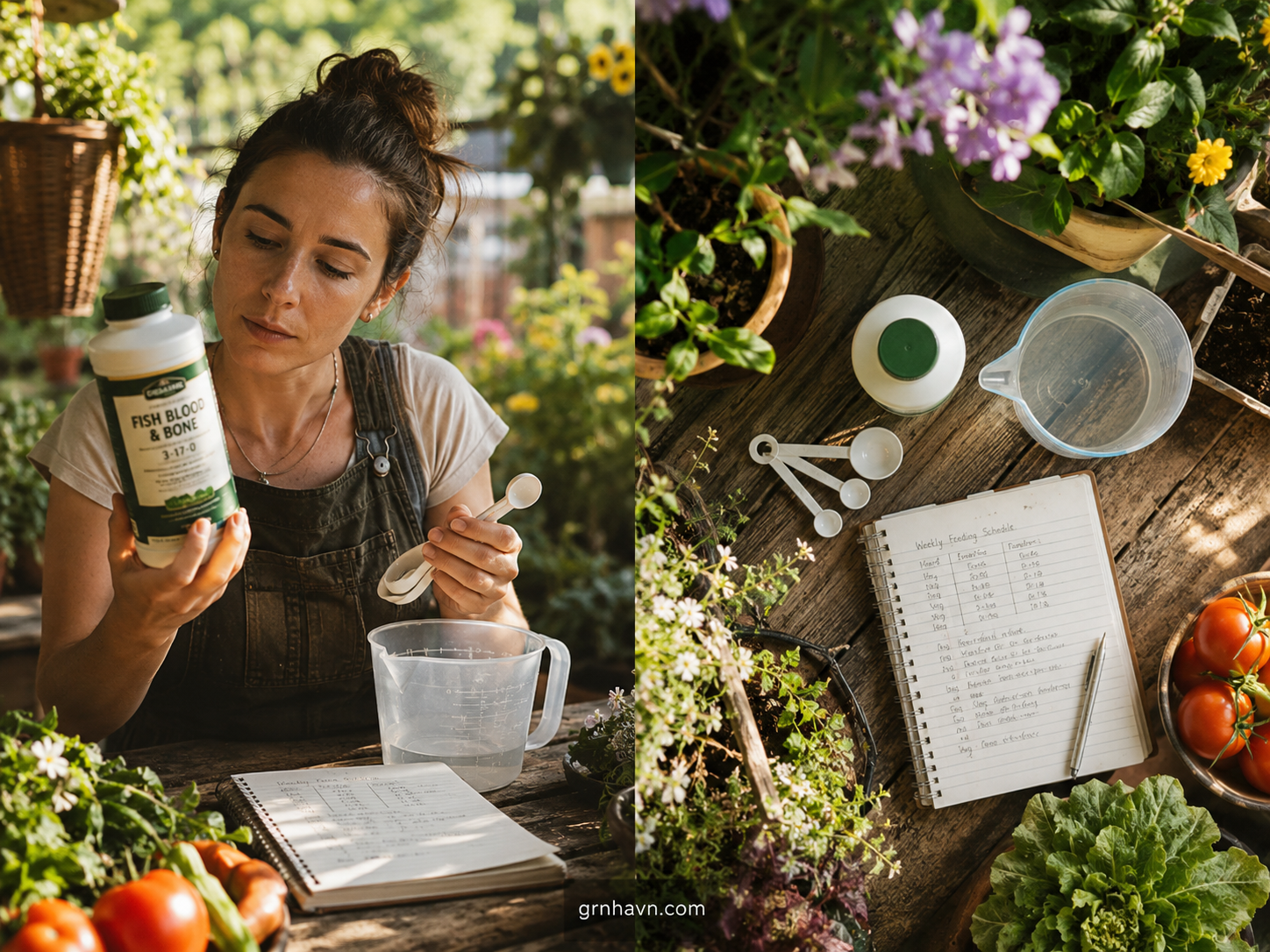
This is where fertilizer dosing becomes measurable—and therefore safe. Whether you’re reading US-style “tablespoons per gallon” or EU-style “ml/L,” you’re really doing the same task: converting the label’s recommended dilution into the volume you’re using.
“Tablespoons per gallon” and “ml/L”:
If the label says tablespoons per gallon, you can dose using your measuring spoons and your watering can volume. If it says ml/L, you can mix in liters and use a measuring cup for ml. The goal is accuracy—not speed.
“A label isn’t a suggestion—it’s a boundary. Your job is to stay inside it.”
How often to feed: dose rate + frequency:
Many labels provide both dose rate and a feeding interval (for example, every 2 weeks or monthly). In general, more frequent feeding at a lower dose is often gentler for plants—especially in pots. For USDA-like seasons and Europe frost logic: feed during active growth, and reduce when light and temperatures drop.
My practical opinion: for beginners, always “start low and observe.” That means using a slightly reduced dose for the first 1–2 feedings, then adjusting based on leaf color and growth speed. Plants are amazing at telling you what they need—if you’re listening.
Step 4 — How to Dose in Garden Beds (In-Ground)
Garden beds are forgiving in a way pots aren’t. Soil volume dilutes fertilizer, and rainfall helps move nutrients through the root zone. But “forgiving” doesn’t mean “ignore dose.” In-ground plants can still get stressed—especially in compacted or dry soil. My favorite approach is calm, split application: feed a little, then feed again later if the plant responds well.
Start-low dosing and split applications:
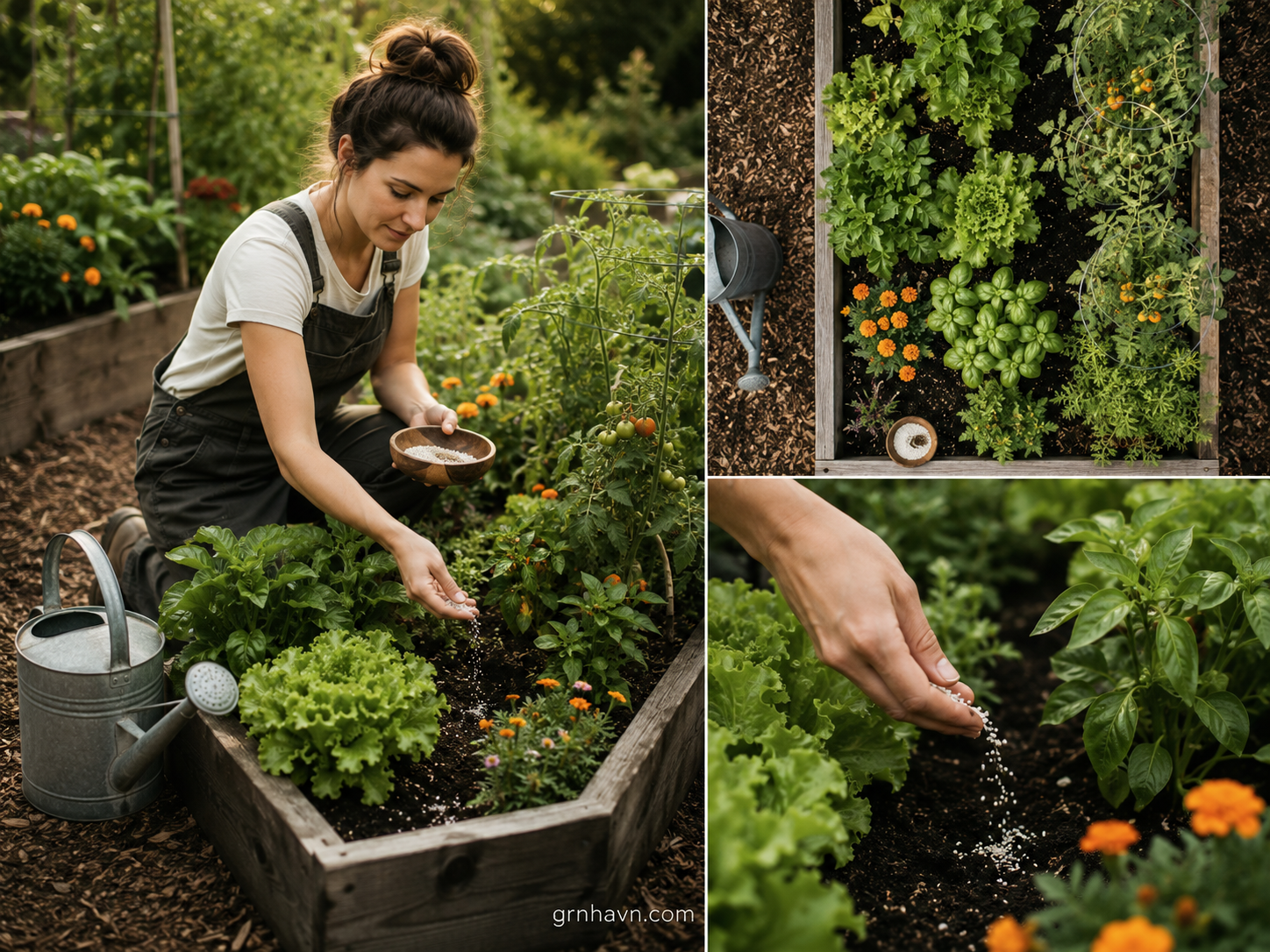
Begin with the label’s lower end or a slightly reduced rate, especially if you’re working with young plants or newly established beds. Then split the application over time. This reduces the chance of salt concentration and keeps nutrients available when roots can use them.
“Think of garden feeding like watering seeds—gentle, steady, and timed to help.”
Distance from stems + watering after application:
Avoid direct contact with stems and foliage. Spread fertilizer into the soil area where roots are likely to be (often a bit beyond the plant’s main stem). After applying granular fertilizer, water thoroughly to move nutrients into the soil—especially in warm, sunny weather when dryness can “lock in” salts.
US gardeners can use zone timing to align with growth spurts. Europe gardeners can align with temperature consistency and frost risk. The rule stays the same: feed when plants are actively growing, not when they’re barely awake.
Step 5 — How to Dose in Pots (Indoor Plants)
Pots are where most people learn the hard way—because containers behave differently. In a garden bed, nutrients and salts disperse into a large soil volume. In pots, everything concentrates faster. That’s why fertilizer dosing for indoor plants is usually more “less often but correctly.”
Why containers burn faster:
Limited soil volume means a strong feed can raise nutrient salts quickly around the roots. Over time, repeated dosing without adequate watering/leaching can lead to salt buildup and nutrient imbalance. The result can be brown leaf tips, yellowing, or a plant that looks “okay-ish” until it suddenly doesn’t.
“Indoor plants don’t want more— they want gentler, measured care.”
Dilution and “less often but correctly” feeding:
For many houseplants, I recommend diluting below the label’s maximum first. If the label says a stronger rate, start at a reduced dose, then increase only if growth is steady and leaf color remains healthy. Also, feed when light is supportive (spring through early autumn in many climates) and ease off during low-light months.
If you’re caring for olives or evergreen companions: be extra patient. Slow growers often need fewer nutrients than you’d expect. Your job is to encourage without forcing.
Fertilizer Dosing Methods (Pick Your Approach)
Once you understand label rates, you can choose how you want to dose. Different methods feel different in real life. I like offering options because it reduces the “I don’t know where to start” feeling. Choose the method that matches your schedule and plant type—and then keep it simple.
Dilution method (liquid fertilizer):
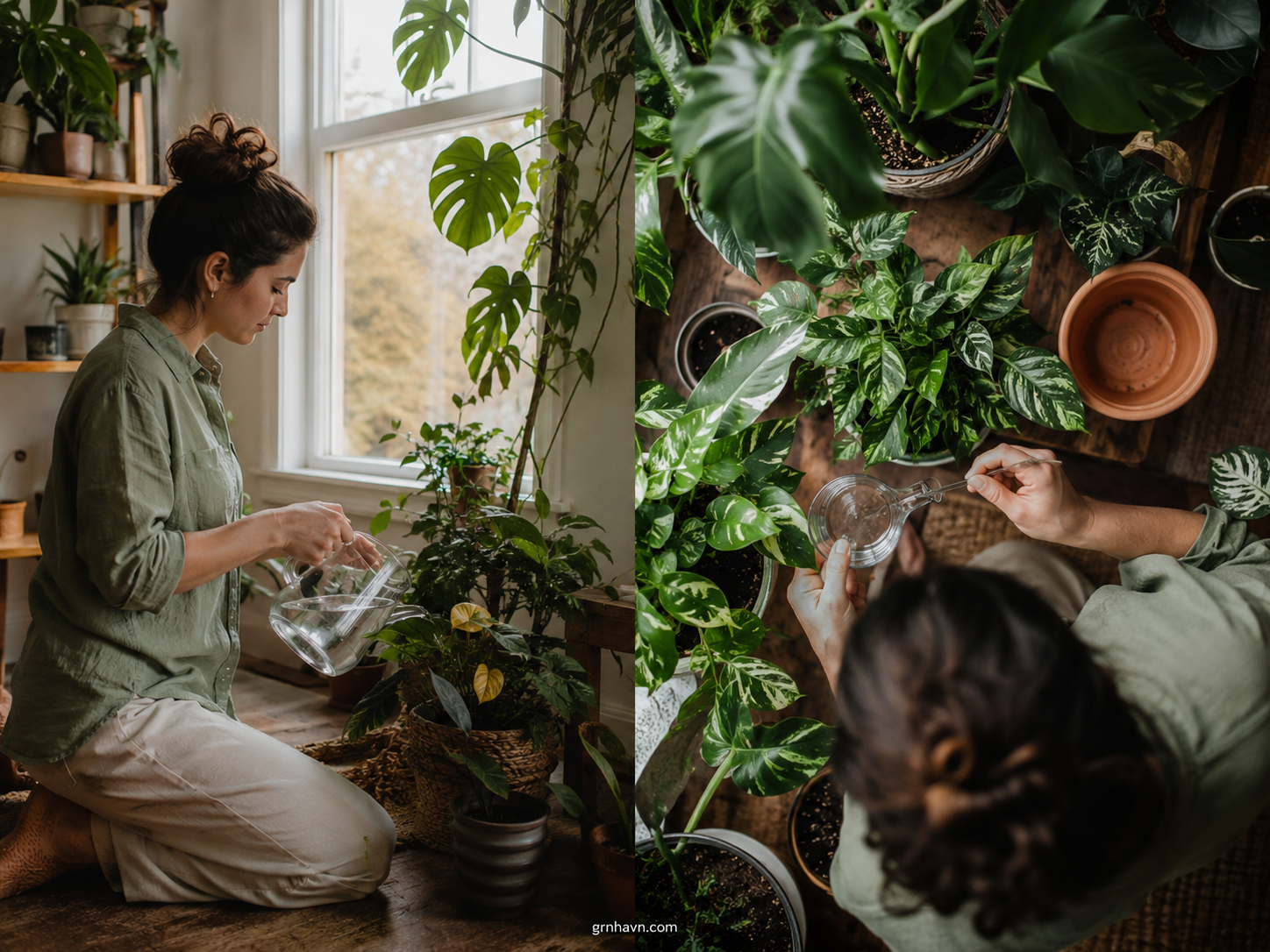
Mix to the label’s ratio (ml/L or tablespoons per gallon), then apply evenly to moist soil. This method is great for indoor plants because you can control strength and frequency. If you see stress, reduce concentration next time.
Granules/pellets method:
Use the label’s recommended amount per plant or per area. Spread evenly, keep away from stems, then water thoroughly. For pots, granules can still cause salt buildup—so follow a conservative approach and watch the soil surface over time.
“The best dosing method is the one you’ll repeat without panic.”
Area-based dosing for gardens (sq. ft.):
Many garden fertilizers list amounts per square foot. If so, measure your bed size in square feet (or convert to square meters if your label uses EU units). Then apply evenly and water in. Split if you want extra safety—especially for heavy feeders or sandy soil that drains quickly.
Troubleshooting Guide
Troubleshooting isn’t failure—it’s information. Plants speak in patterns: color, edges, growth speed, and leaf texture. When you learn what “symptoms” match what kind of dosing issue, you can correct fast and keep the plant moving forward.
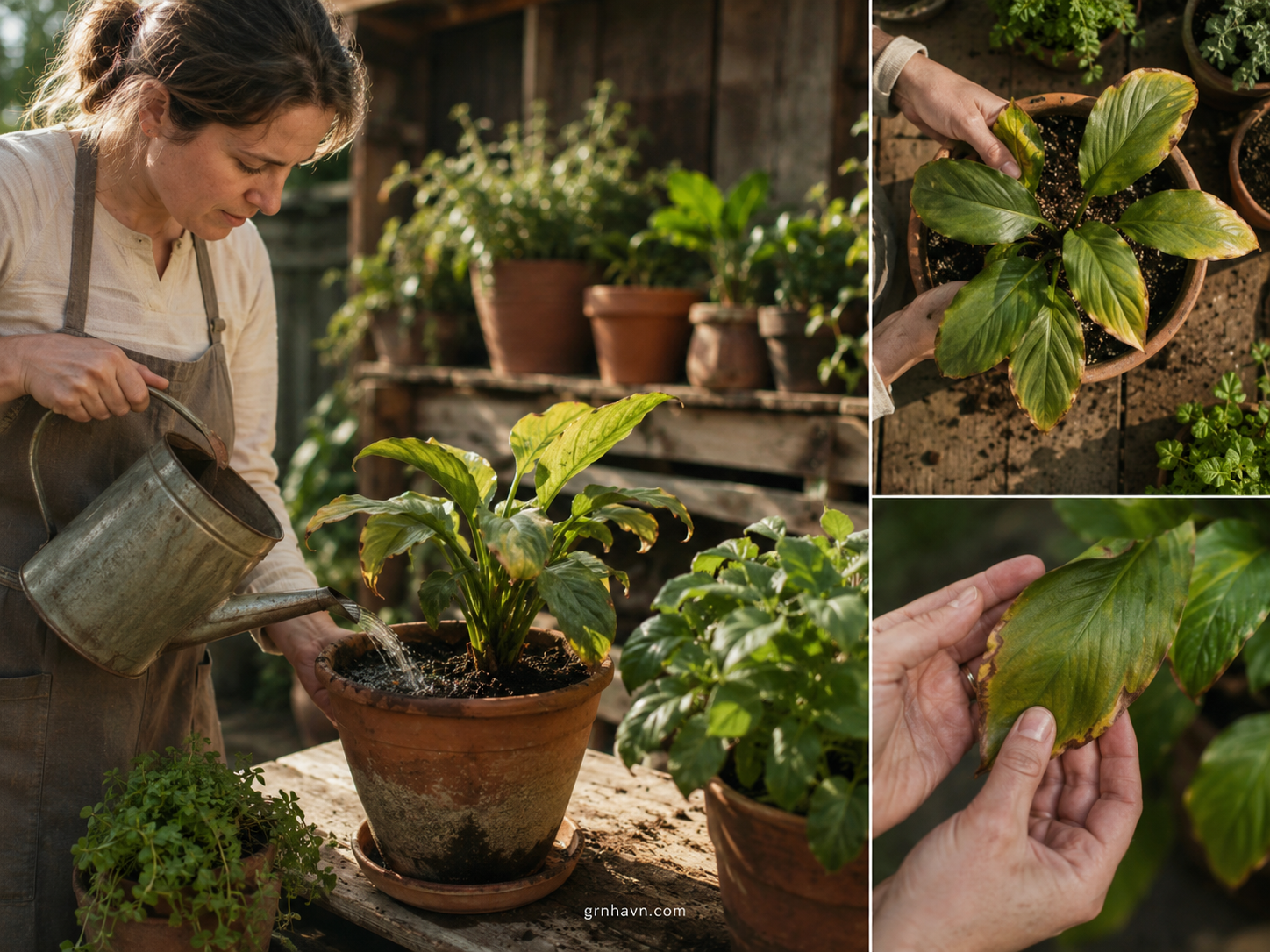
Yellow leaves after fertilizing:
Yellowing can be a sign of nutrient imbalance, root stress, or salts—especially in pots. If the yellowing started after feeding, pause fertilizer, check moisture levels, and consider flushing (watering deeply to remove excess salts).
“If the plant looks unhappy after feeding, your next dose should be gentler—not bolder.”
Brown leaf tips/edges (fertilizer burn):
Brown tips often point to fertilizer burn or salt buildup. I usually recommend stopping feedings temporarily and ensuring the pot has proper drainage. If you suspect heavy buildup, flush the soil with clean water and let it drain fully.
Slow growth despite feeding (wrong stage/light/root issues):
Sometimes the issue isn’t the fertilizer—it’s the conditions. Low light reduces nutrient uptake. Root problems reduce absorption. And feeding during a low-growth period can look like “nothing works.” Check light, watering habits, and whether the plant is in a growth window (spring/summer for many climates).
Conclusion
If you only keep one idea, let it be this: the safest approach to how to dose fertilizer for plants is label + start low + observe + adjust. You’re not trying to force instant results—you’re building a relationship with your plant’s pace. The “best friend” version of fertilizing is measured, kind, and responsive.
The safest dosing formula: follow the label rate, use a beginner-friendly starting point, then check the plant after each feeding window. If you see healthy new growth, keep the rhythm. If you see stress, reduce concentration and slow down frequency.
“Plants remember your consistency more than your intensity.”
What not to do? Don’t overdo it “just because.” Don’t keep feeding late into low-light months. And don’t ignore basics like watering habits, drainage, and whether the plant is actually in an active growth stage. Overwatering + fertilizer mistakes can create a double problem.
Case-study style (from what I see most often): indoor gardeners who switch from “strong dose every week” to “diluted feed, then observe” usually recover faster. Gardeners who split applications also avoid sudden stress in hot weather. The pattern is always the same: controlled inputs, clear observation, and quick adjustment.
Final verdict from my perspective: if you want reliable results—especially with containers—dose gently, water correctly, and let your plant tell you the truth.
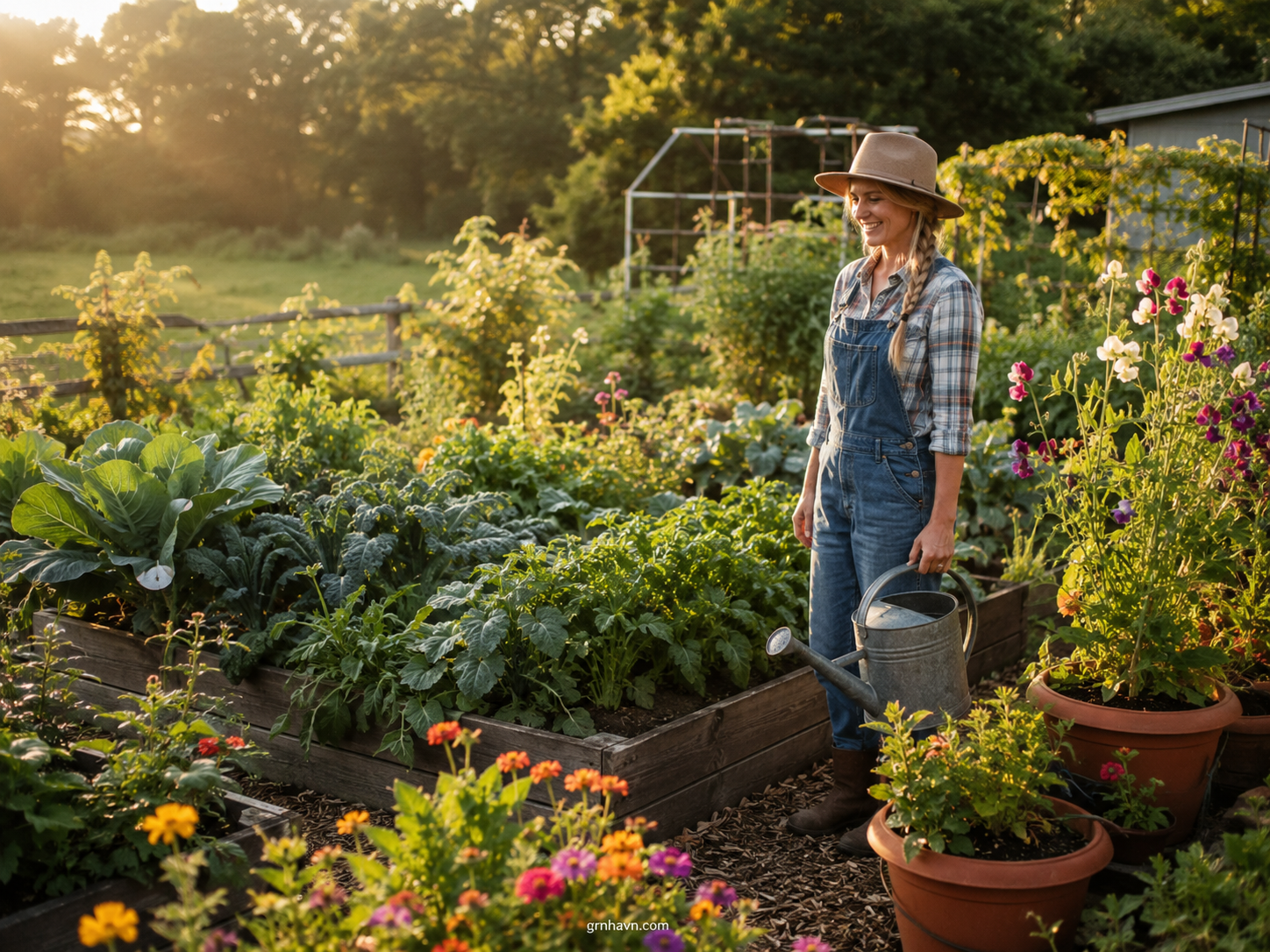
Before you go, take a breath—because you don’t need to be perfect to be successful. Use the label, choose a method that fits your routine, and remember that plants grow in seasons (and in light). When you do that, fertilizer dosing becomes less of a test and more of a steady care ritual.
FAQ: Fertilizer Dosing Questions (Indoor + Garden)
1. How do I know how much fertilizer to use for my plants?
Start with the label rate, then adjust for your plant’s growth stage. For beginners, start low (lower end of the label) and observe leaf color and growth over the next 1–2 feedings.
2. What does N-P-K mean on a fertilizer label?
N-P-K stands for Nitrogen, Phosphorus, and Potassium. These numbers describe the main nutrient balance that supports leaf growth, roots/flowering, and overall plant strength.
3. Is fertilizer dosing different for indoor plants vs garden beds?
Yes. Pots concentrate nutrients faster, so indoor dosing is usually gentler and less frequent. In-ground beds dilute nutrients and can rely more on rainfall to help move them into the root zone.
4. How often should I fertilize plants in general?
Follow the label’s frequency and match it to active growth. In most climates, feeding is stronger during spring/summer and reduced during fall/winter when light and growth slow down.
5. Can I over-fertilize plants even if I dilute the fertilizer?
Yes. Even diluted feeding can still build salts and imbalance if you feed too frequently or if your pot drains poorly. Dilution helps, but frequency and soil conditions matter too.
6. What are the signs of under-fertilizing vs over-fertilizing?
Under-fertilizing often shows slow growth, pale leaves, or reduced vigor. Over-fertilizing commonly shows leaf edge/brown tips, yellowing after feeding, and stress in containers.
7. What is the safest fertilizer dose for beginners?
Use the label’s lower end, or start with a reduced concentration for the first 1–2 feedings. Then increase only if your plant shows healthy new growth.
8. What should I do if I suspect fertilizer burn?
Pause fertilizer, ensure proper drainage, and flush the soil with clean water if salts seem likely. Remove badly damaged leaves if needed, but focus on correcting the cause.
9. Do I need to water after applying granular fertilizer?
Often, yes. Watering helps move nutrients into the soil and reduces salt concentration on the surface, especially in warm weather.
10. Should I fertilize after repotting?
Usually not immediately. Fresh potting mixes may contain starter nutrients, and newly disturbed roots need recovery time. Wait until the plant shows active growth again.
11. How do I choose between liquid fertilizer and slow-release fertilizer?
Choose liquid if you want precise, repeatable control. Choose slow-release if you prefer stable, gentler feeding—just still monitor containers for salt buildup.
12. What nutrients do plants need besides NPK?
Plants also need micronutrients like iron, magnesium, and zinc, plus supportive elements depending on soil and species. Fertilizers often include trace minerals for completeness.
13. How do soil pH and light affect fertilizer results?
Soil pH influences nutrient availability, and light affects nutrient uptake. Even the perfect fertilizer can fail if light is too low or pH prevents nutrient absorption.
14. Is organic fertilizer dosing the same as synthetic fertilizers?
The label still matters. Organic fertilizers may release more slowly and depend on temperature and soil biology, but dosage and timing are still key.
15. What’s the best time of day to fertilize plants?
Feed in the morning or early afternoon to support proper absorption and reduce stress. Avoid mid-day heat in gardens; indoor plants benefit from stable conditions.
Final verdict: when you treat fertilizer dosing like a caring ritual—measure gently, feed during active growth, and watch your plant’s feedback—you stop living in “maybe” and start seeing real results. In my experience, the happiest plants belong to people who started with the label, went a little easy at first, and adjusted like they were learning a language. That’s what makes you not just successful… but confident.
Ready To Dose With Confidence?
Use the printable checklist below and take one careful feeding step today. Your leaves will notice.
✅ Printable Checklist: Fertilizer Dosing (Indoor + Garden)
Your safe dosing steps
- Read the label first: note the NPK, dose rate, and frequency.
- Match the growth stage: feed only when the plant is actively growing.
- Start low (beginner rule): use the lower label range for the first 1–2 feedings.
- Use the right method: liquid dilution for control, granules for steady release.
- In-ground beds: split applications and water in after granules.
- In pots: dilute more, feed less often, and watch for salt buildup.
- Avoid direct stem contact: spread fertilizer where roots are, not on the plant.
- Observe after dosing: healthy leaf color + new growth = keep rhythm.
- If you suspect burn: pause feeding and flush/ensure drainage.
- Season timing: align with USDA hardiness zone growth (US) or frost/temperature logic (Europe).
- Never “make up” for slow growth: check light and roots before increasing fertilizer.
Note: This checklist is a starting point. Always follow your fertilizer label’s specific guidance for best results.