When and How to Winterize Garden Beds — The Complete Guide
“Winter doesn’t take away your garden—it just teaches it to rest with intention.”
How to winterize garden beds is one of those quiet, caring skills that makes spring feel almost unfair—in the best way. I learned this the hard (and beautiful) way after watching a few raised beds struggle under late cold snaps. The problem wasn’t my plants; it was timing, soil protection, and the cover materials I chose without thinking through the weather cycle. Raised beds behave differently than in-ground gardens, and flowers are especially honest about what you did (or didn’t) do.
In this guide, I’ll walk you through the practical steps I rely on—mulch thickness, whether to cover, how to prep garden soil for winter, and how to avoid the “overwatering/late pruning” mistakes that quietly set you back. I’ll also help you translate your local conditions using USDA hardiness zones and frost-date logic—and I’ll include Europe-friendly temperature thinking too. We’ll use both inches + centimeters and °F + °C so you can act confidently no matter where you garden.
What You’Ll Get From This Guide (My Best-Friend, No-Fluff Promise)
Quick facts before you start
-
Key idea: Winterization is about steady protection, not constant tinkering.
-
Raised beds: They drain fast—so they can dry out even in “cold” weather.
-
Colorado note: Early freeze + thaw cycles are brutal—plan for swings.
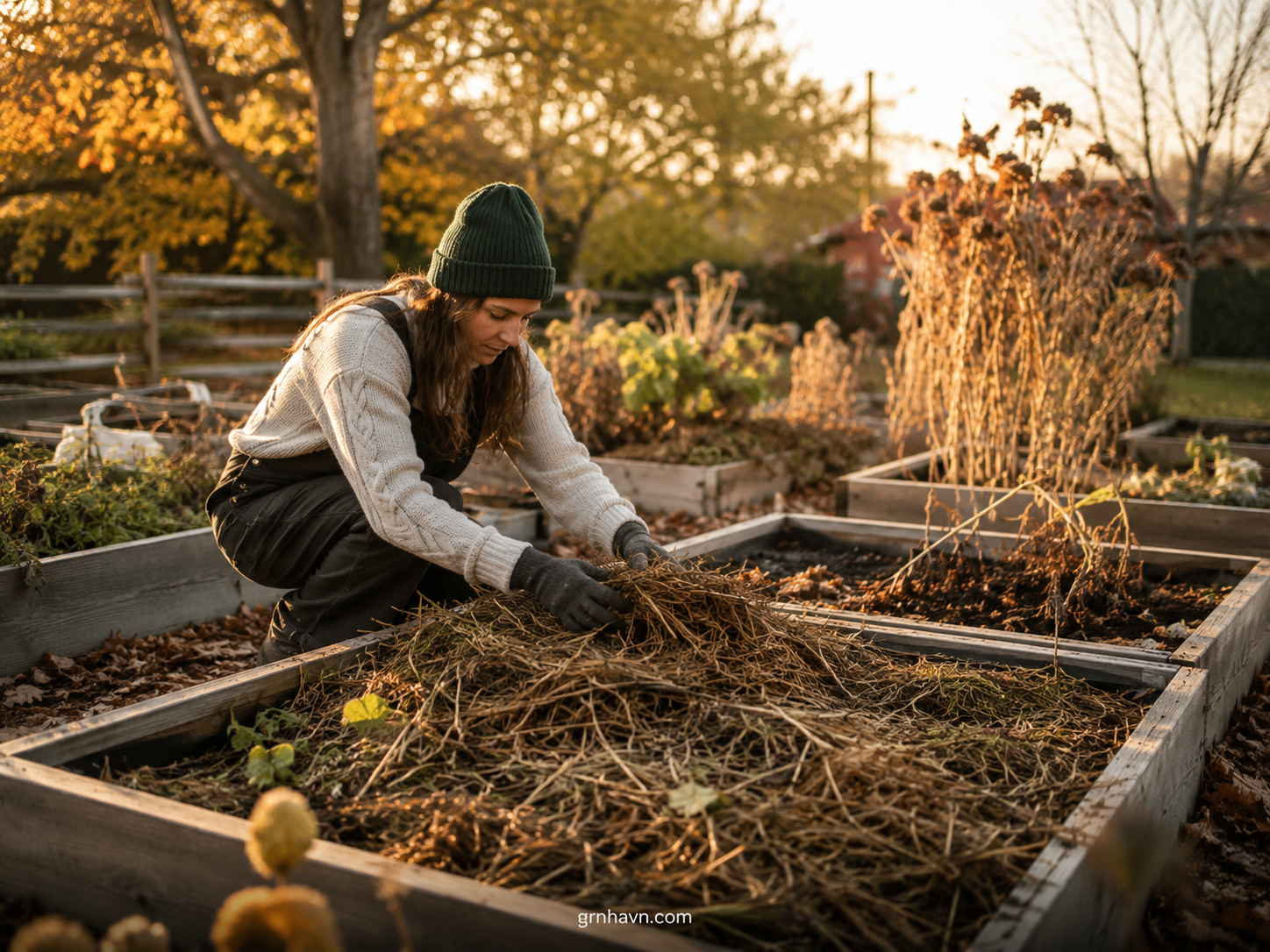
How To Winterize Garden Beds (Start With The Rhythm, Not A Checklist)
If you’ve ever looked at your garden in late fall and thought, “What do I even do now?”—you’re not alone. I used to rush. I’d add too much, remove too late, and then wonder why spring felt smaller than it should. The calmer truth is this: how to winterize garden beds is really about protecting the living systems you can’t see.
Beds in cold climates don’t just “go dormant.” They cycle through drying winds, temperature dips, freeze-thaw stress, and soil shrinkage. Your goal is to keep temperature swings gentler, reduce bare-soil erosion, and prevent the crown roots (especially on flowers) from getting battered. In a raised bed, the stakes feel higher because the soil volume is smaller— it warms and cools faster.
“Winter care is quiet devotion—done once, done well.”
My approach is simple: I plan protection in layers—soil prep first, then mulch or cover, then a final “hands-off” phase once the weather stabilizes. That means you’ll know exactly when to stop adjusting and let the garden rest.
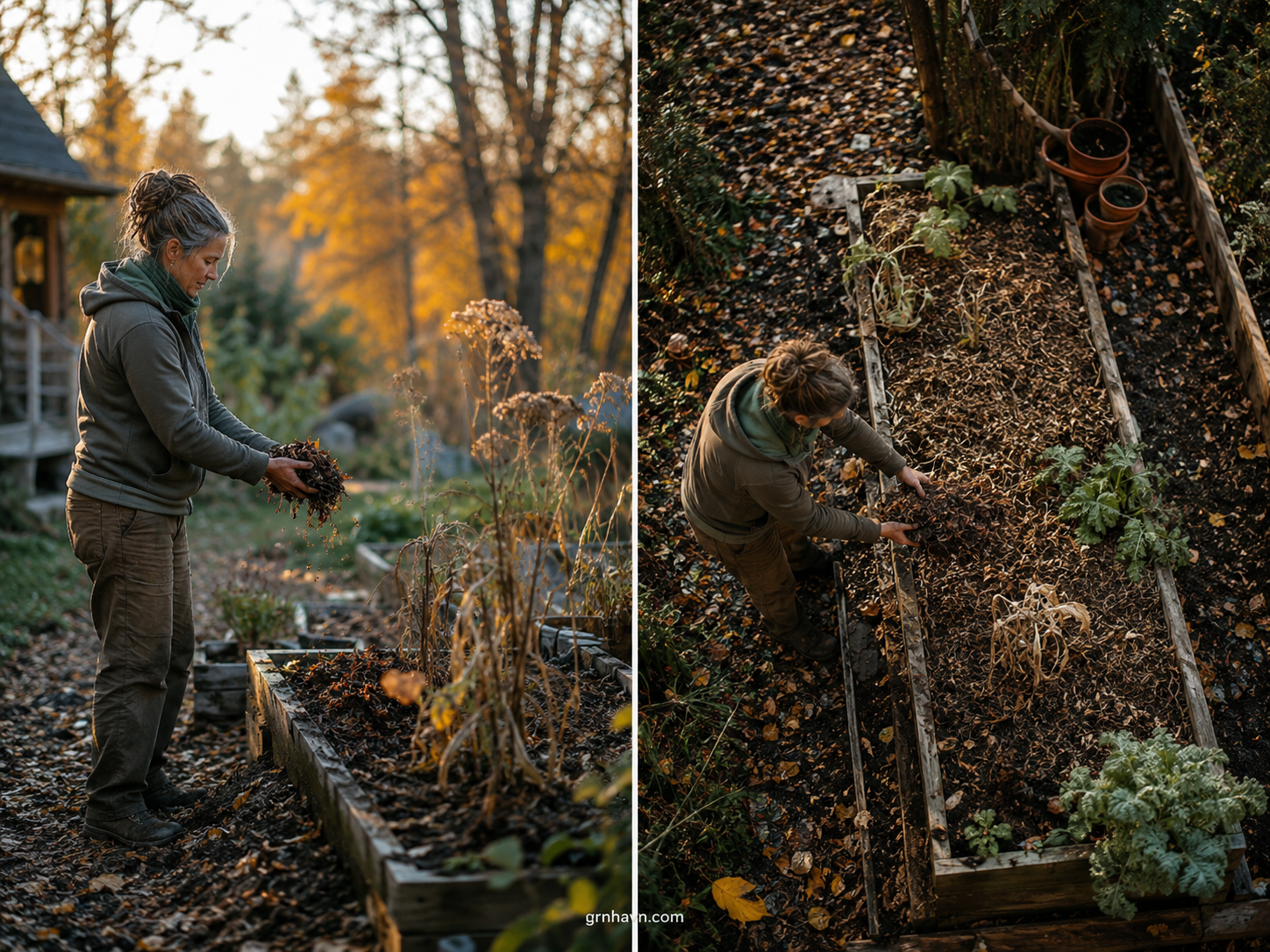
How To Winterize Garden Beds In Winter (Timing Using Usda + Frost-Date Logic)
The most important part of timing isn’t the month—it’s the pattern. A late warm spell can trick plants into growing, then a sudden dip can hurt tender crowns and new growth. That’s why I rely on two anchors: USDA hardiness zones (for America) and frost-date logic + seasonal temperature thinking (for Europe).
In the US, gardeners often start winter prep around when average nighttime temps hover close to freezing and you’re approaching your region’s first frost window. A practical rule I use: aim to mulch/cover after a couple of light frosts, not immediately at the first hint of cold. For many beds, that lands roughly in late fall—but it varies by zone. In Europe, think similarly: if you see nights hovering around 30–32°F (-1 to 0°C) and frosts are frequent, it’s usually time to protect.
“The best winterization happens at the moment your garden stops negotiating with autumn.”
Colorado readers: frost swings can be dramatic. If you’re in a zone with fast freeze-thaw cycles, plan a “stability-focused” approach— which we’ll do in the Colorado section. The goal is not to keep the soil warm forever; it’s to keep it from freezing hard, thawing wildly, and repeating that stress loop.
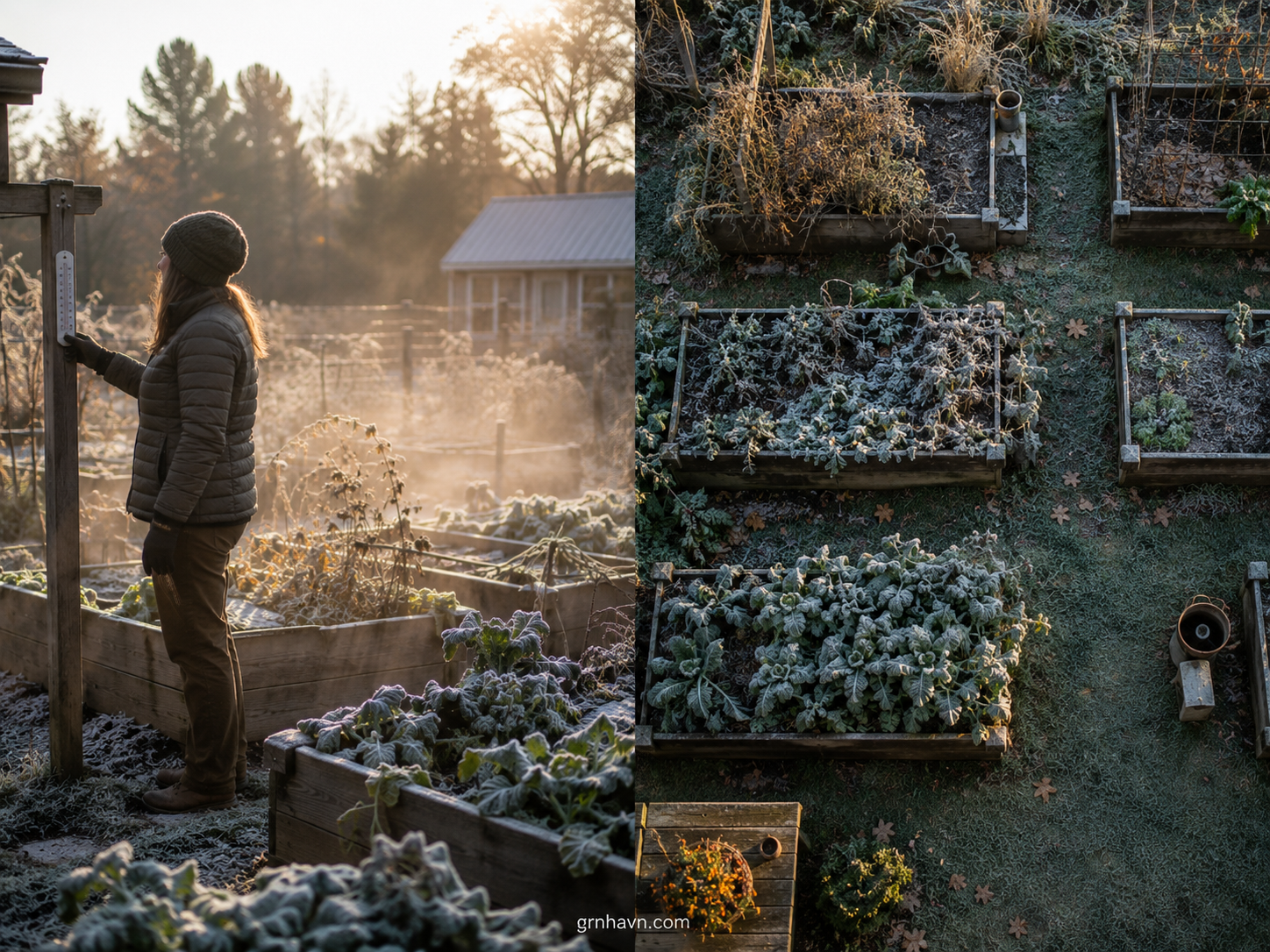
How To Winterize Your Garden Bed (Soil Prep That Supports Spring)
This is the part where people often get tangled. They either “fix everything” in November… or they do nothing. For how to winterize garden soil, I recommend a gentle, restorative approach: clear only what needs clearing, avoid heavy disturbance, and add thoughtful organic protection.
Here’s a simple sequence I’ve used successfully across raised beds and flower beds: remove dead plant matter that’s clearly diseased, then leave healthy stems and roots alone if they’re providing natural structure. Next, top-dress with compost or a soil-safe organic layer. If you’re thinking “preparing garden soil for winter,” the real win is protecting your bed surface from erosion and keeping soil life active rather than repeatedly freezing and drying bare.
Then mulch: aim for about 2–3 inches (5–8 cm) of insulating material. If you’re using lighter, airy mulches, you may need slightly more. If you use heavier materials, don’t bury crowns—especially for flowers. Think “blanket,” not “lid.”
“Soil doesn’t need drama. It needs consistency and a little cover.”
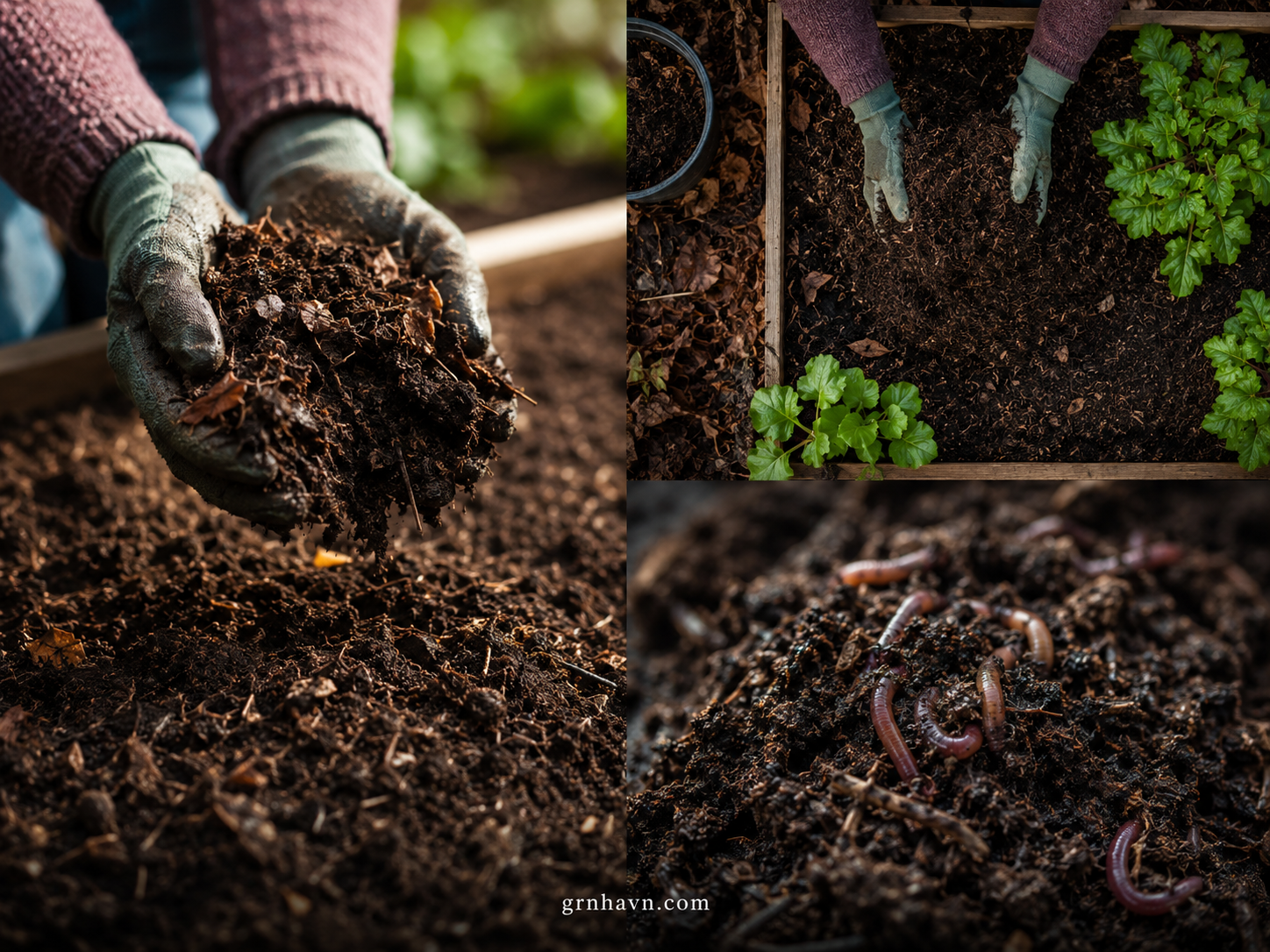
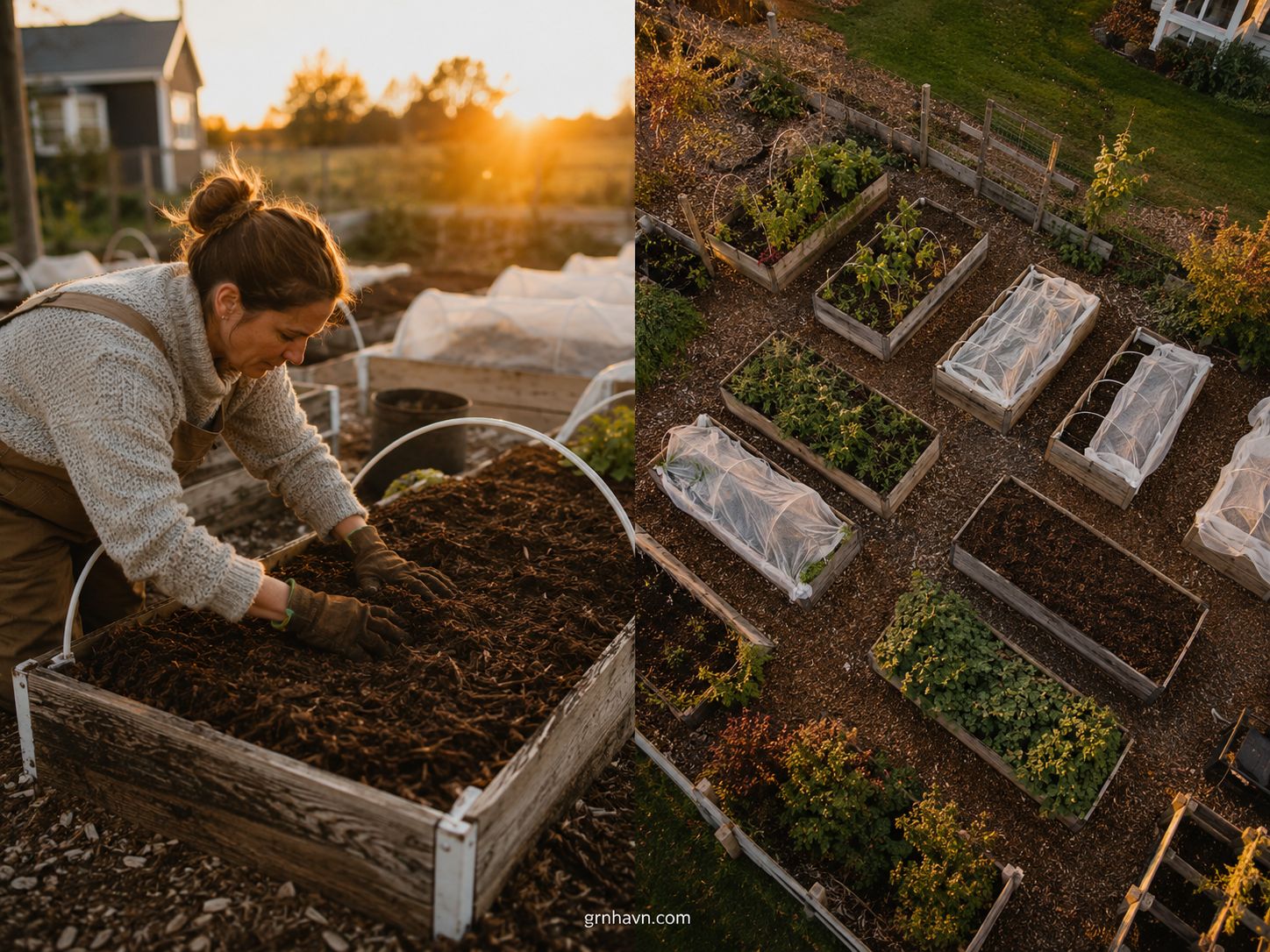
How To Winterize Raised Garden Beds (Because Drainage Changes Everything)
Raised beds are like containers with a personality: they warm sooner in spring, drain faster in storms, and dry out quicker in cold wind. That’s why how to winterize raised garden beds means protecting against drying as much as protecting against cold.
Step-by-step, here’s how I do it: (1) after the first meaningful frosts, top-dress compost, (2) apply mulch at 2–3 inches (5–8 cm), and (3) cover with a breathable option if your winters are harsh or windy. If you use a cover, prioritize airflow—think “protection,” not “plastic steam chamber.”
In my own garden, the beds that bounced back the most in spring were the ones where I avoided overwatering right before freezes. Water is helpful when it’s stable; it’s harmful when it becomes a freeze-thaw rollercoaster inside the bed. So I water lightly only if the soil is dry going into cold stretches (and always allow proper drainage).
“A raised bed doesn’t want to be rescued. It wants to be insulated—gently.”
You can usually find good winter mulches and cover supplies locally at a garden center, home improvement store, or even a grocery store seasonal aisle. Quick practical tip: when choosing mulch, pick something that won’t mat completely (so air can move) and aim for 2–3 inches (5–8 cm) around plants—avoiding crowns.
If you want alternatives, check nursery shops, local markets, hardware stores, or Facebook Marketplace for second-hand frost cloth/row cover. You may also need garden ties or staples to secure edges, plus a small container for keeping mulch dry until application.
Prefer online speed? You can compare options on Amazon, or use the product comparison list below for quick, hassle-free selection.
How To Winterize Flower Beds (Protect Blooms Without Smothering)
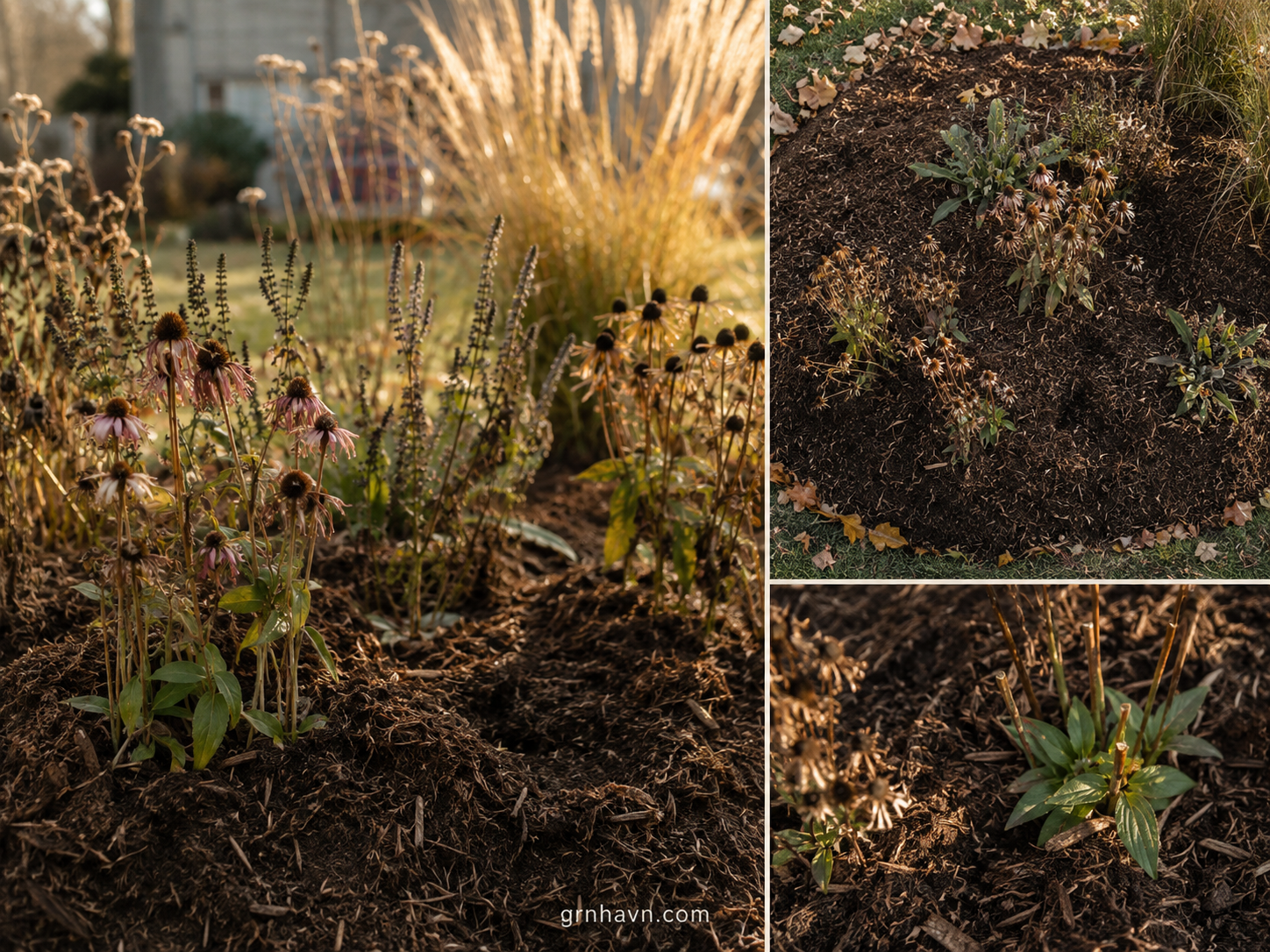
Flower beds are where I personally slow down. Not because I’m hesitant—because flowers remember everything. If you want how to winterize flower beds to actually pay off, you need to protect crowns and avoid late, stress-inducing pruning.
My go-to approach is: tidy what’s already clearly spent, but don’t do aggressive “winter cuts” unless the plant truly needs it. Then mulch carefully around the base. For many perennials, that insulating layer of 2–3 inches (5–8 cm) is enough to buffer temperature swings. If you’re in a windy spot, a breathable windbreak (or a light cover) can help—again, keep airflow in mind.
“Treat your flowers like guests at a cozy dinner: warm, safe, and never crowded.”
Over the years, I’ve seen the best spring recoveries in beds where mulch was applied after the first meaningful frosts. That timing reduces the risk of plants staying too “awake” during an unseasonable warm spell.
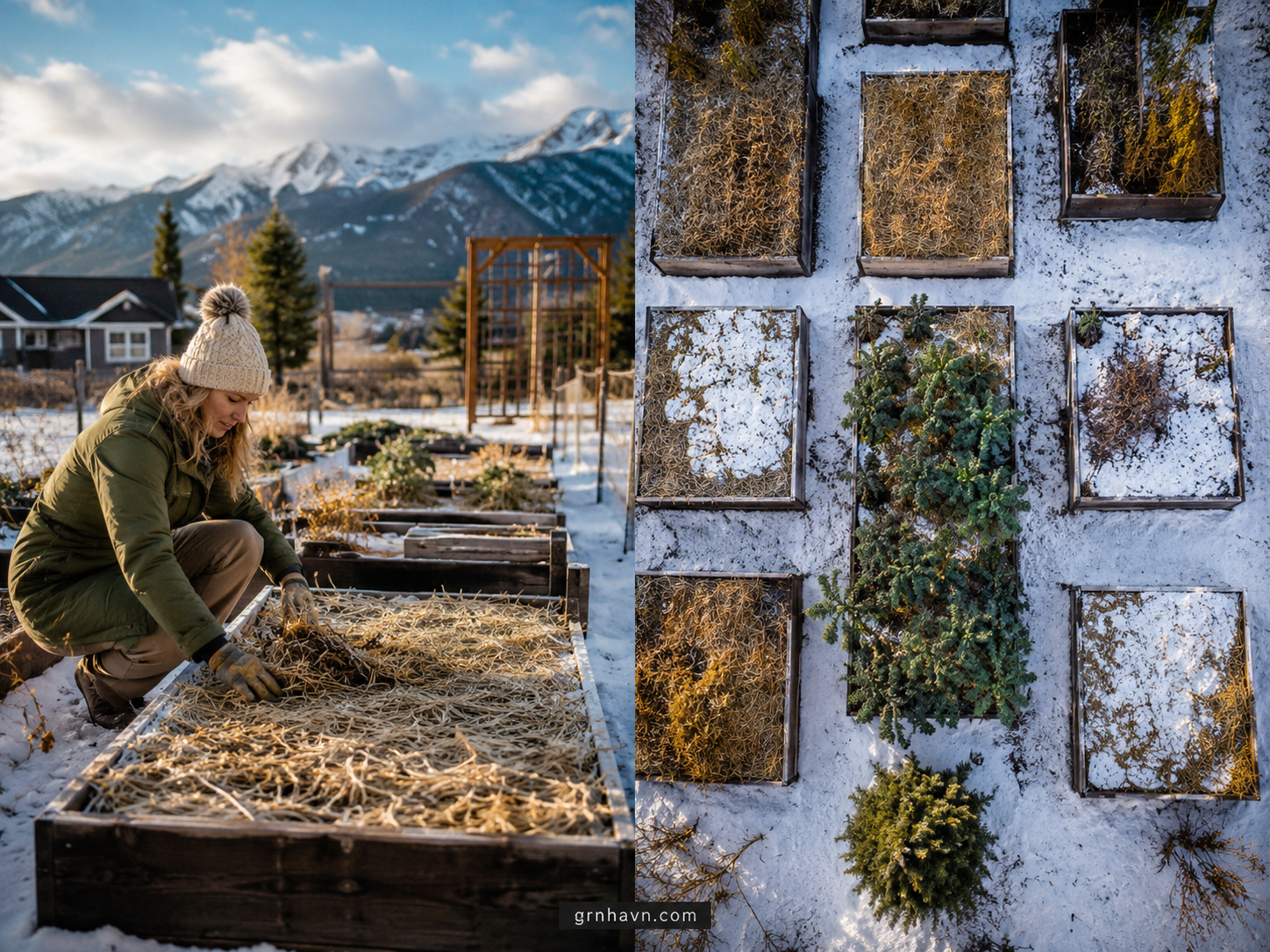
How To Winterize Garden Beds Colorado (Survive Freeze–Thaw Like A Pro)
Colorado winters can feel like weather roulette—sunny days that warm the bed surface, then nights that drop fast. If you’ve ever watched mulch settle, then re-freeze hard, you already know why this matters for how to winterize garden beds Colorado.
The fix is to focus on stability. After first frosts, top-dress and mulch at 2–3 inches (5–8 cm). If your winters are especially windy or you get frequent rapid swings, consider a breathable cover for the coldest stretches. Avoid sealing beds in plastic; instead, choose breathable fabric and secure edges to reduce wind whipping.
“In Colorado, your garden needs guardrails—not a locked door.”
One mini case study: a friend’s raised beds last season looked “fine” until one cold snap hit right after a warm afternoon. The bed surfaces thawed unevenly, then froze, stressing tender crowns. In spring, those beds took longer to wake up. The following season, they waited for frosts to “stick,” then added a steadier mulch layer. Spring improved dramatically— less crown damage, more consistent growth.
What Not To Do (Overwatering/Late Pruning)
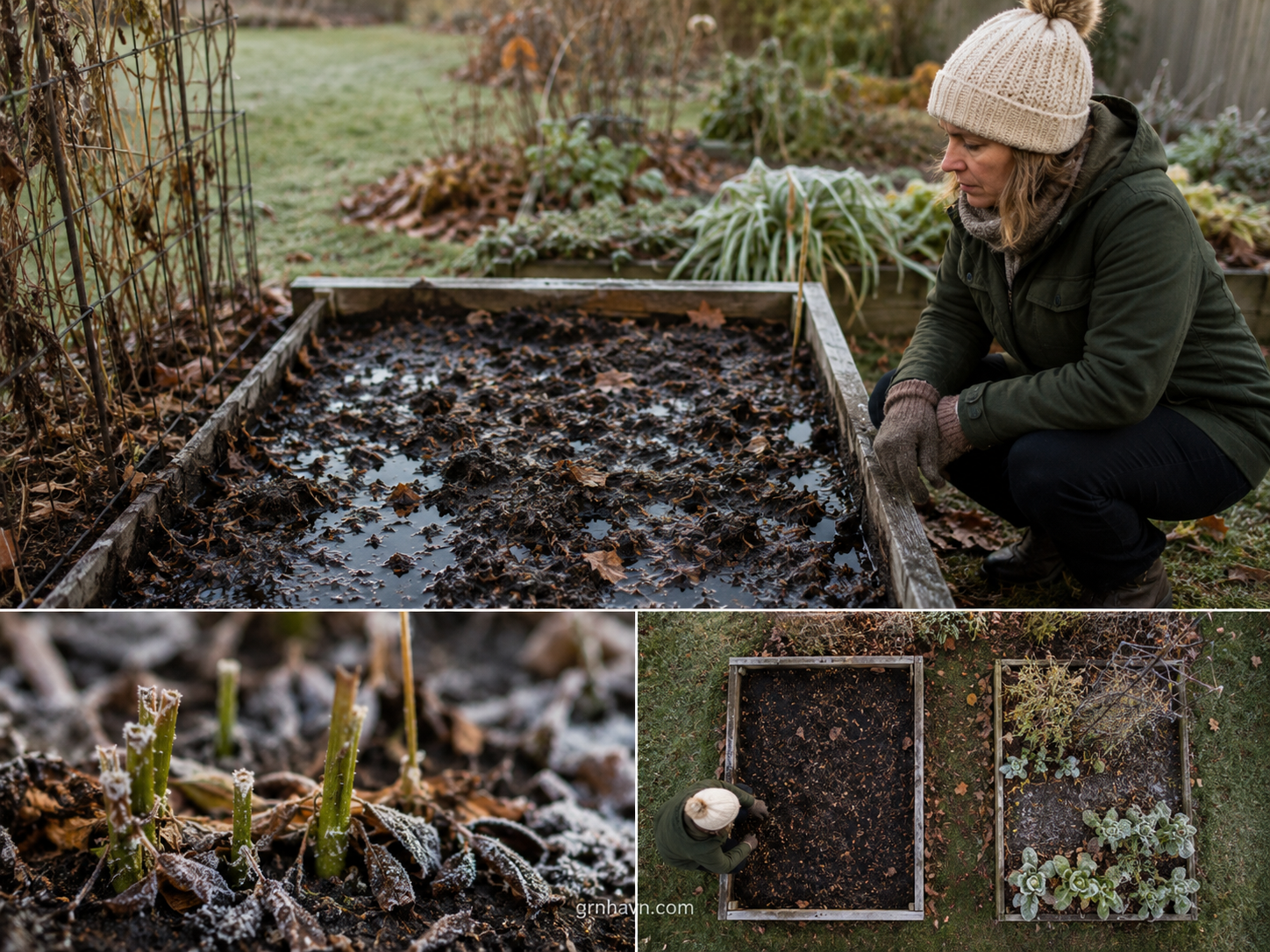
Let’s talk honesty. The two most common problems I see when people search how to winterize your garden bed are overwatering and late pruning. They feel “responsible” in the moment—until winter turns them into stressors.
Overwatering right before freezes increases the chance of icy, unstable conditions in the upper soil. That’s when you get freeze-thaw damage and dried crowns later. Late pruning can also stimulate fragile regrowth, which is exactly what you don’t want when temps dip again.
“Some actions are kind—until the calendar flips. Timing is part of care.”
My recommendation: water only if the bed is genuinely dry going into cold stretches, then stop micromanaging. For pruning: remove only what’s clearly spent or diseased; otherwise, let plants rest.
Final Printable Checklist (Raised Beds, Flowers & Cold Climates)
- Watch for timing signals: first meaningful frosts, not random early cold spells (USDA zone + frost-date logic).
- Clear gently: remove diseased debris only; avoid aggressive trimming for late-season regrowth.
- Top-dress soil: add compost as a protective layer (avoid heavy digging).
- Mulch properly: apply 2–3 inches (5–8 cm), keeping crowns safe.
- Cover only if needed: use breathable protection for windy/harsh conditions; avoid sealed plastic.
- Don’t overwater: water only if the bed is dry going into cold stretches.
- Hand-off phase: after protection is in place, let the garden rest.
Common Mistakes (And The Fix)
Overwatering & unstable soil
- Mistake: watering late, then freezing hard.
- Fix: check moisture first; water lightly if dry, then stop.
- Why it matters: freeze-thaw stress damages crowns.
Late pruning or “fixing” everything
- Mistake: pruning that triggers new growth.
- Fix: tidy only what’s clearly spent/diseased; let plants rest.
- Why it matters: tender regrowth gets hammered by cold snaps.
“The best winterization is calm. You’re protecting life—not forcing a perfect look.”
Faq (Quick, Honest Answers)
What is the best mixture for raised bed soil?
I’ll be real: the “best mixture” depends on drainage in your area. For winter success, you want a blend that holds moisture gently without staying soggy. In practice, aim for a stable base (often a soil/compost blend) topped with compost for protection. If your area gets heavy rain, prioritize drainage—raised beds can freeze-stress if water pools.
How to winterize a garden bed?
Start with the timing window: protect after meaningful frosts. Then tidy gently, top-dress with compost, add 2–3 inches (5–8 cm) of mulch, and use a breathable cover only when conditions are harsh or windy. Avoid overwatering right before freezes—your goal is steady insulation, not wet soil that turns icy.
What not to fill a raised garden bed with?
Avoid dense, non-breathable materials that trap water (like heavy, unamended fill). Also skip “mystery compost” that’s inconsistent and may be too hot, especially close to cold snaps. In winterization, predictable texture beats chaos.
Should I cover garden beds in winter?
Only if you need it. Covering helps with wind stress and rapid temperature swings. Use breathable covers, not sealed plastic. If you mulch at 2–3 inches (5–8 cm), many beds are fine without a full cover—especially in calmer climates.
How do I prep my garden for winter?
Prep is a sequence: timing → gentle clearing → compost top-dress → mulch → (optional) breathable cover. Then step back. That “hands-off” part is where many people quietly succeed in spring.
What is the best filling for a raised bed?
A balanced mix that supports roots and drainage. Practically, many gardeners use a combination of quality raised-bed soil plus compost for nutrients. For winter, the compost layer acts like a protective buffer that feeds your soil microbes while the bed rests.
What vegetables should not be grown in a raised bed?
Nothing is “universally forbidden,” but some crops are a poor match for your bed size or drainage. If your bed dries fast, leafy greens may struggle in hot-to-cold transitions. For winter specifically, avoid planting tender crops right before the first frost window unless you have protection.
What’s the cheapest way to fill a raised garden bed?
Cheapest usually means sourcing thoughtfully: check local compost/soil suppliers, garden center specials, or bulk delivery. Then top-dress with compost for winterization value. Don’t cut corners so hard that drainage becomes poor—cheap that holds water can become expensive later.
Can you fill a raised bed with just soil?
You can, but it often works less well long-term because “just soil” may not supply consistent organic matter. For winter, top-dress with compost so soil structure and microbial life can keep doing their job through the cold.
What is the best thing to put in the bottom of a raised bed?
I prefer avoiding heavy layers that trap water. If you’re building from scratch, use materials that improve structure and drainage. Many gardeners focus on using quality mix throughout rather than stuffing the bottom. Winter success is really about the upper root zone.
How many bags of soil does it take to fill a raised bed?
It depends on your bed volume and bag size. A quick method: calculate cubic feet/meters, then convert to bag volume. If you tell me your bed dimensions (length × width × height), I can help you estimate in both metric and inches.
What do coffee grounds do for soil?
Coffee grounds can add organic matter and support soil life when used thoughtfully. For winterization, I treat coffee grounds like “small seasoning,” not a thick mulch replacement—too much can compact and affect moisture behavior.
Can I just use compost instead of soil?
Compost alone often isn’t ideal as a full growing medium because it may be too rich and can change structure. For winter beds, compost as a top-dress is excellent. For the base, blend for stable texture and drainage.
How many 25L bags of soil are in a cubic metre?
Rough estimate: a cubic meter is 1000L, so about 40 bags of 25L (because 1000 ÷ 25 = 40). Always confirm bag coverage varies by product density.
How much soil do I need for a 4×8 raised bed?
Multiply volume: 4ft × 8ft × height (ft) to get cubic feet, then convert to bags or cubic meters. If your height is (for example) 12 inches (1ft), that’s 32 cubic feet before conversion.
Can you put too much compost in a raised bed?
Yes. Too much compost can hold moisture differently and may be “too hot” if it’s not fully mature. In winterization, keep compost to top-dress amounts, then cover with mulch so the bed stays stable.
What should you never put in compost?
Avoid diseased plant material from unknown sources, meat/dairy, and chemicals. If you’re unsure, keep it simple: compost only what you’d feel comfortable returning to soil in next season.
What is the best homemade compost?
“Best” is finished compost that’s stable and crumbly, not hot and chunky. For winterization, you want compost that won’t create uneven moisture or bursts of growth.
What is a good substitute for potting soil?
For raised beds, a raised-bed mix (or blending garden soil with compost) is often more practical than potting soil meant for containers. Potting mixes can behave differently in winter for drainage and moisture stability.
What is the cheapest way to fill a raised bed?
Use local bulk soil/compost options, check for delivery discounts, and combine sources strategically. The “cheap” goal is to maintain decent drainage—because winter stress is costly.
How much does a 50L bag of soil cover?
Coverage depends on bag density and bed depth. As a general rule, you can approximate by volume: 50L is 0.05 cubic meters. Multiply your bed area by depth in meters to estimate how many bags.
What is the best time of year to add soil?
For winter beds, add compost/top-dress around late fall after frosts begin, so it settles and protects the soil surface. Major refills are better done earlier so the mix can settle before winter.
What are common composting mistakes?
Common mistakes include adding the wrong materials, not balancing browns and greens, and letting piles stay too wet or too dry. For winter success, the takeaway is: use mature compost, and don’t dump huge amounts right before freezing weather.
What soil do you use in raised garden beds?
Most gardeners use a raised-bed mix plus compost top-dressing. Prioritize a texture that drains well but still retains moisture evenly. Winter is about consistency—soil that behaves predictably through temperature swings.
How much can you grow in a 4×4 raised bed?
A 4×4 is great for variety with smart spacing—especially for crops that transition well into cooler weather. Winterization doesn’t increase yield directly; it increases your spring momentum by protecting soil structure and roots.
Can I put banana peels in my compost?
Yes, chopped and in moderation. Overdoing it can attract pests or slow decomposition. For raised beds, remember winterization timing—compost use is best as mature top-dressing.
Can I put garlic in my compost bin?
Usually yes. Keep it covered and in reasonable quantities. If garlic was diseased, don’t compost it. Compost quality matters most for what you add to beds heading into winter.
Do coffee grounds make good compost?
Coffee grounds can make great compost “browns/greens balance” when you add them in moderation and mix well. Use them as part of a broader compost process rather than as a thick winter layer.
Final Verdict: Winterize Once, Then Let Spring Surprise You
Here’s my honest opinion after years of trial, small mistakes, and better recoveries: the gardeners who win at how to winterize garden beds aren’t the ones who do everything. They’re the ones who do the core steps at the right time— gentle soil prep, thoughtful compost, the right mulch thickness, and (when needed) breathable cover that buffers freeze-thaw swings. If you’re in Colorado or any place with dramatic temperature shifts, prioritize stability over perfection. And if you’re in Europe, let frost frequency guide you the same way USDA zones guide Americans. Do it calmly, protect the soil life, and your beds will wake up ready to grow—without you starting over.