3 Gardening Tools That Make Plant Care Easier and Smarter
“Plant care shouldn’t feel like guessing. It should feel like love—with proof.”
If you’ve ever watered “just in case” and then watched your leaves droop anyway, I get it. I’ve been there—standing
over a container tree with a watering can in one hand and a worry spiral in the other. That’s exactly why I’m sharing
my real-life take on the best gardening tools: not the flashy ones, but the ones that reduce uncertainty.
Over seasons across US USDA hardiness zones and Europe’s frost/temperature reality, I learned something:
healthy plants aren’t only about more sunlight or more water. They’re about knowing what’s happening underground.
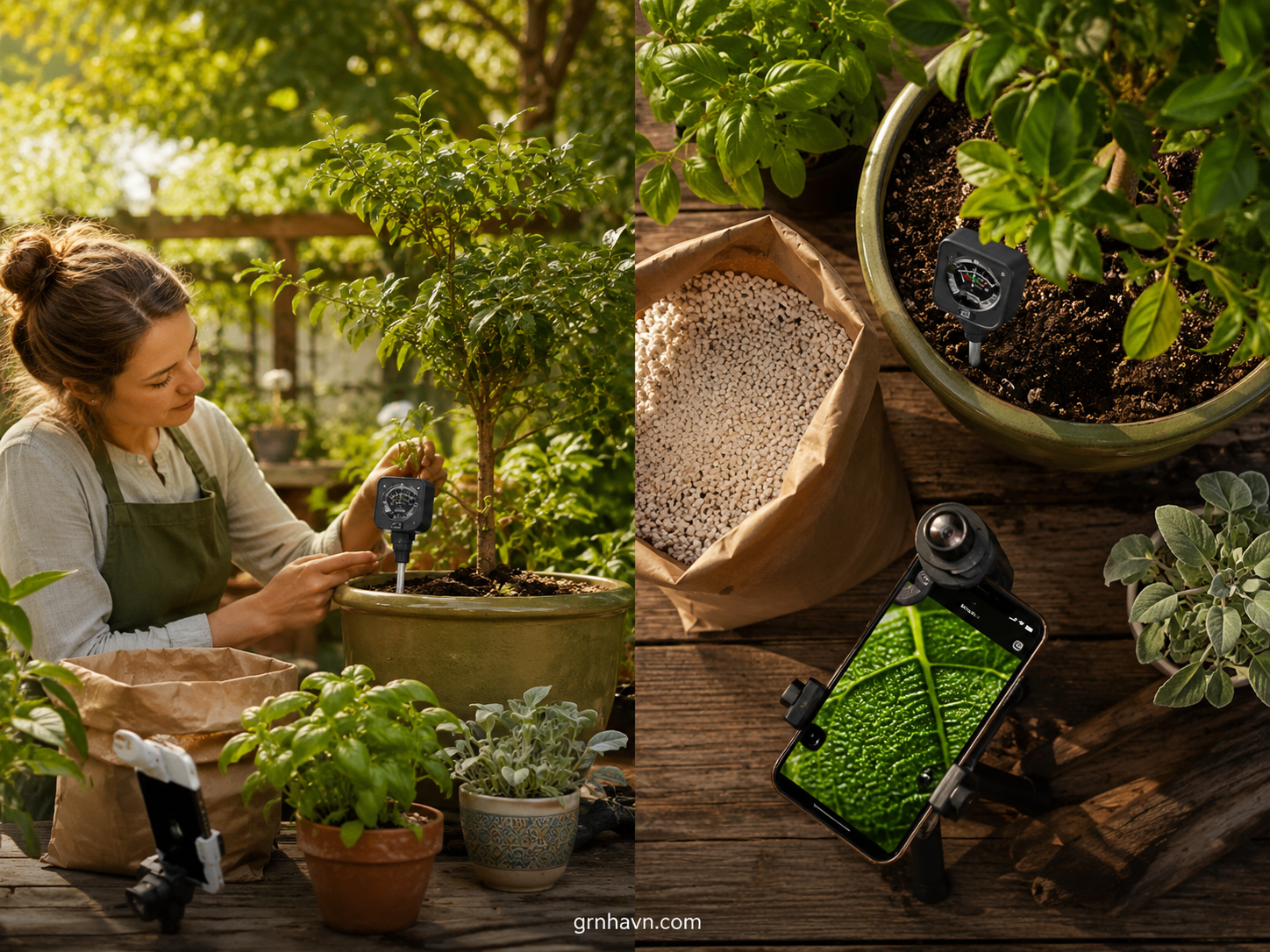
A soil moisture/plant meter helps you read the moment. A smart potting mix—especially one built with perlite—helps
roots breathe. And a clip-on macro lens lets you document details early, when it’s still easy to fix.
Here’s what you’ll get from this guide
- Three tools that work together for calmer, smarter plant care (with buyer-friendly comparison tables).
- Practical guidance for both Europe + America timing (USDA zones + frost-date logic).
- Honest opinions on what matters most for healthy plants, container gardening, and indoor/outdoor growth.
Why Smart Gardeners Use The Right Tools
I used to think plant care was mostly “vibes”—a sunny spot, a watering schedule, and hope.
Then I tried plant monitoring for real. The moment I stopped guessing and started measuring,
everything felt easier: not because plants became simpler, but because I did.
When your soil is too dry, roots struggle to drink. When it’s too wet, roots can suffocate.
In container gardening, this imbalance shows up fast—especially through seasonal shifts.
In the US, your USDA hardiness zone tells you what can survive outside. In Europe,
your frost-date timing and average winter temperatures guide your indoor-to-outdoor transitions.
Either way, the goal is the same: protect plants before stress snowballs.
Saving Time in Plant Care
Smart tools shorten your trial-and-error. Instead of “water because it feels dry,” you measure moisture. Instead of “wait and see,” you use light/temperature readings to prevent stress before it shows on leaves.
Growing Healthier Container Trees
Container trees depend on the relationship between soil and drainage. A perlite-enhanced potting mix keeps airflow around roots, helping you avoid the common trap of watering too often. (And yes—overwatering can happen even when you water “gently.”)
Capturing Better Garden Photos
If you’ve ever tried to explain a leaf issue to yourself later… you know how messy memory is. A clip-on macro lens turns everyday phone photos into documentation—so you notice tiny changes early, and you create garden photography you actually enjoy sharing.
Tool #1 – 4-In-1 Plant Meter For Better Plant Decisions
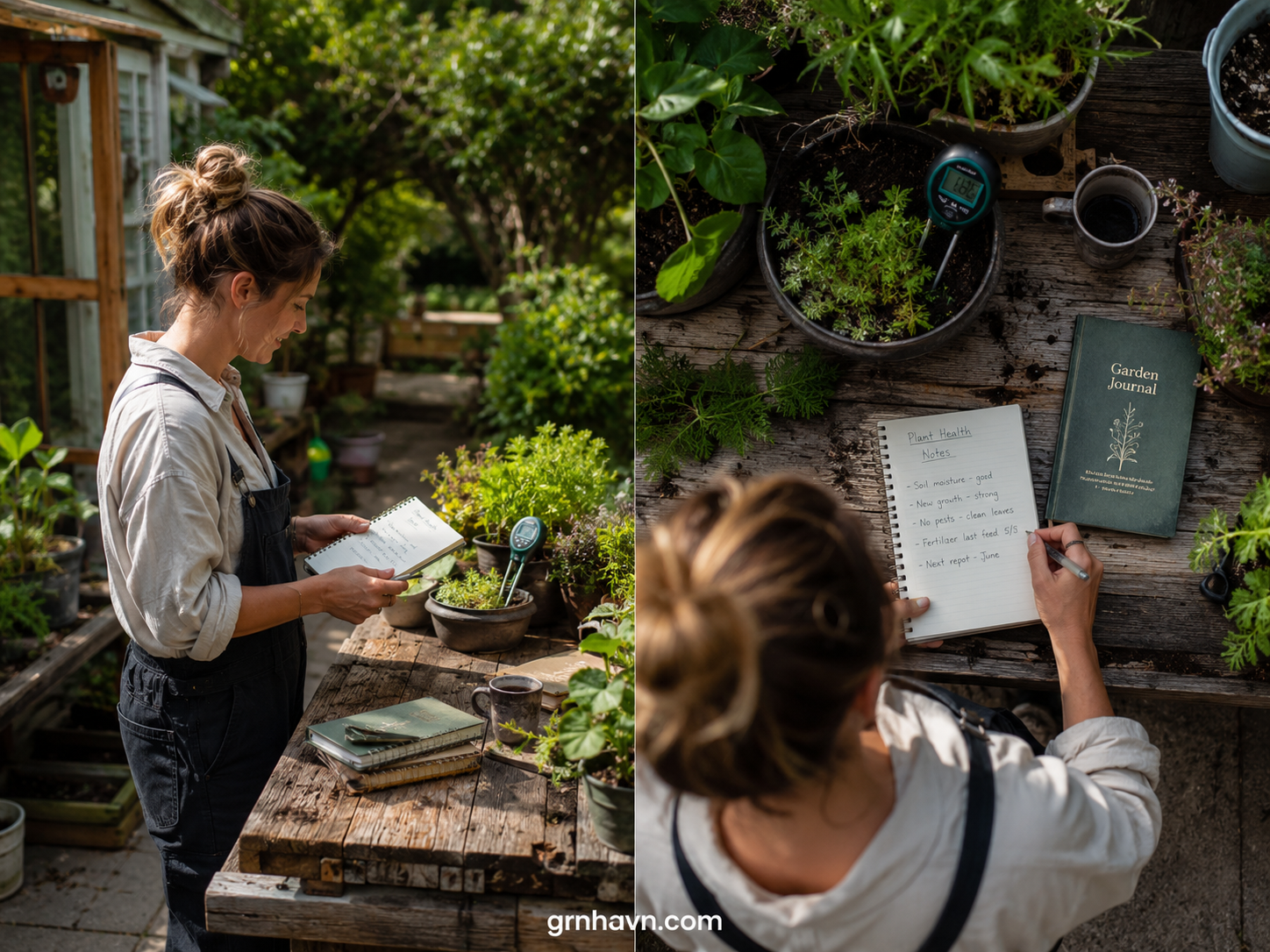
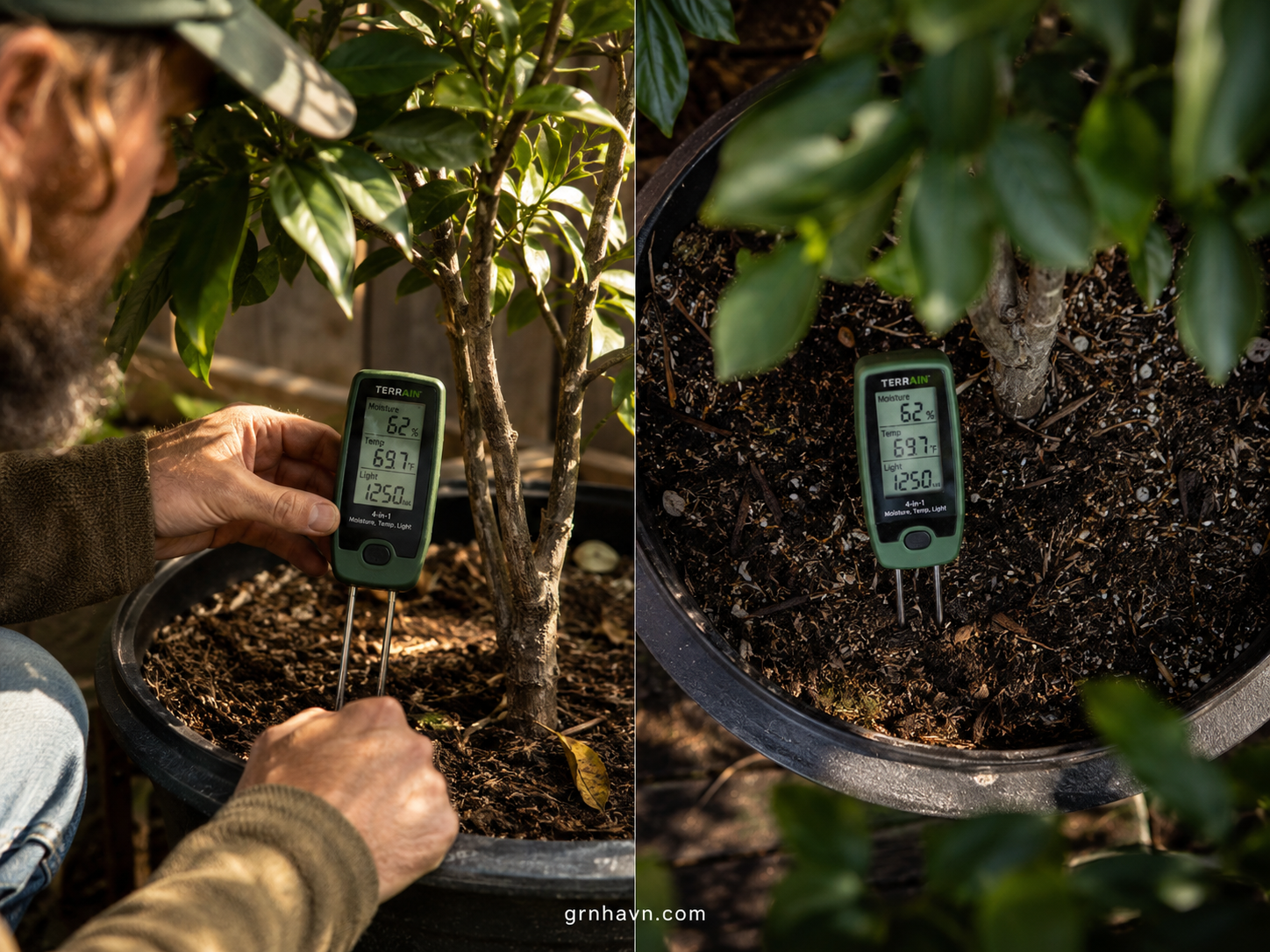
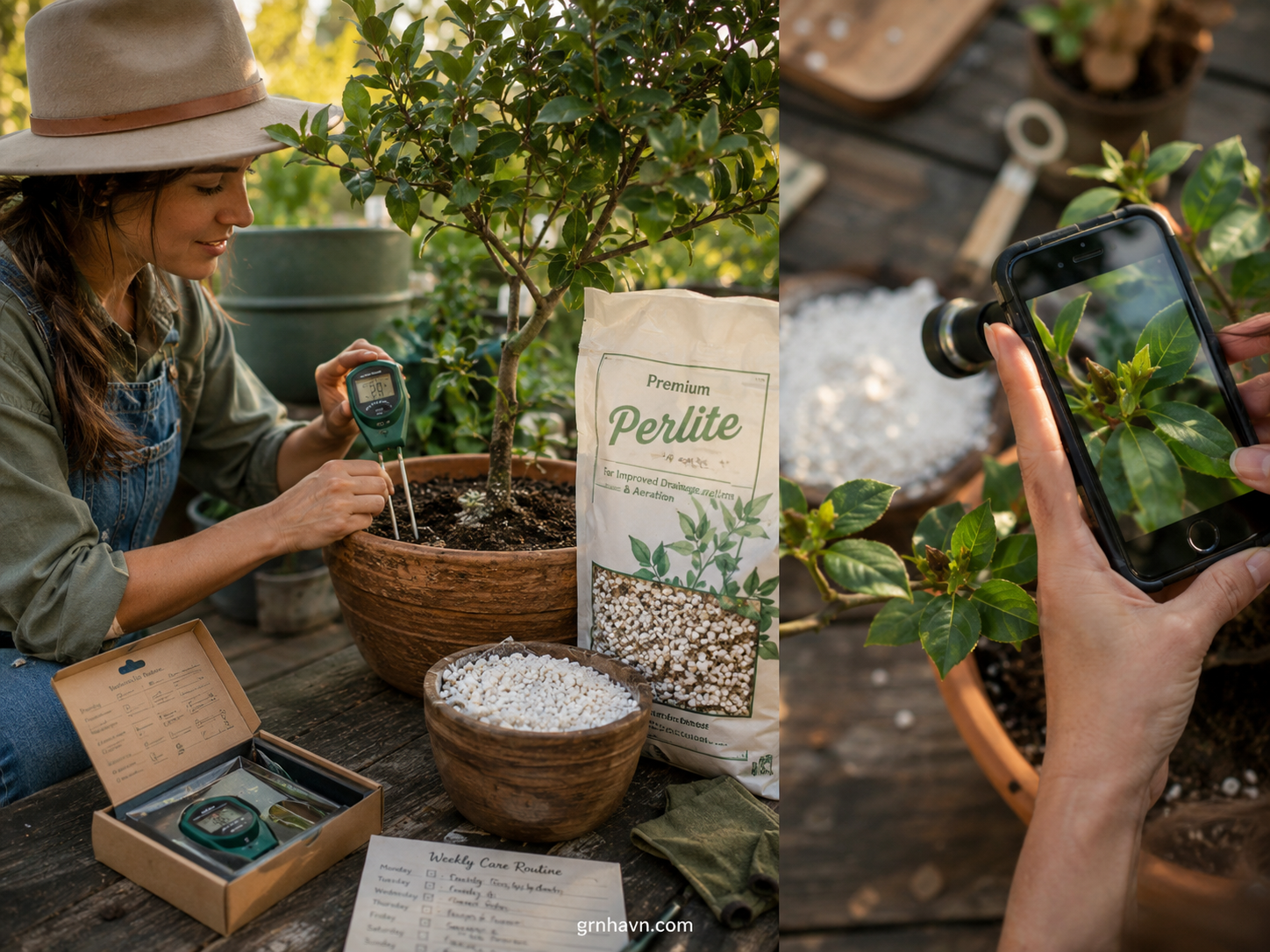
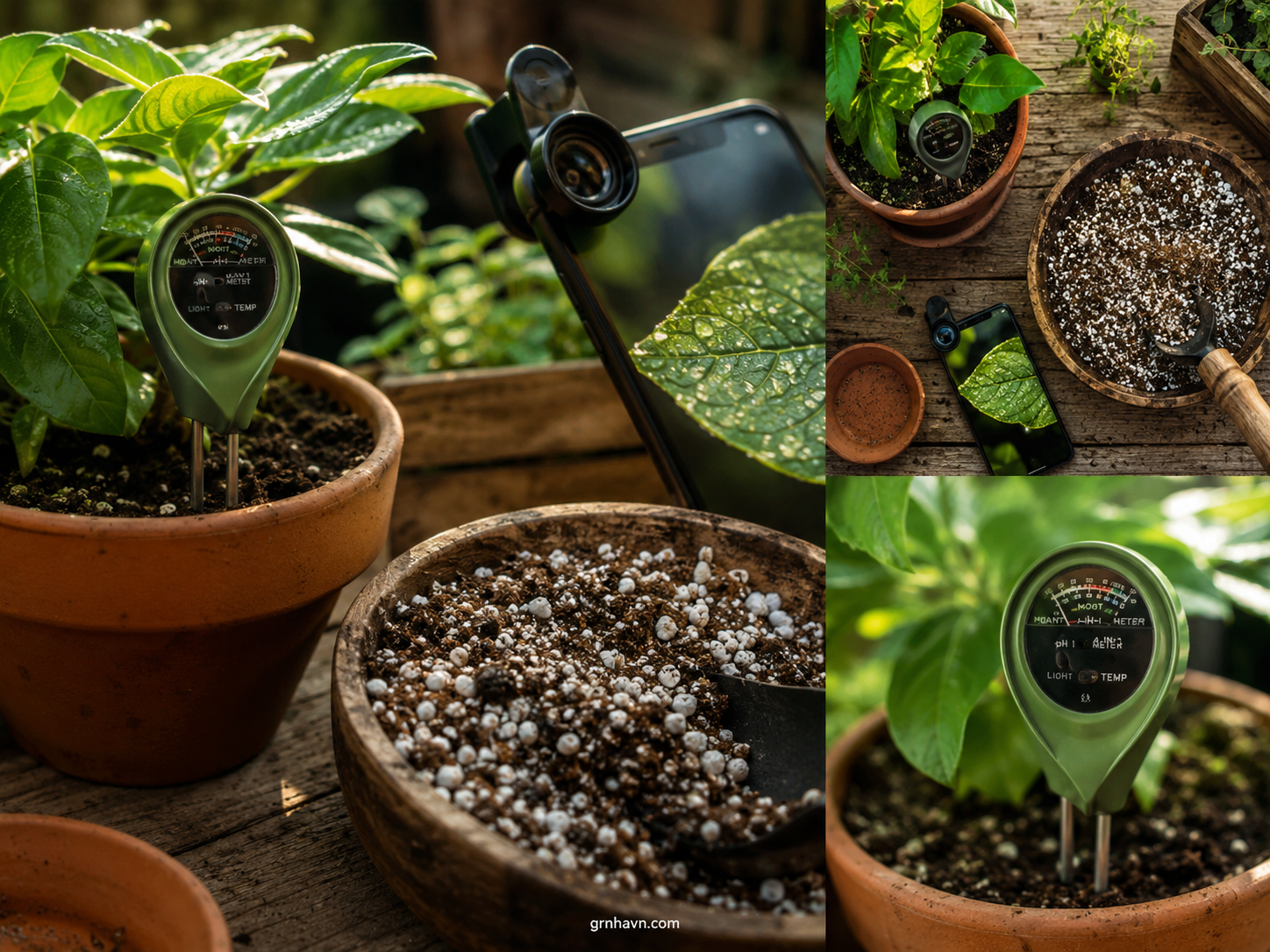
This is the tool I recommend when you want to stop the guessing game. A quality soil moisture meter
(often marketed as a 4-in-1 soil meter) can help you measure moisture, temperature, and sometimes light readings.
It’s the difference between “I think it needs water” and “the readings show it’s time.”
In my own experience, the meter becomes especially valuable during schedule chaos:
heat waves (above ~85°F / 29°C), cool snaps, and those shoulder-season weeks when plants look fine one day and stressed the next.
For Europe readers, frost timing and nighttime dips matter—moving from indoor warmth to outdoor exposure can swing conditions quickly.
In the US, your USDA zone helps predict survival—but microclimates still surprise you.
What Moisture Readings Actually Tell You
Moisture meters (including plant moisture meter styles) are most useful as a comparison tool: “today vs. last week,” or “this pot vs. that pot.” Aim for consistent moisture—not constant wetness.
Monitoring Light and Temperature
If your garden spot changes with the sun (or your indoor plants shift near a window), light readings help you avoid the “too little / too much” cycle. Temperature checks help you anticipate stress during sudden dips (below ~50°F / 10°C outdoors for many plants).
Preventing Overwatering Problems
Overwatering is the number-one quiet plant killer in container gardening. A meter helps you water “when needed,” not “when anxious.” That’s how you protect root health without sacrificing growth.
Who Should Use a Garden Meter
If you’re new to gardening, have indoor plants, manage outdoor pots, or want a simple system for garden maintenance, this is your starting line. It’s also great for gardening tools for beginners who want confidence fast.
Affiliate Pick
4-in-1 Moisture Temperature Light Meter
Check Price on Amazon View Product Comparison| Feature | Why it matters for plant care | Best for |
|---|---|---|
| Moisture reading | Helps you avoid overwatering and underwatering cycles | Indoor plants • outdoor pots |
| Temperature guidance | Prevents stress during cool nights / heat swings | Season transitions |
| Light/brightness checks | Supports healthier placement decisions | Window gardens • balconies |
Tool #2 – Best Potting Mix With Perlite For Container Trees
Here’s a small confession: I used to blame myself when container trees struggled.
But so often, the root problem was the soil structure—especially when drainage wasn’t balanced.
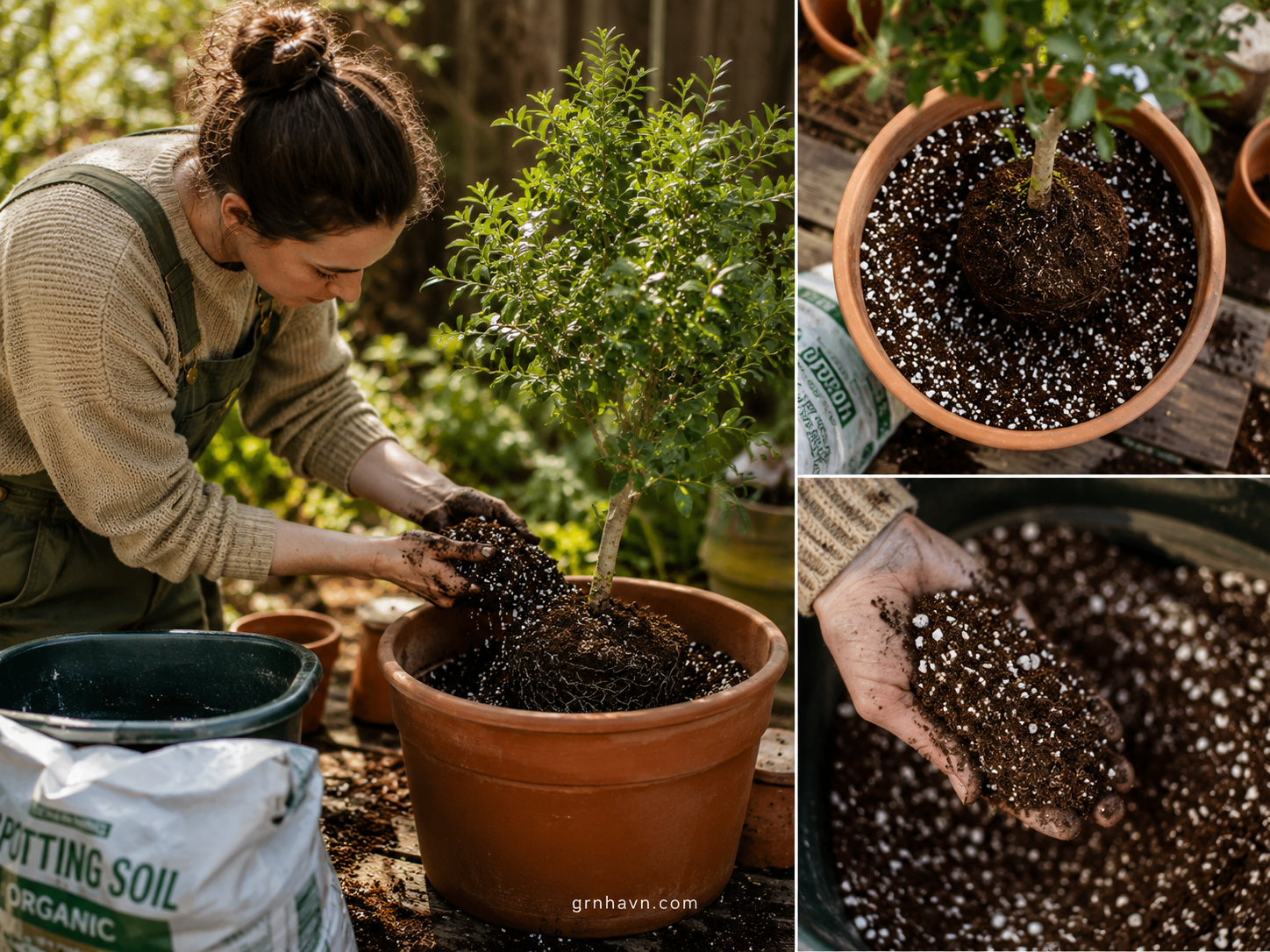
A potting mix with perlite helps create air pockets in the root zone, supporting healthy root function and better watering outcomes.
Look for blends described as tree potting soil, container tree soil,
or best potting mix for trees. Perlite (mixed in properly) improves airflow and drainage without completely drying out too fast.
That matters whether you’re gardening outdoors across a hot US summer or tending indoor plants through a colder Europe winter.
Why Perlite Matters
Perlite is like tiny support springs inside your mix. It helps water flow through while still leaving oxygen available to roots. That balance prevents soggy conditions that lead to root stress.
Drainage vs Water Retention
You want drainage, but not “instant dry.” The goal is steady moisture with breathable structure—especially in pots where soil temperature can swing and evaporation changes week to week.
Tree Species That Benefit Most
Container trees and many indoor/outdoor potted plants thrive with a more aerated mix. If you’re growing herbs, citrus-like plants, or smaller fruiting trees in containers, this is where perlite shines.
Common Soil Mistakes
Overpacking soil, using heavy garden topsoil, or repeating the same potting mix for years without refreshing can all reduce airflow. If your watering schedule feels unpredictable, your soil may be the hidden variable—not your routine.
Affiliate Pick
Potting Mix with Perlite for Trees
Check Price on Amazon View Product Comparison| Soil trait | What to look for | How it supports plant health |
|---|---|---|
| Perlite content | Airflow + drainage improvement | Helps prevent root stress |
| Balanced moisture | Not bone-dry too fast | Supports consistent growth |
| Container suitability | Blend designed for pots | Improves indoor plants + outdoor pots |
Tool #3 – Mobile Phone Clip-On Macro Lens
This one feels “extra” until you use it. Then it becomes your favorite garden gadget.
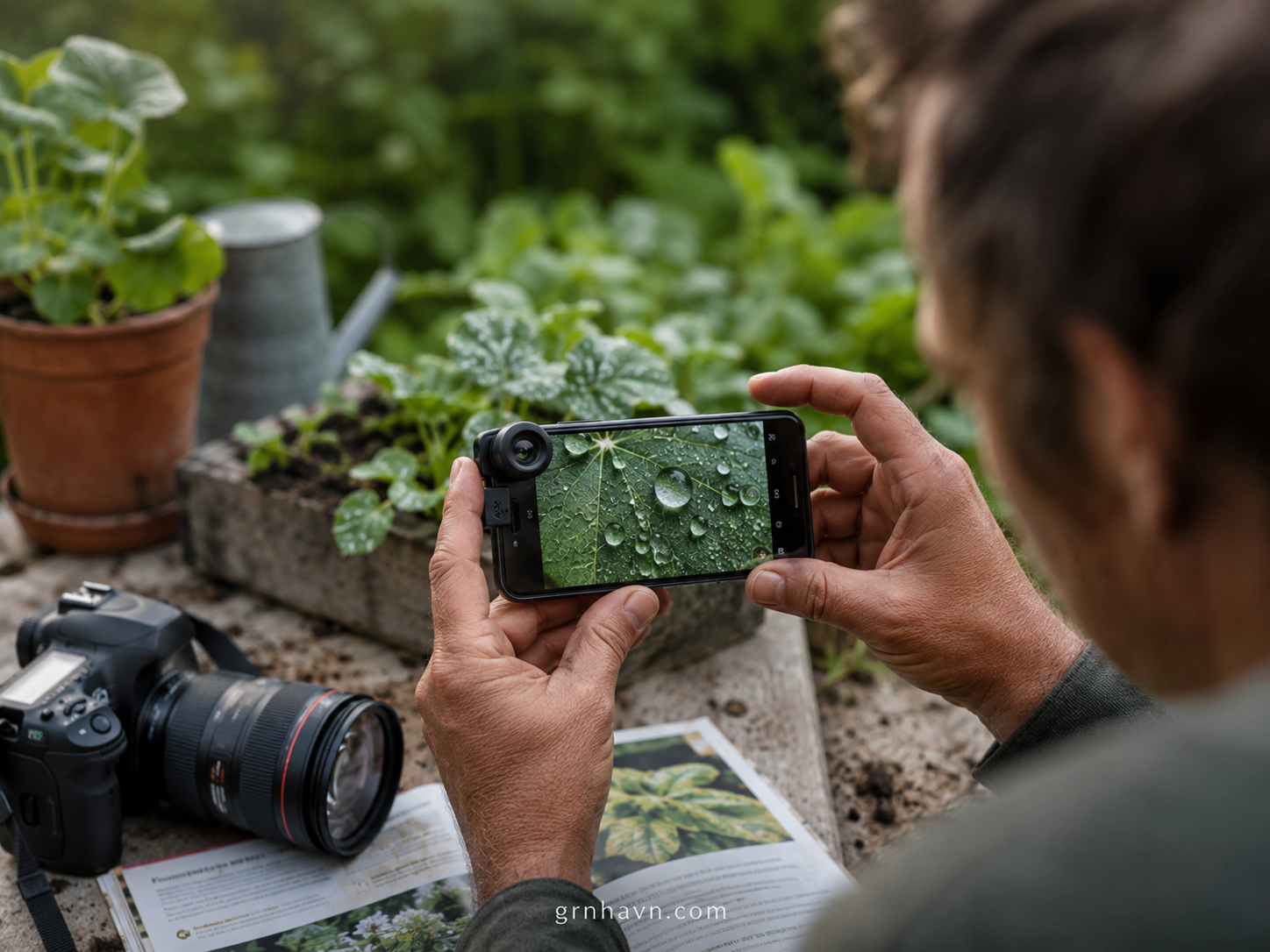
A clip on macro lens (smartphone macro lens) helps you take closer photos of flowers, leaves,
and tiny pest or nutrient clues—often before you can see them with your eyes clearly.
When I started documenting with mobile macro photography, I noticed patterns.
The kind of patterns that help you troubleshoot without panicking:
new spots appearing after a watering cycle, leaf curling worsening after a temperature dip,
or discoloration that repeats at the same time each week.
It’s also how content creators build trust—your audience can literally see progress.
Why Gardeners Love Macro Photography
You gain clarity. The details become obvious: leaf texture, tiny discoloration, early stress signs, and even the difference between healthy new growth and struggling growth.
Photographing Flowers and Leaves
Macro is also surprisingly calming. It slows you down in a good way—so instead of rushing through plant care tools and chores, you actually notice what’s working.
Capturing Plant Problems Early
Many issues become visible first at the microscopic level—then they show on the overall plant. With a macro lens, you can act earlier with smaller corrections.
Creating Pinterest and Blog Content
If you share your garden, macro turns “pretty photos” into educational proof. That helps your posts rank for gardening tools and supplies topics and keeps your content trustworthy.
Affiliate Pick
Clip-On Macro Lens for Smartphones
Check Price on Amazon View Product Comparison| Macro feature | Why it matters | Best for |
|---|---|---|
| Clip-on stability | Helps reduce blurry shots | Garden photography tools |
| Clear detail focus | Shows early leaf issues | Plant health monitor habits |
| Easy smartphone use | No complex camera setup | Beginners • Pinterest content |
How These Three Tools Work Together
Think of this as your “smart gardening loop.” Measure what’s happening. Fix what the soil is doing.
Then document changes so you can learn faster than your doubts.
I recommend using the tools in the same order every week—because consistency lowers stress.
And for seasonal timing: in the US, check your local frost-date logic before moving plants outdoors; in Europe,
watch night temperatures and frost warnings. A plant can be fine at midday and stressed after a cold evening drop.
Step 1 – Measure Soil Conditions
Use your soil moisture meter (or plant health monitor) to understand where each pot stands. Don’t chase one reading—look for trends.
Step 2 – Improve Root Health with Better Soil
If moisture stays too high, refresh with a mix that includes perlite. This is where soil mix for trees and tree potting soil choices matter.
Step 3 – Document Growth with Macro Photography
Take macro photos once a week. Compare month-to-month. It makes plant care tools feel like a gentle story, not a constant emergency.
Step 4 – Build a Better Gardening Routine
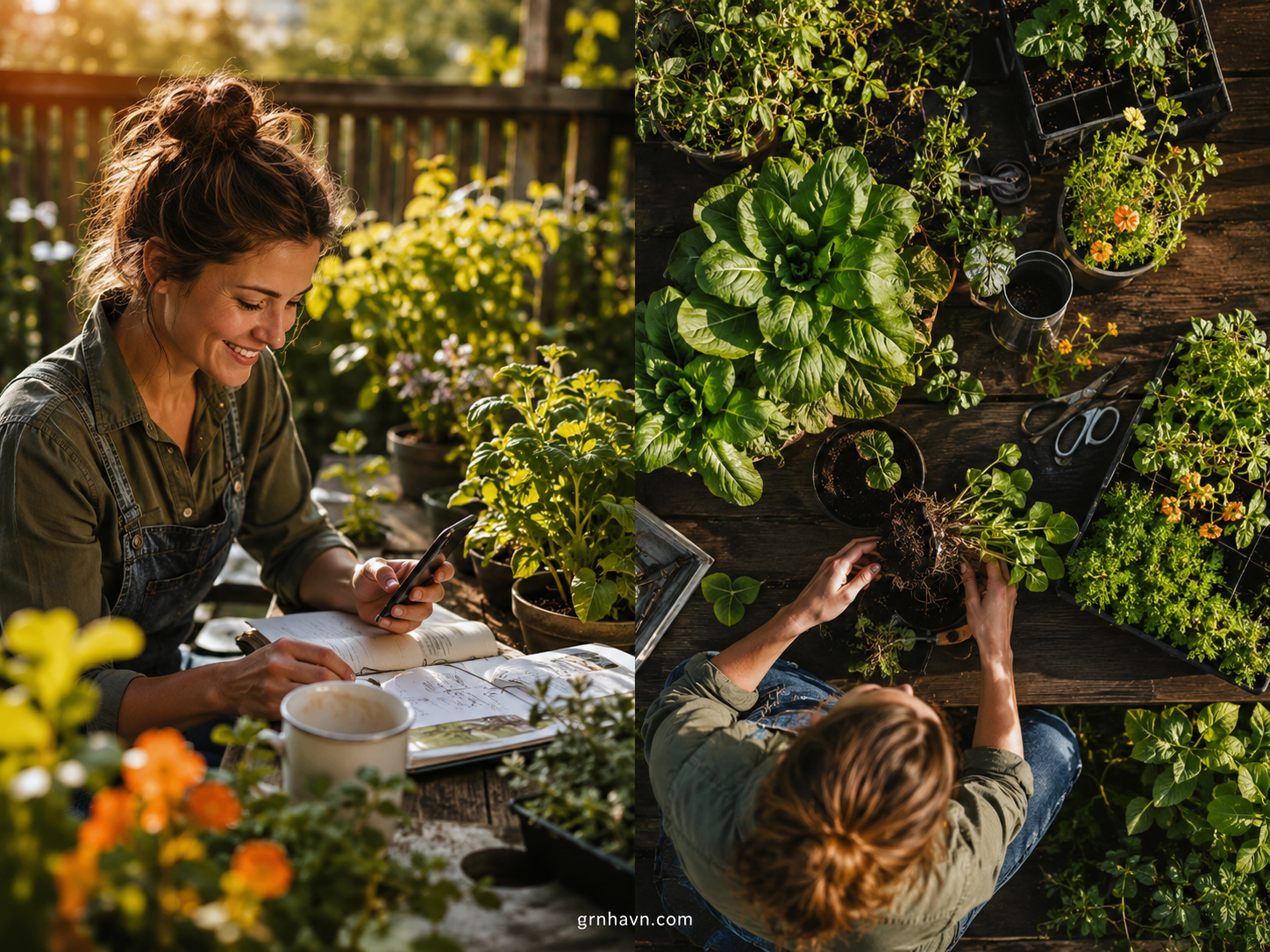
Keep notes: watering intervals, sunlight changes, and seasonal shifts. Your future self will thank you—deeply.
How To Take Better (Table)
This table is your “do it right the first time” checklist—made for real life, not perfect gardens. For measurement comfort, I included both inches/cm and °F/°C where it helps.
| What to do | Recommended method | Why it works |
|---|---|---|
| Check soil depth | Insert meter about 2–3 in (5–8 cm) into the root zone. | Avoids false readings near the surface. |
| Water based on trend | Compare today’s moisture to last week—don’t chase one number. | Prevents overwatering and underwatering loops. |
| Time outdoor changes | Use frost-date logic and night temps (aim to avoid dips below ~10°C / 50°F). | Reduces shock during seasonal transitions. |
| Macro photo cadence | Once weekly, same angle if possible; capture new leaves + underside. | Shows early plant problems and growth patterns. |
Benefits Of Using (Table)
These benefits are what you’ll feel after a few weeks—not just what looks good on a product page. Plant care becomes warmer, easier, and more confident when the system supports you.
| Benefit | Which tool helps most | Real-life impact |
|---|---|---|
| Fewer watering mistakes | 4-in-1 plant meter | More consistent moisture without overdoing it. |
| Better root oxygen | Perlite potting mix | Improves drainage + reduces root stress risk. |
| Early issue detection | Clip-on macro lens | Catch leaf changes before they spread. |
| Learning faster | All three together | Notes + photos + measurements = confident decisions. |
Recommended Gardening Essentials
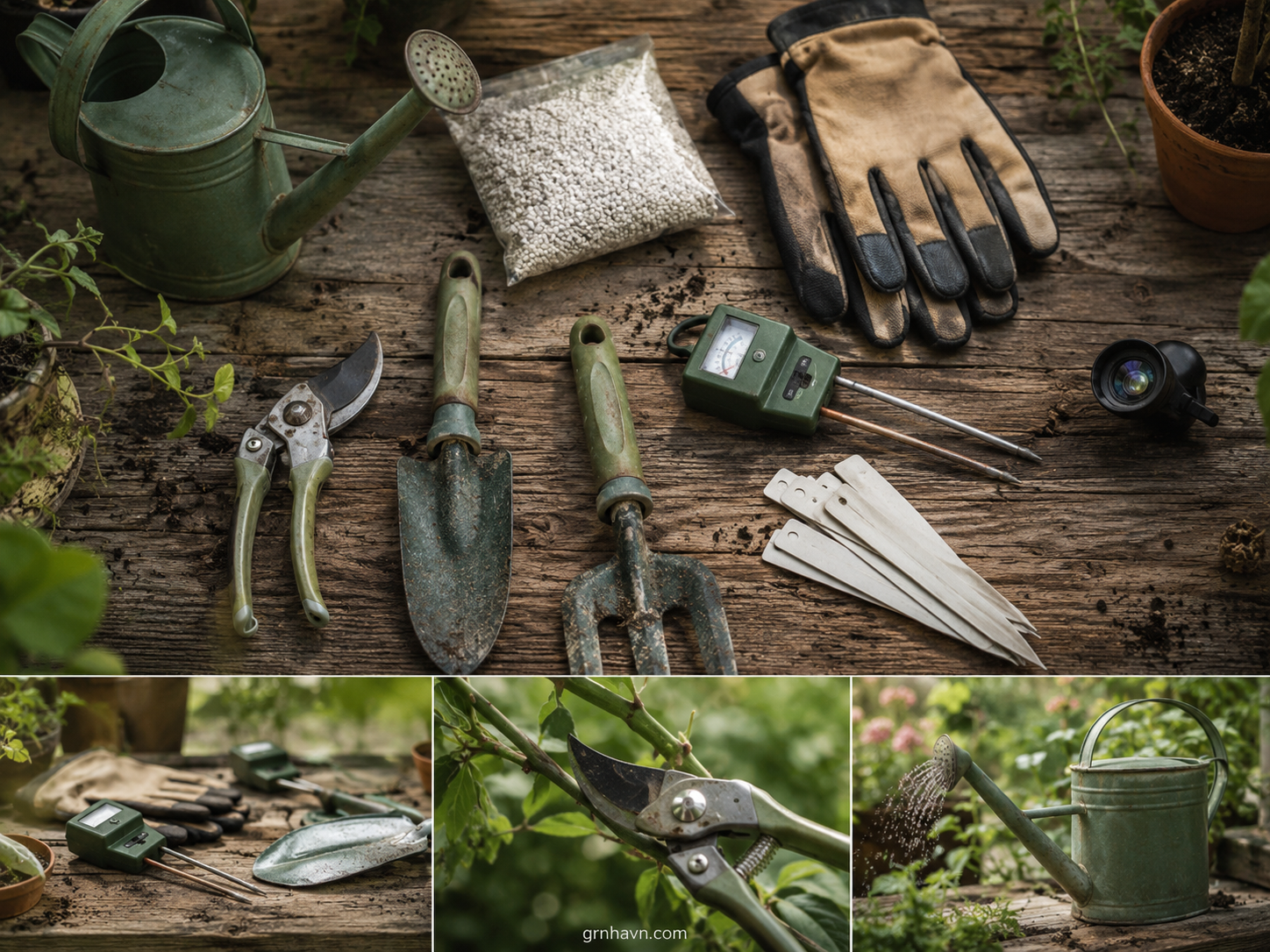
The tools above are your “big three,” but healthy plants also need the basics that support garden maintenance and good routine habits. I’m listing them as a friendly starter kit—because the best garden gadgets work best when paired with simple, reliable equipment.
Editor’s Top Picks
- ✅ 4-in-1 Plant Meter
- ✅ Potting Mix with Perlite
- ✅ Clip-On Macro Lens
- ✅ Pruning Shears
- ✅ Soil Moisture Meter (if you want a dedicated one)
- ✅ Gardening Gloves
- ✅ Plant Labels
- ✅ Watering Can
Which Tool Should You Buy First?
If you’re torn between options, don’t overthink it. Your first purchase should remove your biggest uncertainty. For most people, that’s watering accuracy and root-zone health—so the starting point is the meter and soil structure. But here’s the emotional truth: the “right first tool” depends on why you’re struggling.
Best Choice for Beginners
Start with the 4-in-1 plant meter. It quickly reduces guesswork and helps you stop accidental overwatering. It’s one of the best gardening tools when you’re learning gardening for beginners.
Best Choice for Tree Growers
If you’re focused on container trees, choose potting mix with perlite first. Root health + drainage balance is the foundation of steady growth and resilient leaves.
Best Choice for Content Creators
A clip-on macro lens is the creative power move. It helps you build garden photography tools into your workflow so your content is educational and visually satisfying.
Best Overall Value
The best overall value is the trio working together: meter + perlite mix + macro lens. One tool solves uncertainty, another solves root structure, and the third helps you learn and share.
Complete Product Comparison Hub
Here’s your one-stop comparison. Use this to decide quickly, especially if you’re browsing on your phone. Think of it like a shopping checklist plus a supportive gardener’s brain.
| Category | Affiliate Pick | Best for | Quick reason to buy |
|---|---|---|---|
| Plant Monitoring | 4-in-1 Moisture Temperature Light Meter | Indoor plants, outdoor pots, container gardening | Stops watering guesswork; helps prevent overwatering |
| Soil Upgrade | Potting Mix with Perlite for Trees | Container trees, root health & drainage balance | Breathable mix that supports healthier roots |
| Garden Photography | Clip-On Macro Lens for Smartphones | Gardeners who document growth + problems | Captures plant details early for better decisions |
Common Mistakes (And What I’D Do Instead)
Every gardener makes mistakes. The difference is how quickly you notice—and how kindly you adjust. Here are the errors I see most often when people buy smart gardening tools and then still struggle:
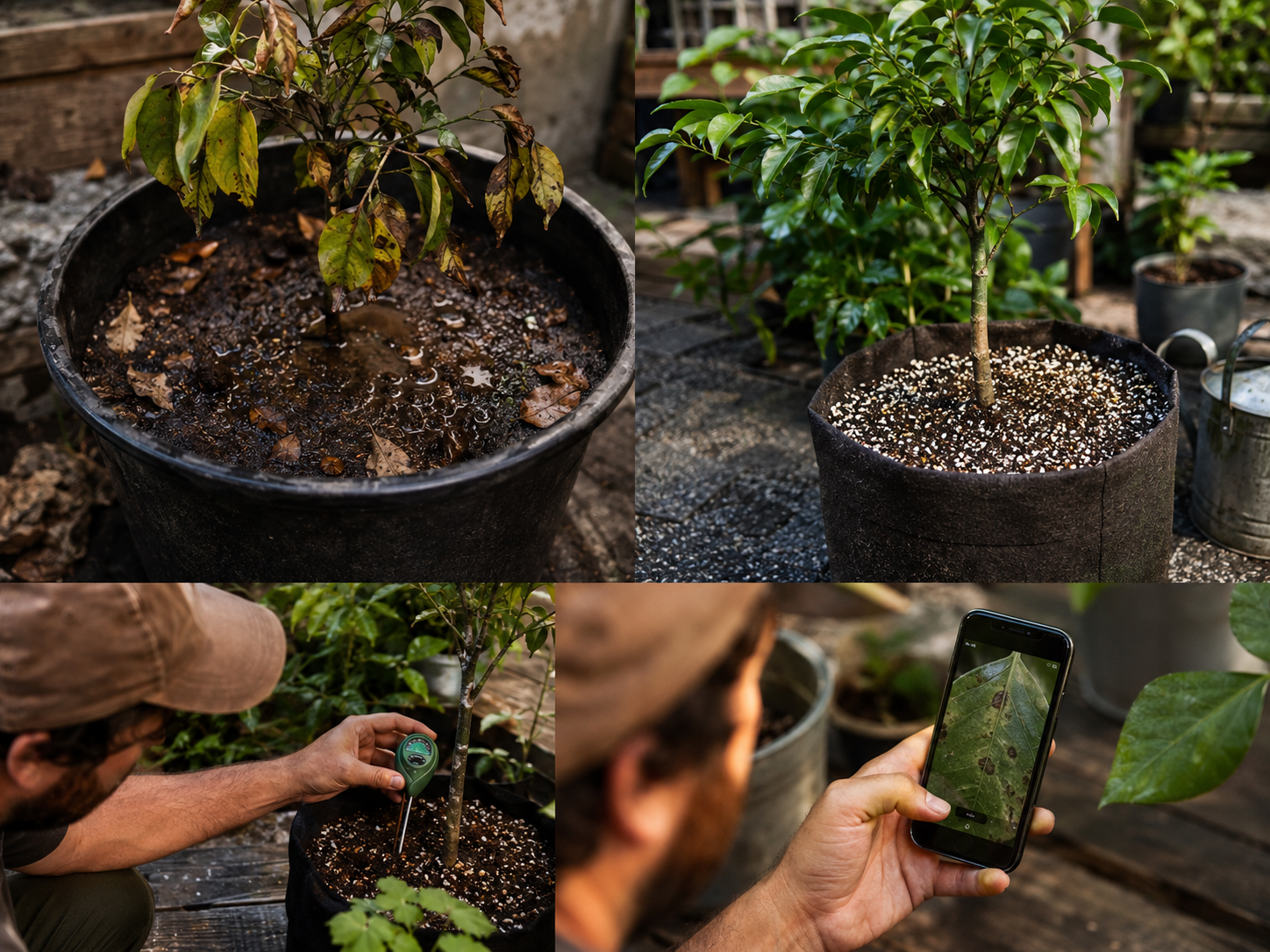
- Overwatering because the schedule says so. Instead: check moisture trend (2–3 in / 5–8 cm), then water when needed.
- Using heavy soil in containers. Instead: refresh with a perlite-based mix designed for tree potting soil.
- Skipping documentation. Instead: take weekly macro photos so you can compare changes—not guess.
- Ignoring season timing. In the US: respect USDA zone reality + local frost dates. In Europe: watch frost/overnight temps; avoid sudden outdoor moves when nights dip.
- Waiting too long to adjust. Instead: make small corrections early—your future harvest depends on early wins.
FAQ
What are the names of small garden tools?
In my experience, “small” tools often become your daily favorites: pruners, hand trowels, hand cultivators, narrow rakes, plant labels, and gloves. They’re the quiet heroes of gardening accessories and garden supplies—especially for indoor/outdoor plants.
What are simple garden tools?
Simple tools are the ones that help you do one job well: a watering can, pruners, a trowel, a soil moisture meter, and a plant label. When you start with basic gardening essentials, your routine feels less overwhelming.
What are 5 gardening tools?
A practical starter set: pruning shears, a hand trowel, gardening gloves, plant labels, and a watering can—plus (if you want smarter care) a soil moisture meter for fewer mistakes.
What are the 10 garden tools?
Ten common tools include: hand trowel, pruning shears, hand rake, watering can/hoses, gloves, plant labels, soil meter, macro lens (for documentation), potting tray, and a small container scoop for soil mix for trees.
What are examples of small tools?
Examples: plant scissors, narrow trowels, hand weeders, mini stakes, clip-on trellis ties, label markers, and small brushes for cleaning.
What is a garden tool like a pick?
That’s typically a pickaxe or garden pick/pitchfork style tool—often used for breaking up soil or lifting. For container gardening, lighter tools usually work better to avoid disturbing roots.
What are the 20 examples of farm tools and their uses?
Farm tools vary widely, but a common set includes plows, cultivators, seed drills, shovels, rakes, hoes, wheelbarrows, sprayers, irrigation hoses, tractors, pruning saws, pitchforks, hay tools, measuring tapes, and soil testing tools. Pairing soil tests with monitoring gives better outcomes.
What are the names of things that gardeners need?
Gardeners need seeds/seedlings, potting mix (often with perlite for containers), planters, water tools, plant labels, pruning tools, and supportive gadgets like a plant moisture meter.
What is the name of a garden tool?
There are many—trowel, pruners, rake, watering can, soil moisture meter, and pruning shears are all common examples used in plant care tools.
What is a garden tool like a pick?
Look for a “garden pick” or “soil pick.” It’s used to loosen compacted soil, though in pots you’ll usually prefer gentle tools to protect roots.
What are the 16 tools and equipment in plant propagation?
Common items include: propagation trays, rooting medium, seed-starting mix, labels, humidity dome, misting/sprayer tools, rooting hormone, sterilized tools, heat mats, watering equipment, pruning shears, grafting ties, pots, and clean containers.
What are most gardening tools made of?
Many are made from steel (often stainless), aluminum, or carbon steel for strength. Handles are usually wood, rubber, or composite materials. Tools that touch soil often benefit from rust-resistant coatings.
What are the tools and their uses?
Tools do “jobs”: pruners shape and remove; trowels plant; watering cans deliver moisture; meters measure plant moisture meter data; macro lenses document progress; labels track varieties and dates.
What are some good gardening tools?
Good tools are reliable and match your plants: a 4-in-1 soil meter for monitoring, perlite potting mix for root airflow, pruning shears for shaping, and a macro lens for early detection.
What are garden tools names and pictures?
Many guides include pictures by category—hand tools, soil tools, watering tools, and garden gadgets. If you want, replace the placeholders in this post with your own product images to create a visual “tools + uses” gallery.
How do you clean garden tools?
Clean with warm water and a brush, remove soil residue, then dry thoroughly. Disinfect cutting blades with alcohol (or a mild solution), especially after removing diseased plant material—this keeps your tools safe and helps prevent spread.
What are the common tools used in gardening?
Hand trowel, rake, pruners, gloves, watering can, plant labels, and soil testing/monitoring tools like a soil moisture meter are among the most common.
What tool is used to make a garden?
You start with planning tools (like a measuring tape) and soil tools (trowel, shovel) plus a potting mix choice. The “smart” step is soil moisture monitoring so your garden doesn’t become guesswork.
What are the different types of garden tool sets?
Common sets include starter hand-tool sets, watering sets, pruning sets, and “soil + planting” bundles. For container gardening, a set that includes gardening accessories plus a plant health monitor can be especially helpful.
Final verdict
If I had to choose just three choices that feel like a supportive best-friend move, I’d pick the meter, the perlite potting mix, and the clip-on macro lens—because they solve the root emotional problem: uncertainty. With plant monitoring, you stop guessing. With better soil for container trees, you stop fighting your drainage reality. And with macro garden photography, you learn what’s changing before it becomes dramatic. In my own seasons—across heat, cool nights, and those tricky frost logic moments—this system turns “what do I do?” into “I’ve got this.” That’s the difference between buying random gadgets and building confident plant care tools.
Want A Smarter Plant Routine—Starting This Week?
Use this guide as your setup checklist: measure soil conditions, support roots with perlite potting mix, and document growth with macro photos. Then make one small improvement each week—no stress, just progress.