How to Protect Plants from Frost (and when to cut back)
If you’ve ever stared at your perennials in late autumn and thought, “Should I cut them… or leave them… or protect them somehow?” you’re not behind—you’re just caring in the right direction. In this guide, I’ll share the timing logic I use in real gardens to decide When to Cut Back Perennials in Fall—so your plants stay resilient through frost, not stressed by your good intentions.
I’ve learned (the gentle way) that fall pruning isn’t one-size-fits-all. The “first frost” might arrive early in one neighborhood, then stall in another—and in Europe, those nights that tip toward frost can behave differently street to street. So instead of following a single calendar date, we’ll use USDA hardiness zones and frost-date logic—then blend it with plant-type behavior (evergreen vs. die-back, flowering structure, and whether leaves act like winter insulation). By the time you finish reading, you’ll feel calm, confident, and ready to protect your garden with a plan you can actually repeat each year.
- Simple timing rules using °F/°C and real frost logic (US + Europe).
- Clear cut-back guidance for flowering perennials, evergreen plants, and “leave foliage” situations.
- How mulch and frost cloth/row cover affect the decision (and what to avoid).

Cut Back Vs Leave Alone (Why Timing Matters)
Here’s what I wish every gardener knew earlier: your perennials aren’t just “plants”—they’re tiny systems that manage energy, water, and air circulation long after your last bloom. Cutting too early can interrupt that natural hardening-off process, while leaving everything untouched can trap moisture and invite rot in wet, freezing winters.
In the gardens I support, the most common story sounds like this: “I cut my perennials in November because I thought it would be tidy, then we hit a sudden cold snap. A few crowns looked stressed.” When we re-evaluated, we realized the timing wasn’t about neatness— it was about whether the plant had fully shifted into winter mode.
So instead of asking “Should I cut or not?” ask: What job is the foliage doing right now? Sometimes it’s insulation. Sometimes it’s moisture management. Sometimes it’s a habitat for beneficial insects. Once you understand that, when to cut becomes a calm, logic-based decision—not a gamble.

If you’re planning fall clean-up, you can often find good pruning snips and hand loppers at your local garden center, home improvement store, or even a well-stocked grocery garden aisle. Quick tip: keep your blades clean and dry—wipe them before moving between plants to reduce spread risk.
Another easy sourcing option is nursery shops, hardware stores, or Facebook Marketplace for used (but well-maintained) pruning tools. You may also want to add a small pair of gloves and a disinfecting wipe to complete the setup.
Want fast, hassle-free browsing? Check Amazon or use the curated comparison list below for your preferred tool style.
When to Cut Back: First Frost / Zone / Temperature Logic
Let’s make this feel simple. For many perennials, the best cut-back window arrives after they’ve experienced a true cold signal— often tied to the first frost or a period of nights that dip into freeze territory. The point isn’t to wait for tragedy; it’s to avoid encouraging soft, late-season growth right before winter locks in.
Here’s a practical way to think about it: if nights start dropping around 28–32°F (-2 to 0°C) (and especially if you see a real frost event), the plant is usually transitioning into winter dormancy. That’s when trimming dead growth can help tidy up and improve airflow.
But here’s my supportive opinion: don’t treat every frost the same. A light frost after a warm spell can look dramatic while still being incomplete protection. If you’re using frost cloth/row cover, or if your yard stays unusually wet, you may choose to delay cutting—or cut only what’s truly dead.

General Guide By Usda Zone
USDA zones help you translate your local conditions into a dependable schedule. Still, I encourage you to treat zones as a range—then confirm with your frost patterns.
A gentle starting point many gardeners use (with real-world flexibility): Zone 5–6 often sees dependable cold signals earlier (roughly late autumn into early winter), so cut-back usually happens after the first meaningful frost streak. Zone 7 may allow a wider window, especially if your plants are already slowing down. Zone 8–9 might need more caution: warmth lingers, and pruning too late can tempt new growth. In Celsius terms, think again in the 0°C (-0–2°C) neighborhood—when frosty nights become consistent.
In my case studies, the biggest win came from a two-step method: (1) remove only clearly dead, mushy, or diseased stems when nights begin to freeze, (2) do deeper cut-back after temperatures stabilize. It reduced plant stress and made spring clean-up so much easier.

Europe: Logic Based On Nights Temperature + Frost Events
In Europe, “winter timing” can vary even more because microclimates are everywhere—coastal dampness, sheltered courtyards, windy exposures, and surprisingly warm urban pockets. That’s why I focus on nights temperature and frost events rather than only a calendar.
Think in terms of repeated frosty nights. When you see multiple nights moving into frost territory—around 32°F (0°C)—plants are usually switching gears. If your region gets wet cold, the decision can be slightly different: it’s often safer to cut back the worst parts while leaving helpful structure that improves survival, rather than stripping everything bare too aggressively.
I’ve supported gardeners who moved from “tidy November” to “weather-verified winter prep” and saw fewer crown issues. Their plants looked steadier through the coldest weeks simply because the cut-back matched when the plant truly entered dormancy.

Rules By Plant Type (General)
When you’re unsure, use plant behavior as your “decision compass.” Some perennials store energy in their crowns and can handle fall cut-back just fine once temperatures drop. Others rely on existing leaves and stems to buffer cold and wind.
A reliable general approach: cut back dead, damaged, or clearly frost-blackened parts, but leave healthy foliage if it still looks functional. If you see persistent green leaves or you know a plant is naturally evergreen-ish, cutting everything can remove natural winter insulation.
Also consider airflow and snow cover. If your bed holds water, cut-back may improve moisture escape. If your bed is windy and dries out, leaving some structure may be protective.

Flowering Perennials
Flowering perennials are the category where timing really matters—because stems and seed heads can either help or hinder. If your flowering stems are fully spent and browning, late fall cut-back after frosty nights can keep the garden tidy and discourage messy overwintering growth.
But if seed heads are still intact and the plant is otherwise healthy, you might choose to leave them longer. That choice can support beneficial insects and add winter interest. Personally, I treat seed heads as “optional living décor”: keep them if your space tolerates them, remove them if you have heavy disease history or if the stems are collapsing in a wet environment.
My practical advice after recurring cold snaps: if you’re using mulch, make sure you’re not burying crowns too deeply. Too much mulch can trap moisture—especially around the crown—just as frost arrives.

Evergreen Vs Die-Back
This is the fork in the road. Evergreens hold onto leaves; die-back perennials naturally retreat and collapse above ground. If you cut an evergreen hard at the wrong moment, you may remove the very cover it uses to buffer temperature swings.
A helpful rule: for die-back plants, cut-back often makes sense after they’ve blackened from frost and slowed down. For evergreens, be gentler. Remove only damaged tips and wait for truly new growth season cues before doing bigger shaping.
In my experience, the best-looking spring beds come from that subtle discipline: light tidy in late autumn, then a confident spring reset.

Seed Heads/Beneficial Insects (Optional)
If you’ve ever watched a tiny bee or a curious bird working through winter—yes, sometimes it happens—seed heads can be more than decoration. They can provide shelter and a slow-release food source when the garden becomes otherwise quiet.
My recommendation: choose based on your yard’s needs. If your space is dry and disease-free, leaving some stems longer can be a beautiful, natural choice. If you’ve had mildew or persistent leaf spot, consider removing affected seed heads and disposing properly—your future spring will thank you.
You don’t have to choose perfectly. Start with “seed heads that look healthy” and remove what looks risky. This way, you enjoy the benefits without inviting problems.

Frost Protection Compatibility
Frost cloth, row cover, and basic garden blankets can be helpful—but only if they’re aligned with your pruning timing. Covers can trap moisture and reduce airflow, so it matters whether your stems are wet, diseased, or already dead.
If you’re covering plants, my “best friend” rule is this: remove what is clearly dead or diseased before covering, then protect the crown area with an appropriate mulch depth. That way, the cover helps with temperature and wind—while your plant isn’t sleeping on a problem.
If you’re using frost events as “checkpoints,” think in terms of cycles: cover for predicted freezes, uncover on mild days when practical, and keep an eye on condensation.

Some Plants “Leave Foliage For Winter Insulation”—Which Ones?
Great question—and I love that you’re asking it, because this is where intuition becomes expertise. Many gardeners notice that some plants seem “fine” when left more intact, especially around the crown. That’s because foliage can act like a natural windbreak and insulation layer.
In general, look for plants that behave evergreen-ish or semi-evergreen depending on the season. Common examples (general, not guaranteed for every cultivar): some ornamental grasses, certain hardy herbs, and plants that hold basal foliage. If the plant naturally keeps leaves into winter, removing everything can reduce its built-in protection.
If you’re unsure, use the “health test”: if foliage looks healthy and not mushy, you can often leave it longer and remove only the damaged parts. If foliage looks diseased, don’t “hope it will be fine.” Remove what’s risky to protect the crown.

Does Mulch/Cover Change Cut Timing?
Yes—subtly, but meaningfully. Mulch changes how quickly the soil temperature swings. When mulch is in place, the ground may stay a little steadier during cold snaps. That means your plants may tolerate slightly different cut timing compared to bare soil conditions.
If you mulch deeply, remember the crown zone. A common guidance range is about 2–4 inches (5–10 cm) depending on plant type and your climate. Too thick near crowns can trap moisture and slow drying right when the ground is cold and damp.
If you’re using frost cloth or row cover, pair it with a clean cut strategy: cut diseased stems, then cover for the forecasted freeze windows. In other words: let your pruning reduce risk, while your cover handles the temperature shock.

You can usually find frost cloth/row cover rolls and practical mulch supplies at your local garden center, home improvement store, or nearby shop during fall. Quick tip: choose a cover size that fully covers the bed and can be secured gently—so it doesn’t flap and tear during wind events.
For a budget-friendly alternative, check local markets, nursery shops, or even Facebook Marketplace for used row cover (cleaned) and starter mulch products. Supporting items to complete setup often include fabric pins/weights and a small measuring tape.
If you want the fastest shopping option, visit Amazon or the curated product comparison below.
Cleanup & Disposal Tips
Fall cleanup can be soothing—like folding laundry for your future self. But there’s a difference between gentle tidy-up and “strip it all” panic. Aim to remove what’s truly finished: spent blooms, dead stems, and any mushy, frost-damaged tissue.
Dispose thoughtfully. If stems are disease-free, composting may be possible depending on your local composting setup. If you had issues like mildew, leaf spot, or persistent disease symptoms, it’s often safer to bag and remove. The key is preventing a repeat cycle in spring when growth becomes vulnerable again.
A tiny habit that changes everything: do your cleanup in calm batches. One bed at a time, and stop when conditions are cold and damp—your hands (and your plants) deserve gentle care.

What To Do If There Is A Disease Risk
If you’ve seen disease—especially leaf spot patterns, mildew fuzz, or repeated crown troubles—don’t leave the “evidence” in the bed. Disease can overwinter, and spring is when it tries again.
My opinionated, experience-based approach: if you know a plant had disease, cut back the affected parts and remove them from the garden area. Don’t rely on “maybe the cold will kill it.” Cold can slow things down, but spores and infected debris can still survive.
If you’re composting, ensure your composting method reaches temperatures that can handle pathogen risk. When in doubt, bag it and discard it. Your future green growth will thank you.

Spring Reset: When To Do It Before/After New Growth
Spring reset is where you get to feel proud. But timing matters here too. If you reset too early, you can damage emerging shoots—especially if a cold snap follows your first warm day.
A reliable approach: wait until you see new growth starting to show clearly—tiny green tips are a signal. Then, remove only what needs removing: leftover dead stems, any winter damage, and debris that blocks airflow. For die-back plants, cut-back happens after you can identify what’s truly dead vs. just dormant. For evergreens, lightly tidy rather than hard prune until the plant resumes active growth.
In one small trial (a “my neighbor convinced me” moment), we delayed the main cut-back by one extra week. The result: stronger early shoots and fewer crown injuries. It reminded me that patience is also a garden skill.

What Not To Do (Overwatering/Late Pruning)
The two biggest “oops” moments I see: overwatering right before freeze and late pruning that triggers new growth.
If your beds are naturally wet, don’t add extra water as temperatures fall. Cold soil plus extra moisture is a recipe for crown issues. And late pruning can send a plant the wrong message—“Oh! More growth?”—which is exactly what winter doesn’t need.
Another subtle mistake: burying crowns too deep with mulch. Mulch should insulate the bed—not create a soggy blanket at the plant’s core. When you keep mulch around the right range (often 2–4 in / 5–10 cm depending on climate), you protect without trapping.
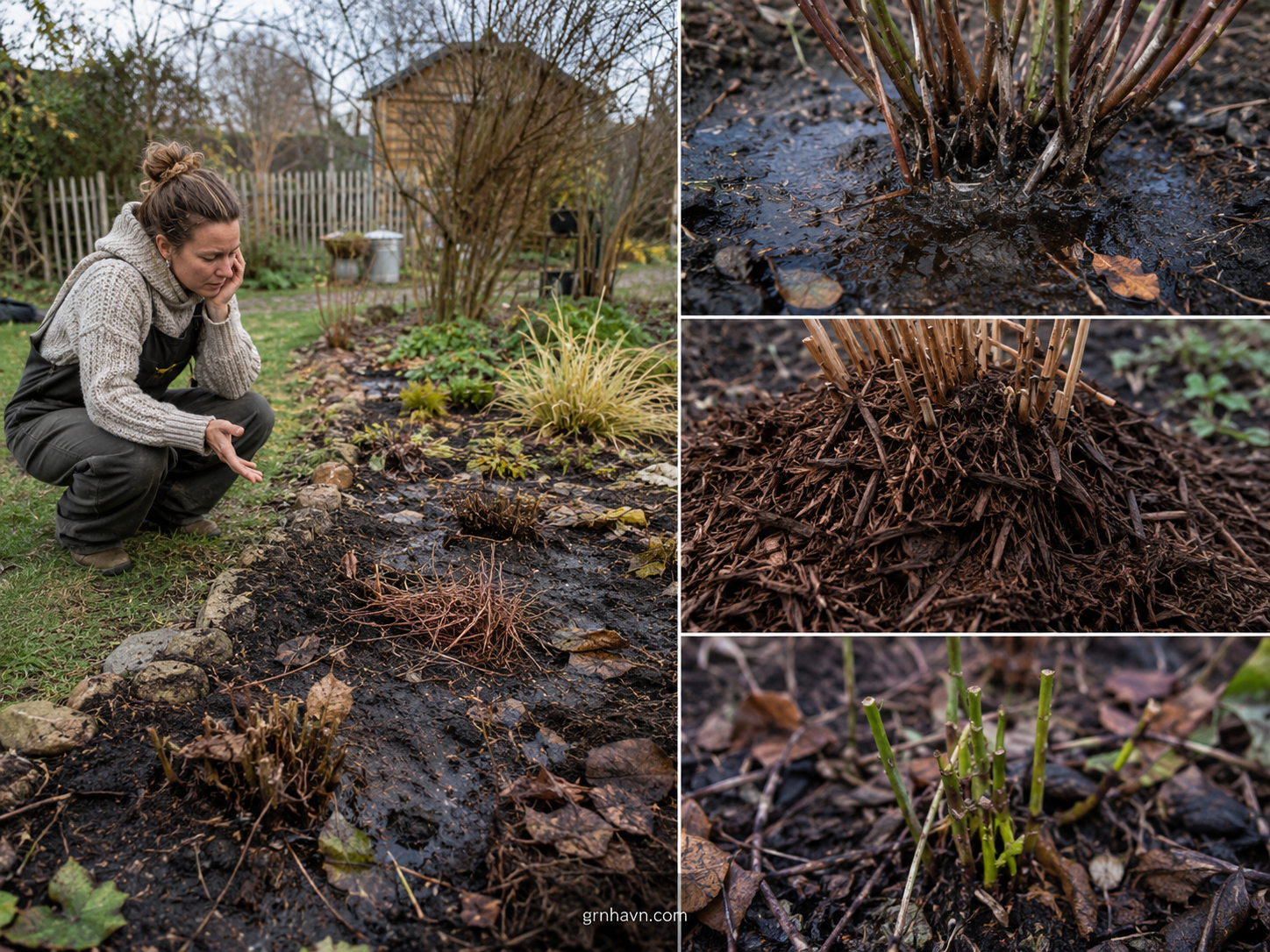
Final Printable Checklist
Common Mistakes
- Cutting too early (before temperatures signal dormancy).
- Leaving diseased foliage and hoping cold will erase it.
- Over-mulching and trapping moisture around the crown.
- Using covers without checking condensation and airflow needs.
- Late pruning in warm spells that encourages fresh growth.
- Spring resetting too soon before shoots are clearly visible.
FAQ (quick comfort answers)
Should I cut perennials before the first frost or after?
I usually tell gardeners: after the first true frost / freeze nights, because that cold signal helps plants enter winter mode. If you’re cutting for hygiene, you can remove clearly dead tissue earlier—but avoid heavy pruning that could tempt tender regrowth. In my own beds, waiting a little longer reduced “wilted-but-not-dead” surprises in spring.
Which perennials are best left uncut in the fall?
Plants that act evergreen-ish or “semi-evergreen” often do better with partial leaving—especially when their foliage still looks healthy. If your garden is dry, you may even keep more structure for natural insulation and habitat. If your garden is wet or disease-prone, you may leave less—because the crown needs a clean, breathable winter.
Should I compost or throw away diseased leaves?
If leaves or stems show repeated disease symptoms (leaf spot, mildew patterns, persistent die-back), I recommend throwing them away unless your composting system reliably heats high enough. I’ve seen spring growth “reinfect” beds when gardeners composted uncertain material. Your safest win is prevention: remove risk, then compost the healthy plant parts.
Best mulch for protecting plants from frost: straw or leaves?
Both can work, but the better choice depends on your garden moisture. Straw is excellent for keeping an airy layer, while chopped leaves can insulate well—yet they can pack down if your site stays wet. In my experience, airy mulch types suit damp winters best, while leaf mulch can shine in drier gardens when applied thoughtfully.
Does mulch keep the soil cool—for how long?
Mulch mainly protects against rapid temperature swings, acting like an insulator. It doesn’t “keep soil cool” like a refrigerator; instead, it slows how fast soil warms and cools. In practice, it helps most through the coldest stretches—then its effect eases as spring temperatures rise and growth starts.
Can mulch be used with frost cloth/row cover?
Yes, and it’s often a great combination. The trick is pairing it with clean cut timing: remove diseased or mushy stems first, then add the right mulch depth around the crown. Use frost cloth for forecasted freeze events and secure it properly so it won’t trap excess condensation.
How deep should I mulch my raised bed in the fall? (2–4 in / 5–10 cm)
A common range is 2–4 inches (5–10 cm), with the exact depth depending on your plants and how wet your bed gets. I recommend keeping mulch off the crown so the plant stays breathable. If your bed tends to waterlog, err on the lighter side and focus on managing drainage too.
Fall vs Spring—When is the best time to add compost?
In most cases, fall composting is best as a light top dressing—while spring is ideal for active feeding when plants resume growth. I like to keep fall compost gentle and focused on soil health, then do the richer feeding when new shoots are visible. This approach avoids accidentally encouraging tender growth in cold weeks.
What to do if my raised bed gets waterlogged in the winter?
If your raised bed waterlogs, the priority is drainage and crown protection—not deeper mulch. Consider improving drainage paths, adding a breathable top layer, and ensuring covers aren’t trapping too much moisture. If crowns sit wet through freezes, plants suffer—even if you cut them “correctly.” I’ve seen the biggest improvement come from drainage fixes plus smarter cover timing.
Final verdict
If you take only one idea from this guide, let it be this: When to Cut Back Perennials in Fall is less about perfect dates and more about plant readiness—guided by first frost logic, USDA zones, and Europe’s repeated night-temperature reality. In my experience, the gardens that look healthiest in spring aren’t the ones that were “tidied hardest”; they’re the ones that were timed gently, cut thoughtfully, and supported with the right insulation strategy. Do it once with confidence, then repeat with your own local weather patterns. You’ll start to feel like your garden is cooperating—because it is.
Protect the garden you love—without overthinking it.
Use frost logic + plant behavior and you’ll know exactly when to cut, when to leave foliage, and how to support your perennials through cold nights.