Best Raised Bed Soil Mix & Fall Prep Guide for Winter
“Fall doesn’t end your garden—it gently folds it into a safer, warmer story for spring.”
If you’ve ever looked at your raised beds in late autumn and thought, “Am I protecting this… or accidentally hurting it?”—I hear you. I’ve been there. And here’s the truth: Raised Bed Gardening: Soil Mix & Fall Prep isn’t about doing everything. It’s about doing the right things at the right time—so your soil stays alive, your roots stay comfortable, and your spring harvest feels effortless.
In this guide (warm, practical, and deeply experience-based), I’ll walk you through the soil mix decisions that support winter survival—especially across US USDA hardiness zones and Europe’s frost/temperature realities. I’ll explain compaction prevention, mulch timing, cover crops, and the “little mistakes” that can quietly steal your momentum.
Think of me as your best-friend gardener: supportive, honest, and slightly obsessed with results. You’ll leave with a checklist you can print, product picks you can compare, and clear guidance you can trust—whether your season ends near the first frost at 32°F (0°C) or stretches into milder winters that still deserve smart prep.
- A fall-to-winter raised bed soil mix strategy (structure + nutrients + drainage)
- Timing logic using USDA zones and Europe frost/temperature
- Compaction prevention + correct mulch timing
- Winter essentials + “what not to do” honesty
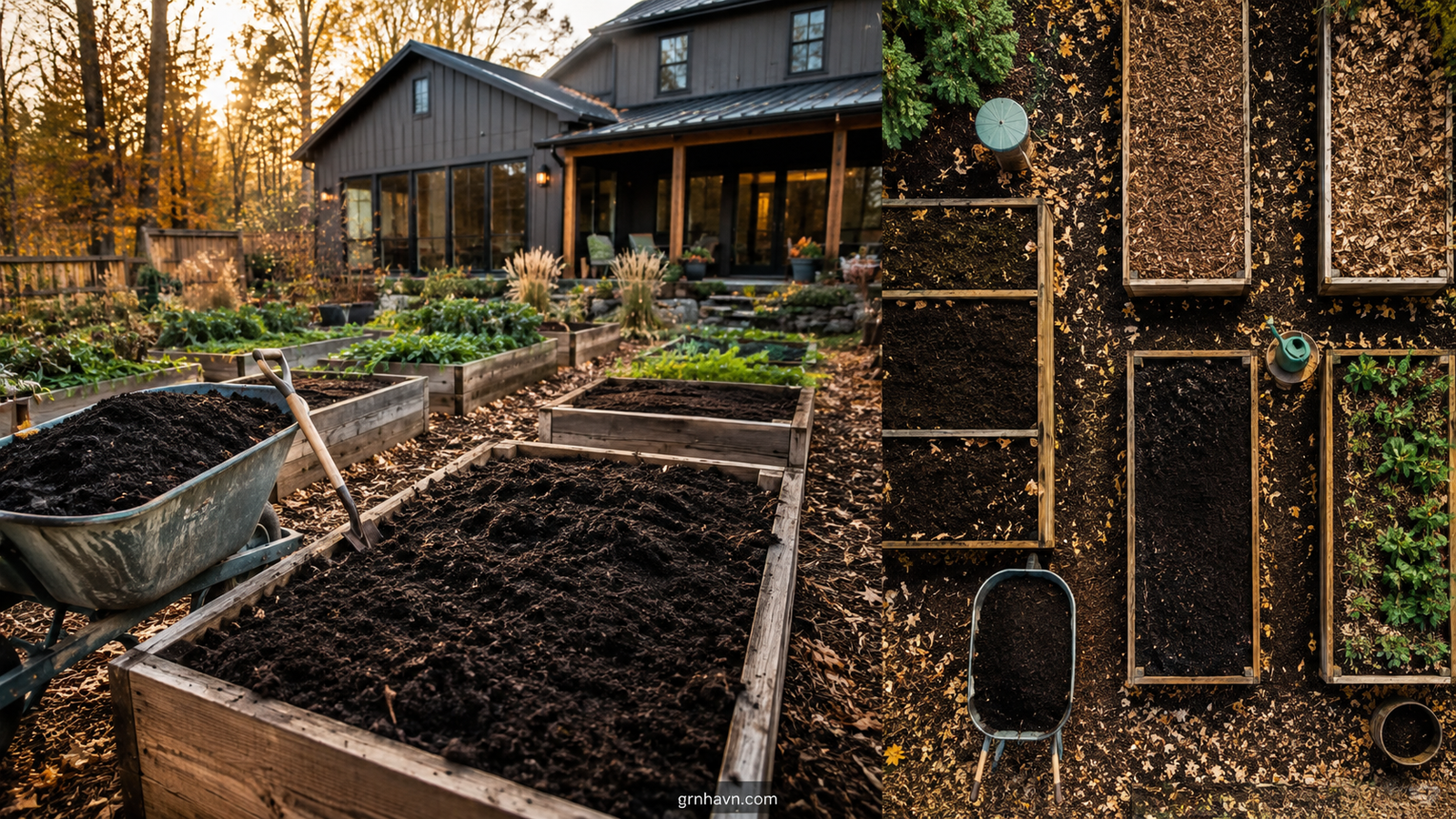
Why Fall Prep Matters For Raised Beds
Fall is the quiet chapter where raised beds either stay resilient or gradually lose their structure. In my experience, the biggest difference between “my beds always bounce back” and “my soil feels dead by spring” comes down to what you do after harvest—not what you do during it.
When temperatures dip toward 32°F (0°C), soil biology slows, moisture patterns change, and the risk of compaction increases. If you’ve ever walked on a bed when it’s wet and noticed how dense it feels afterward—that’s the memory your bed keeps. Winter compression can harden layers, reduce oxygen pockets, and make nutrients harder to cycle.
Here’s where I bring both US and Europe timing into the same mindset: use USDA hardiness zones and frost-date logic to estimate your “prep window,” then translate it to Europe based on typical frost frequency and average winter temperatures. If your ground spends long stretches near freezing, you’ll benefit from earlier preparation—especially around the moment you expect consistent frosts.
“The best winter prep is the one you barely notice—because your soil quietly holds it together.”
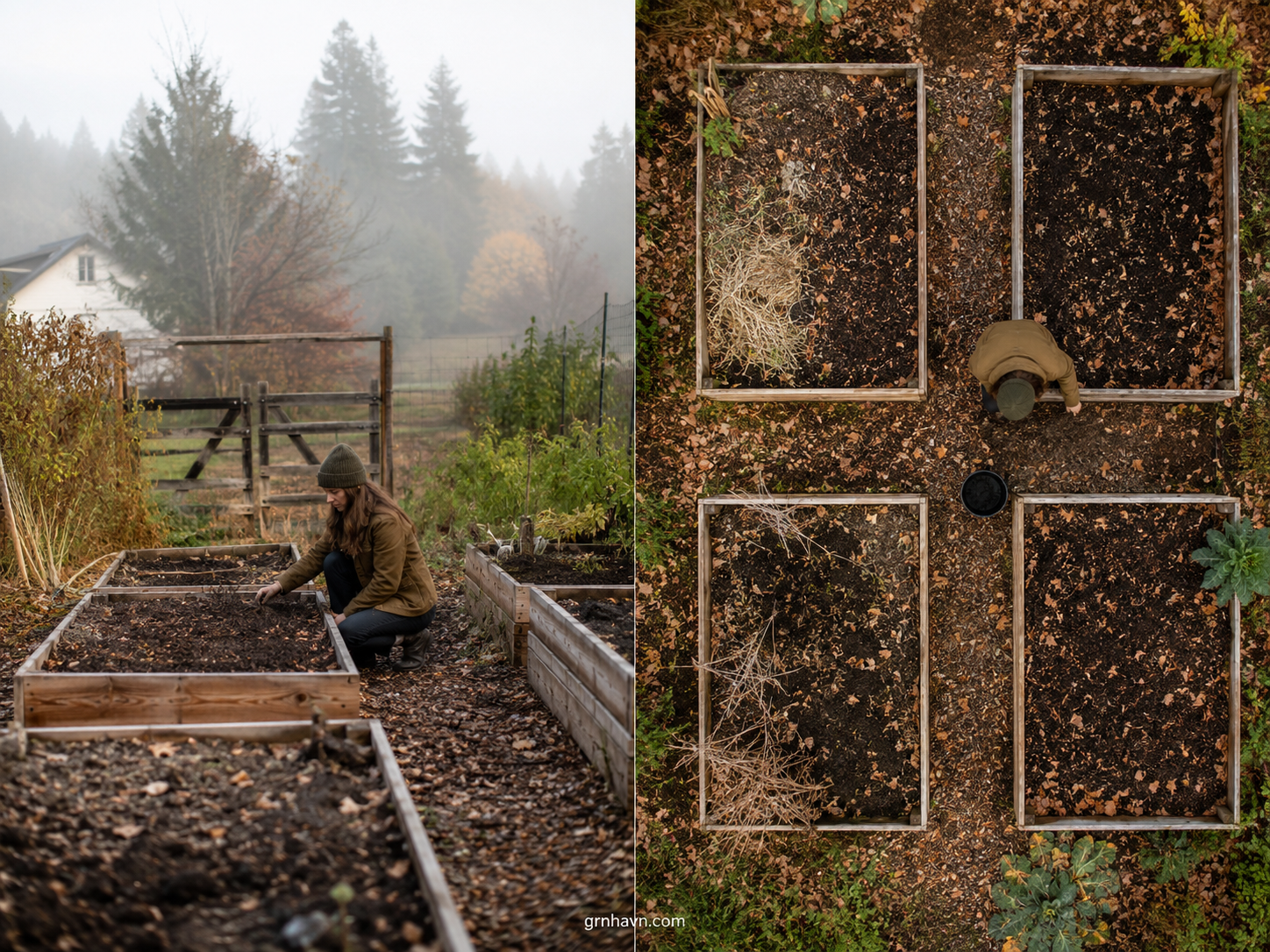
Think of fall prep as training your raised beds like a gardener trains a hammock—gentle support now, comfort later. Once you nail the soil mix and timing, your winter doesn’t feel like waiting. It feels like progress.
Raised Bed Soil Mix For Winter Survival
The “best” raised bed soil mix is the one that balances drainage, structure, and organic matter. In winter, you’re not trying to grow heavy top growth—you’re supporting the underground work: microbial activity and stable moisture.
My go-to strategy for raised beds heading into winter is a layered, well-aerated blend approach: start with a quality base (often a potting soil–style or raised-bed mix), add finished compost for biology and fertility, and keep the structure airy so water can move without turning the bed into a cold sponge. If your soil tends to compact, prioritize ingredients that improve aggregation (and avoid over-fine, mud-like components).
For timing: when the season cools and your days hover near 50°F–60°F (10°C–16°C), you still want to build a soil environment that won’t collapse as it freezes. In the US, zones differ widely—so the key is your frost pattern. In Europe, focus on frost frequency and the duration of chilly nights. Either way, the goal is the same: stable soil, not saturated soil.
| Option | Best for | What to look for |
|---|---|---|
| Raised Bed Soil Kit | Quick, consistent refill + beginner-friendly success |
Compost-rich mix, good texture (not dusty), and drainage support
Tip: match kit volume to your bed area so you don’t under-fill.
|
| DIY Compost + Soil Blend | Experienced gardeners customizing texture | Use finished compost, avoid “fresh manure” into cold months unless fully stabilized |
| Soil Rebuild Only | When your bed is already in good condition | Top dress with compost + cover crop instead of fully replacing |
“A good soil mix feels alive—never swampy, never powder-dry. Winter is when it should stay steady.”
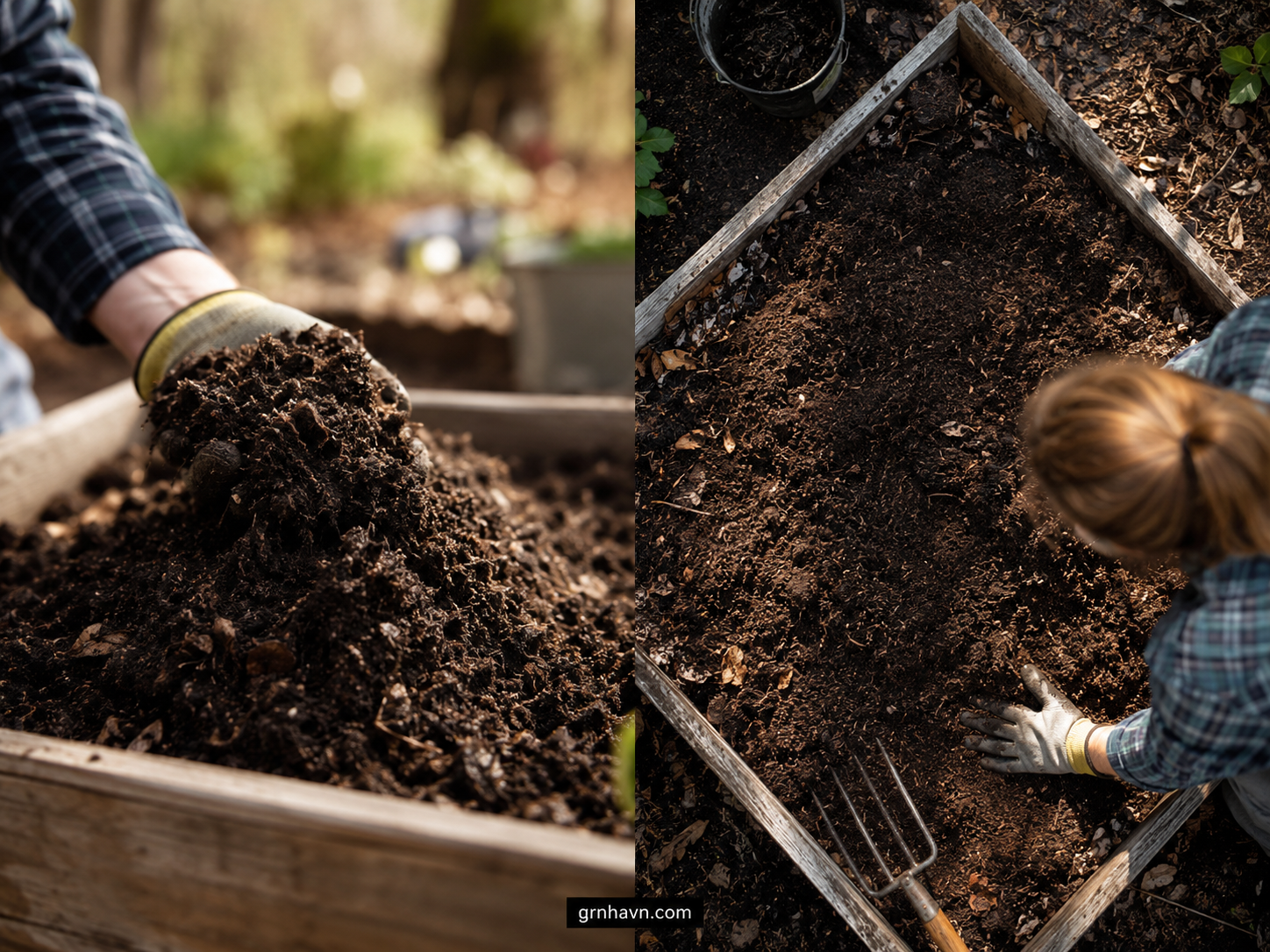
My opinion, from years of winter trials: don’t chase perfection. Chase texture. If you can crumble it, it drains well. If it turns into a dense block, winter will amplify that. Build for oxygen and stability—then let compost and cover crops do the quiet work.
Fall Soil Prep Steps (Checklist)
Let’s make this simple and repeatable. This checklist is designed for real life: busy weeks, damp days, and that moment you realize frost isn’t waiting for you. If you do these steps, your beds enter winter with better structure and a clearer plan for spring.
1) Clear spent plants gently (leave roots only if they’re healthy; don’t rip into clumps that create compaction).
2) Loosen the surface lightly—not deep digging, just enough to prevent a crusted top layer.
3) Top-dress with organic compost to feed microbes and stabilize moisture.
4) Plan mulch timing based on your first consistent cold snap.
5) Consider a cover crop if you’ll have bare soil for more than a few weeks.
If you’re mapping this to seasons: in the US, many gardeners prep before their typical first frost for their USDA zone. In Europe, use frost-frequency and “average cold spell” logic. A practical rule: when your nights repeatedly dip around 32°F (0°C), you’ll want protection and insulation—not heavy disturbance.
“Your goal isn’t to rush. It’s to leave the bed in a good mood for winter.”
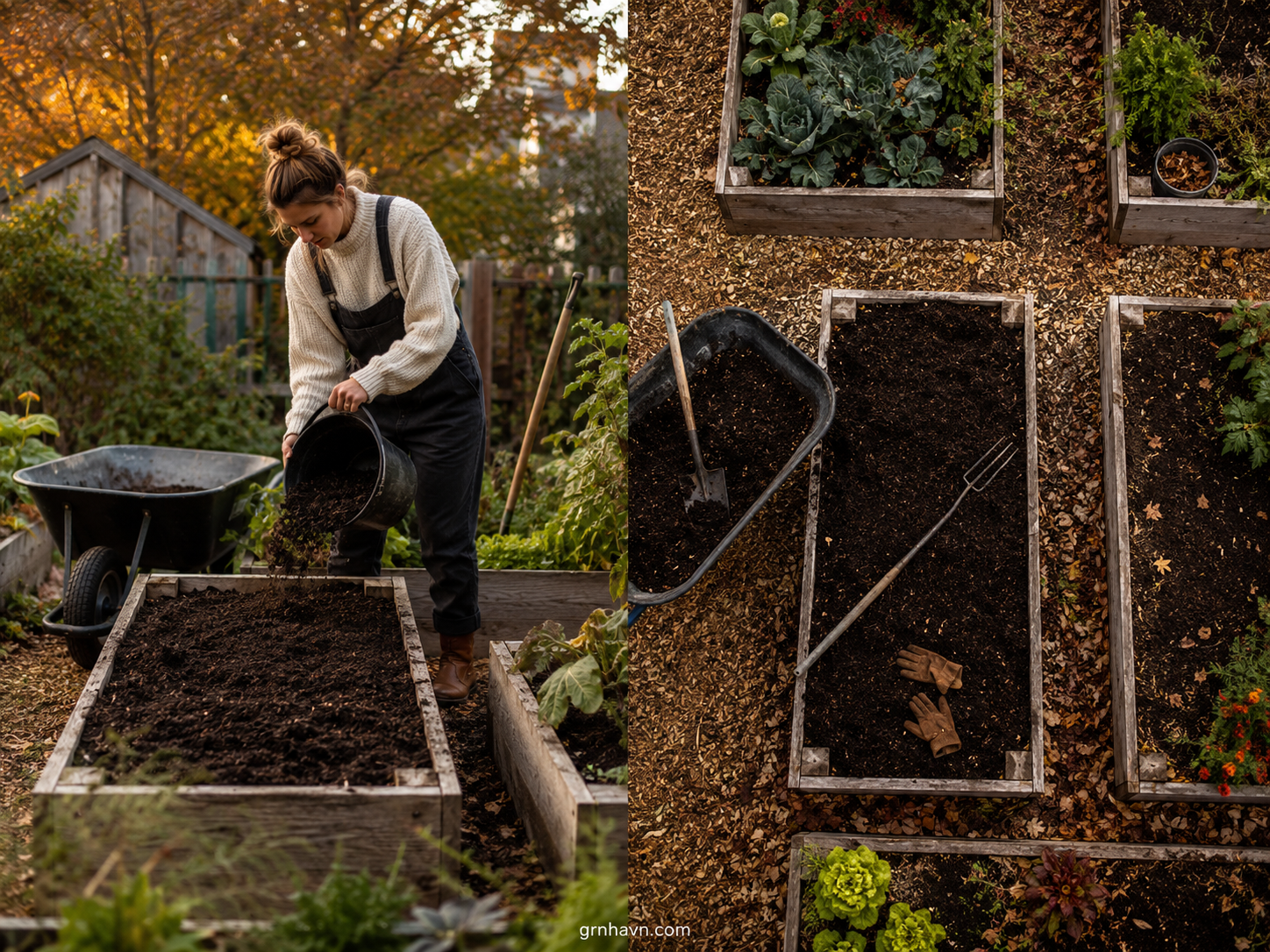
Mini case study from my own beds: the year I stopped fully rebuilding every fall and instead top-dressed compost + used gentle loosening, my soil stayed fluffy longer. Spring felt earlier, and seedlings went in without that “why is it so hard?” frustration.
| Tool / Pick | Why it helps | How to use in fall |
|---|---|---|
| Compost Spreader | More even coverage, less mess | Top-dress compost before mulch. Apply a thin, consistent layer. |
| Broadfork | Breaks compaction with less inversion | Use only when soil is workable (not wet-mud). |
| Garden Clips | Holds cover fabric securely | Fit frost cloth early so wind won’t undo your setup. |
How To Prevent Winter Compaction
Compaction is sneaky because it doesn’t announce itself right away. You’ll notice it later—often in spring—when water pools, roots struggle to spread, or growth looks uneven. Winter compaction tends to happen when beds are wet, stepped on, or heavily disturbed at the wrong time.
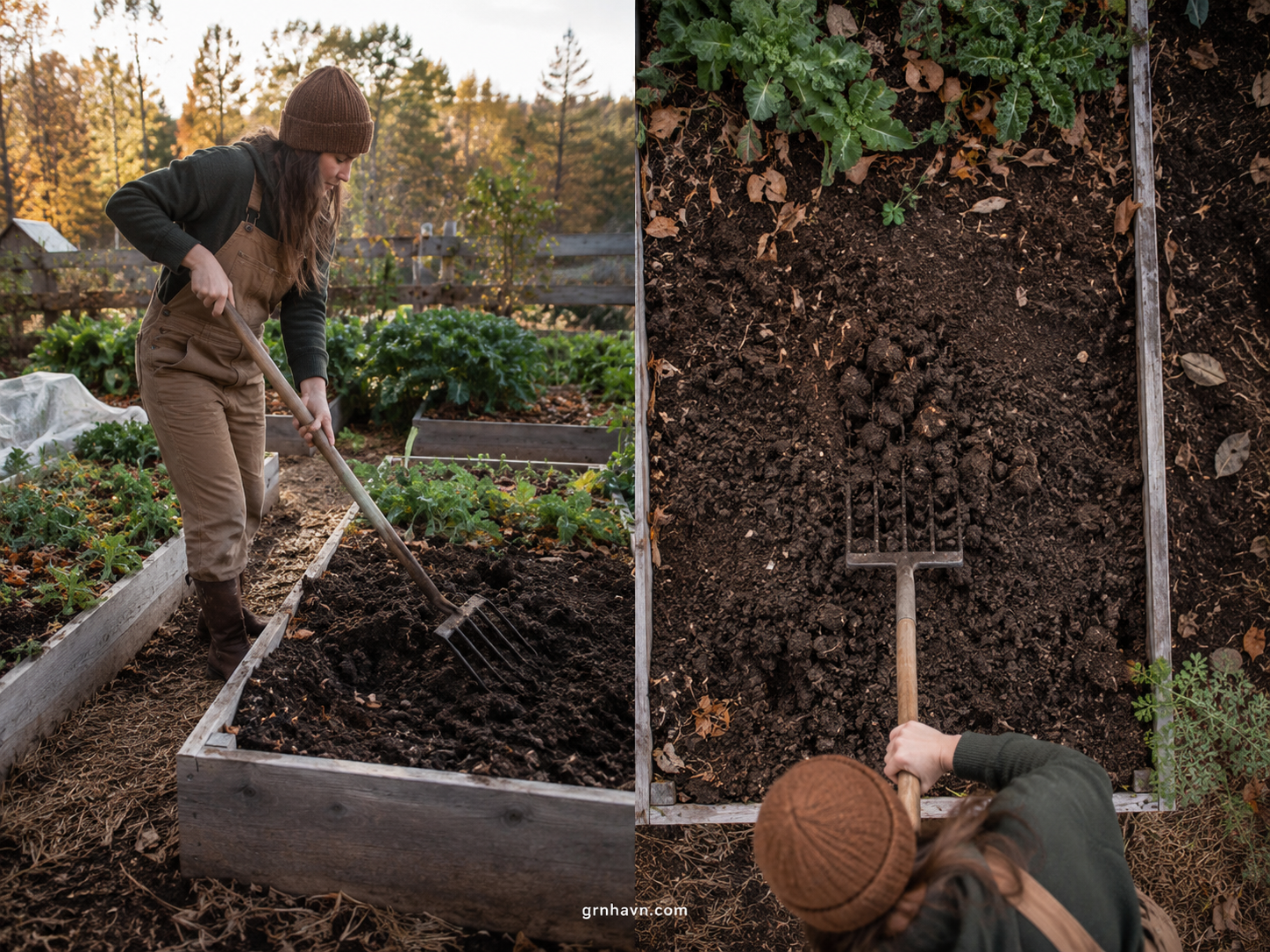
My principle: don’t create unnecessary soil traffic during damp periods, and use soil-friendly tools only when the bed is workable. If you push a broadfork/best-till approach while the soil is too wet, you risk compressing instead of loosening.
If you want a simple strategy: loosen gently in fall, then protect. That means avoiding bare, exposed soil for long stretches and instead using compost top-dressing + cover crops + mulch insulation. In both US and Europe contexts, the “right time” is whenever your consistent frosts start approaching—around 32°F (0°C) nights— but always check soil moisture first.
“The winter you prevent compaction is the spring you don’t have to fix.”
| Approach | Best for | My honest note |
|---|---|---|
| Garden Broadfork | Reducing compaction without flipping soil | Use only when soil isn’t muddy. Let the tool “lift,” not “squish.” |
| Cover Crop + Mulch | Maintaining soil structure naturally | Great for beds you want to “stay untouched” between seasons. |
| Gentle Surface Loosening | Preventing crust + improving infiltration | Don’t dig too deep in cold weather—aim for stability. |
When To Add Mulch On Raised Beds
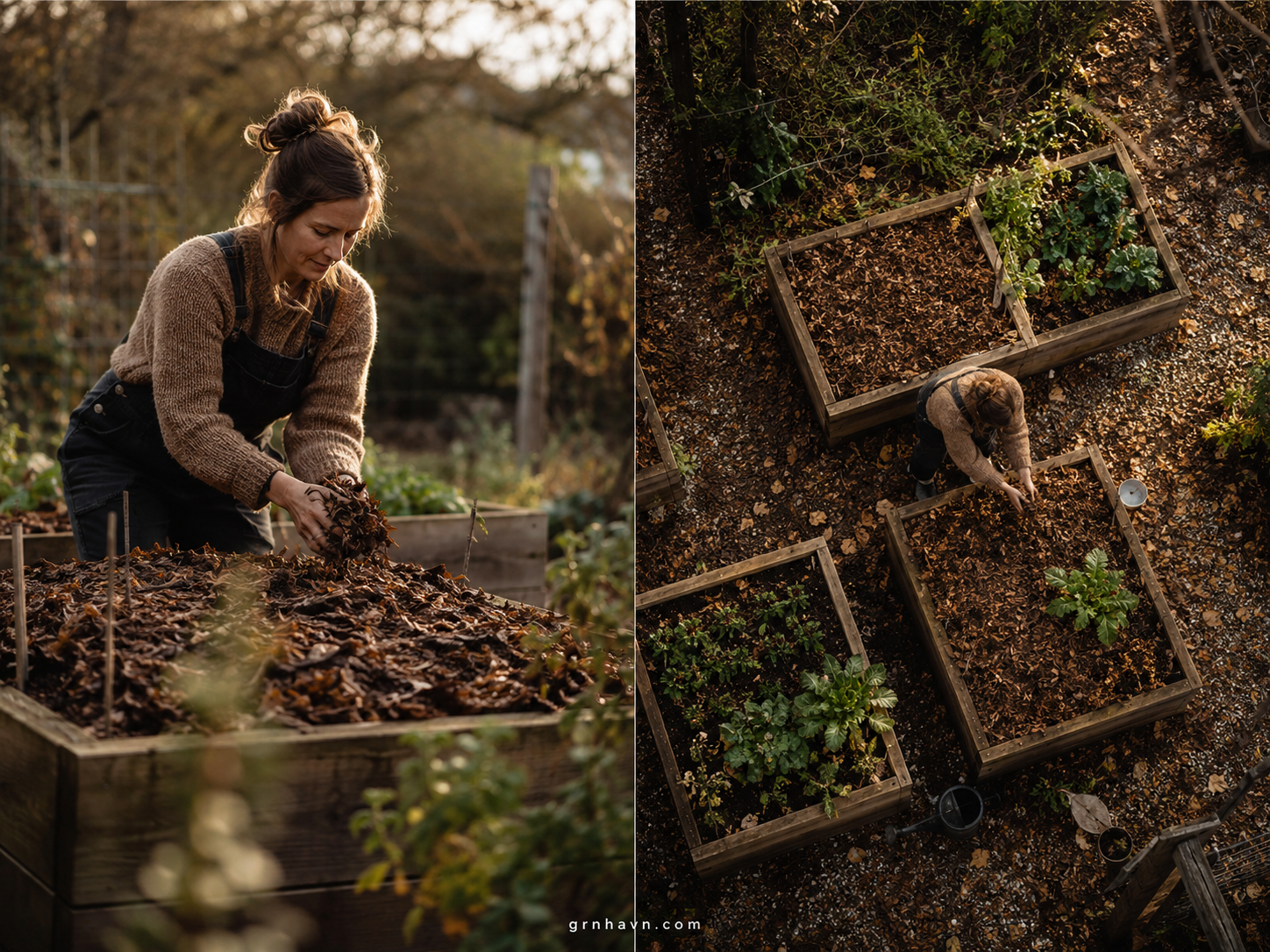
Mulch is like a warm coat—but only if you put it on at the right moment. If you mulch too early while the soil is still warm and active, you can trap moisture and slow down natural drying. If you wait too long, you lose insulation when temperatures swing.
I recommend thinking in two stages: prep first (compost + cover crops if needed), then insulate when cold is consistent. For many gardeners, that means when nights are repeatedly near 32°F (0°C), and daytime temperatures start staying cool. Convert to your region by using your frost dates (USDA logic) and Europe’s frost frequency.
A practical depth guideline: aim for a mulch layer of about 1–3 inches (2.5–7.5 cm) depending on your winter severity and the material. Keep mulch away from directly smothering delicate stems—especially if you’re using cloches or frost cloth.
“Mulch isn’t decoration. It’s protection—and protection has timing.”
| Organic Mulch Option | Pros | Best use in raised beds |
|---|---|---|
| Organic Mulch | Feeds soil + insulates | Use once cold is consistent; maintain thickness ~1–3 in |
| Leaf Mold / Fallen Leaves | Moisture buffering | Great as a winter top layer; shred for better coverage. |
| Straw (if appropriate) | Light insulation | Use selectively; avoid if it brings weed issues. |
Recommended Winter Raised Bed Essentials
Here’s the part I love most: choosing essentials that make winter feel manageable instead of stressful. I don’t believe in overbuying. I believe in selecting a few tools that protect soil, regulate moisture, and prevent wind damage to covers. If you get these right, you’ll feel calmer when the forecast turns cold.
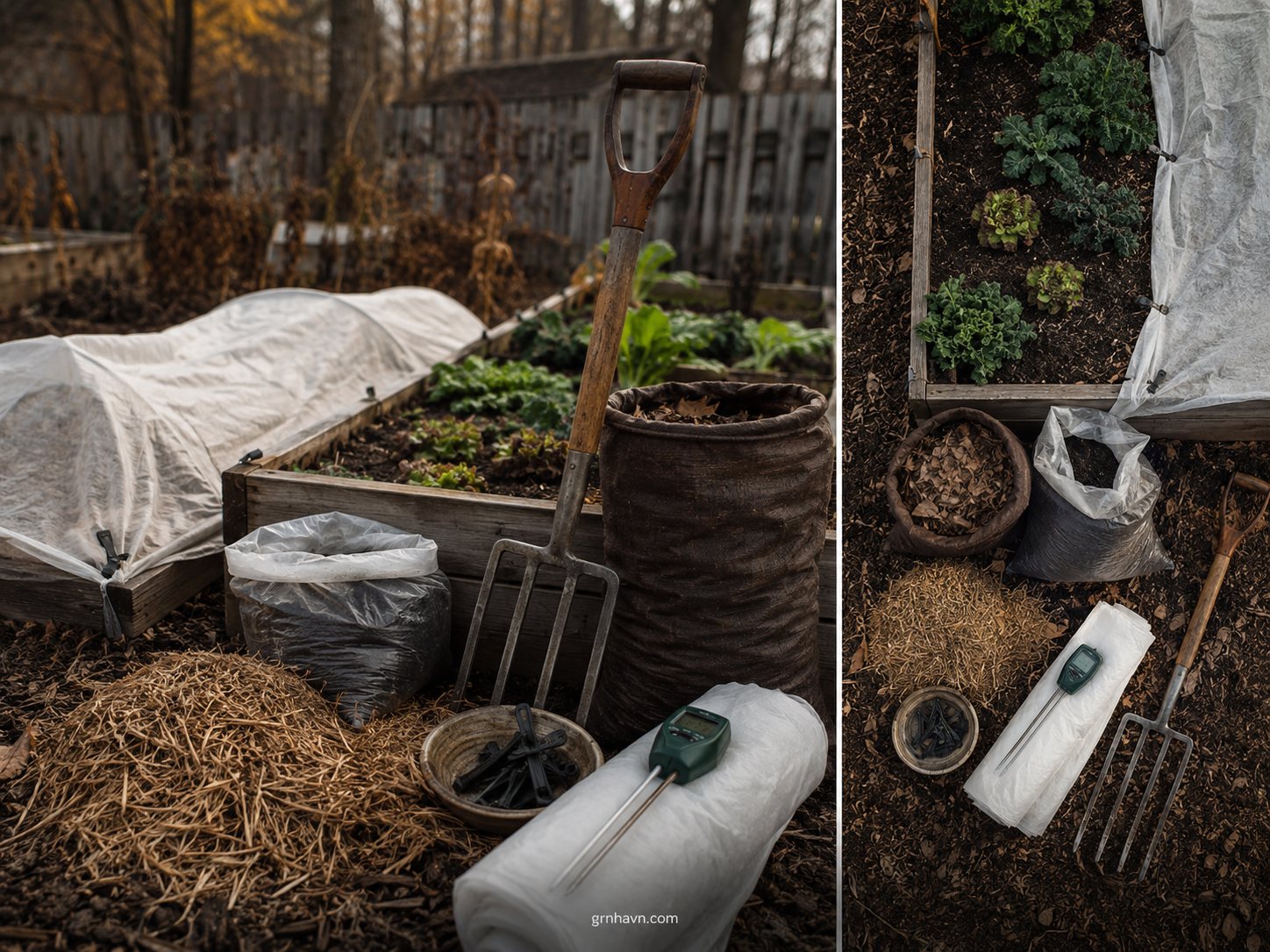
Essential products for winter raised bed success: Raised Bed Soil Mix, Organic Compost, Garden Broadfork, Frost Cloth, Organic Mulch, Soil Moisture Meter, Garden Clips, and Cover Crop Seeds. Each one plays a role—soil stability, moisture awareness, and insulation.
“You don’t need a perfect garden. You need the right supports—quiet, dependable, and kind.”
| Essential | What it does | Winter advantage |
|---|---|---|
| Raised Bed Soil Mix | Stability + drainage + biology support | Less winter collapse, better spring texture |
| Organic Compost | Feeding + microbial support | Slower, healthier nutrient cycling |
| Garden Broadfork | Compaction reduction without inversion | Improved oxygen + infiltration |
| Frost Cloth | Light protection + wind shielding | Extends mild growth and protects roots |
| Organic Mulch | Insulation and moisture buffering | More consistent soil temperature |
| Soil Moisture Meter | Helps you avoid guessing | Stops overwatering risk in cold months |
| Garden Clips | Secures fabric/cover | Wind-resistant setup |
| Cover Crop Seeds | Protects soil and feeds structure | Prevents bare-soil erosion + supports life |
What Not To Do (Overwatering/Late Pruning)
Let’s be kind and direct: two of the most common “winter sabotage” moves are overwatering and late pruning (or late disturbance). Overwatering happens because gardeners feel responsible when it hasn’t rained in a while—then cold arrives and the soil stays wet too long. In cold conditions, wet soil can reduce oxygen and increase risk of slow-root stress.
Late pruning or heavy disturbance can also be a problem. Your plants may still be deciding what to keep, and you don’t want fresh wounds exposed to wind-driven cold. Instead, aim for gentle cleanup, compost top-dressing, and protection once cold is consistent.
“If you do one thing right this fall: stop guessing about moisture. Let your soil tell you.”
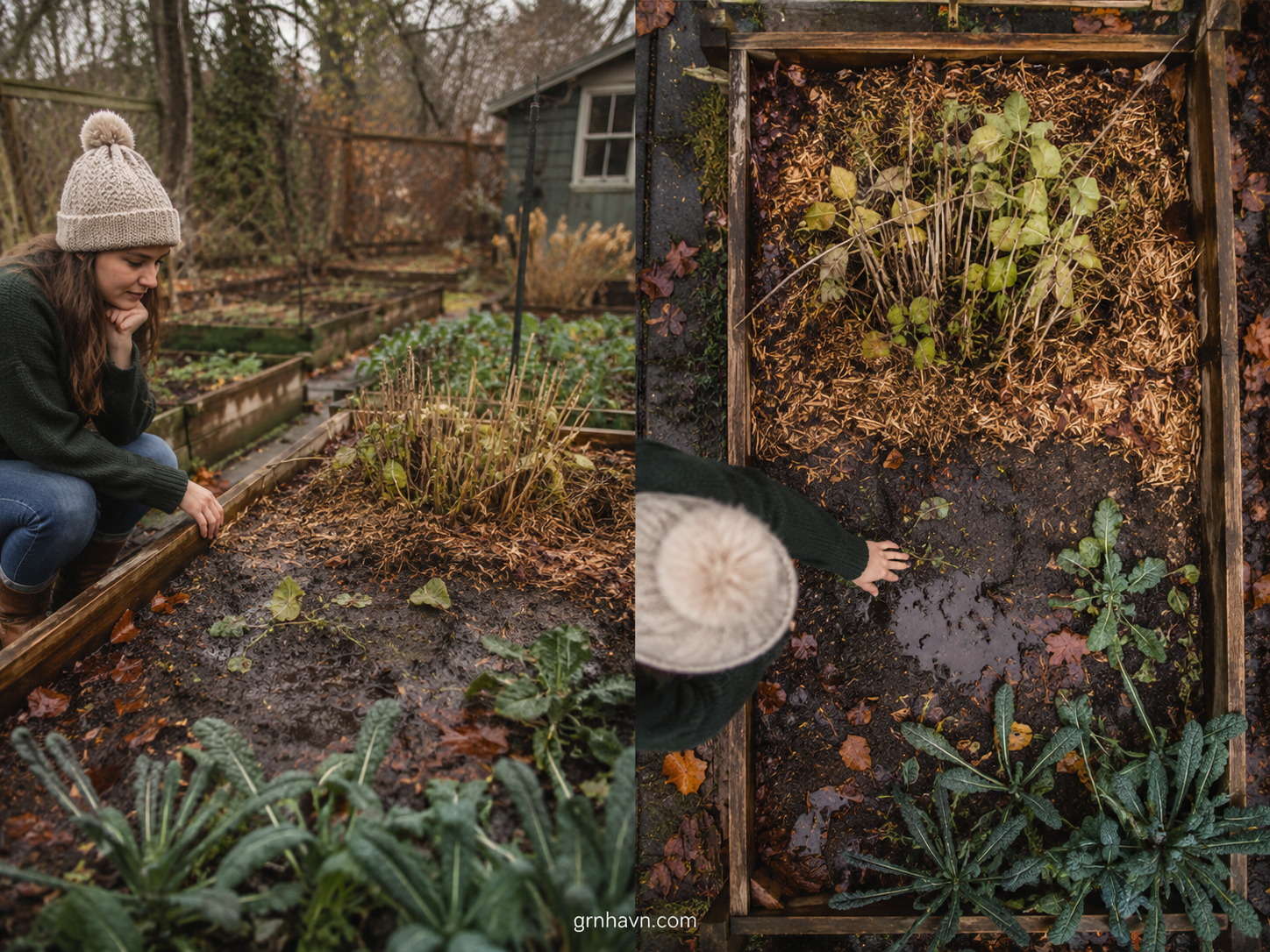
This is also why I love pairing prep with tools that reduce uncertainty—especially a Soil Moisture Meter. If you want, you can add a meter to your toolkit and check before watering.
| Moisture Meter Type | Best for | What I like |
|---|---|---|
| Probe Moisture Meter | Raised beds & quick checks | Simple readings help prevent overwatering |
| Dual Probe (deeper insight) | Bed layers + troubleshooting | Helps you spot uneven moisture zones |
| Advanced sensor setups | Data-minded gardeners | Great for ongoing winter monitoring |
Final Printable Checklist
Use this checklist like a cozy companion—no pressure, just clarity. When you finish these steps, your raised beds will enter winter with a stable soil environment and a ready-to-grow spring foundation.
| Task | When | Goal |
|---|---|---|
| Clear spent plants | After harvest | Reduce mess + keep bed tidy |
| Light surface loosen | Before consistent cold | Prevent crust + improve airflow |
| Top-dress compost | 2–4 weeks before frost | Feed microbes + stabilize soil |
| Cover crop (optional) | When bed will be bare | Protect soil structure |
| Add mulch layer | When nights are consistently near 32°F / 0°C | Insulate + reduce moisture swings |
| Frost cloth + clips | Before wind and heavy frosts | Protect from cold snaps |
“Print it. Follow it gently. Come spring, you’ll feel the difference.”
Common Mistakes
Even experienced gardeners fall into patterns. Here are the mistakes I see most often—and what I recommend instead:
1) Adding mulch too early → wait until cold is consistent so you don’t trap dampness.
2) Overwatering in cold weeks → check soil moisture; let weather be weather.
3) Disturbing soil too late → avoid heavy digging when soil is freezing or wet.
4) Forgetting airflow → cover crops + compost top-dressing help maintain structure.
In my opinion, the “quiet win” is consistency: do the same gentle steps each year and your beds build resilience over time. That’s how winter becomes less scary—and spring becomes more predictable.
“Mistakes aren’t failure. They’re data your future self will thank you for.”
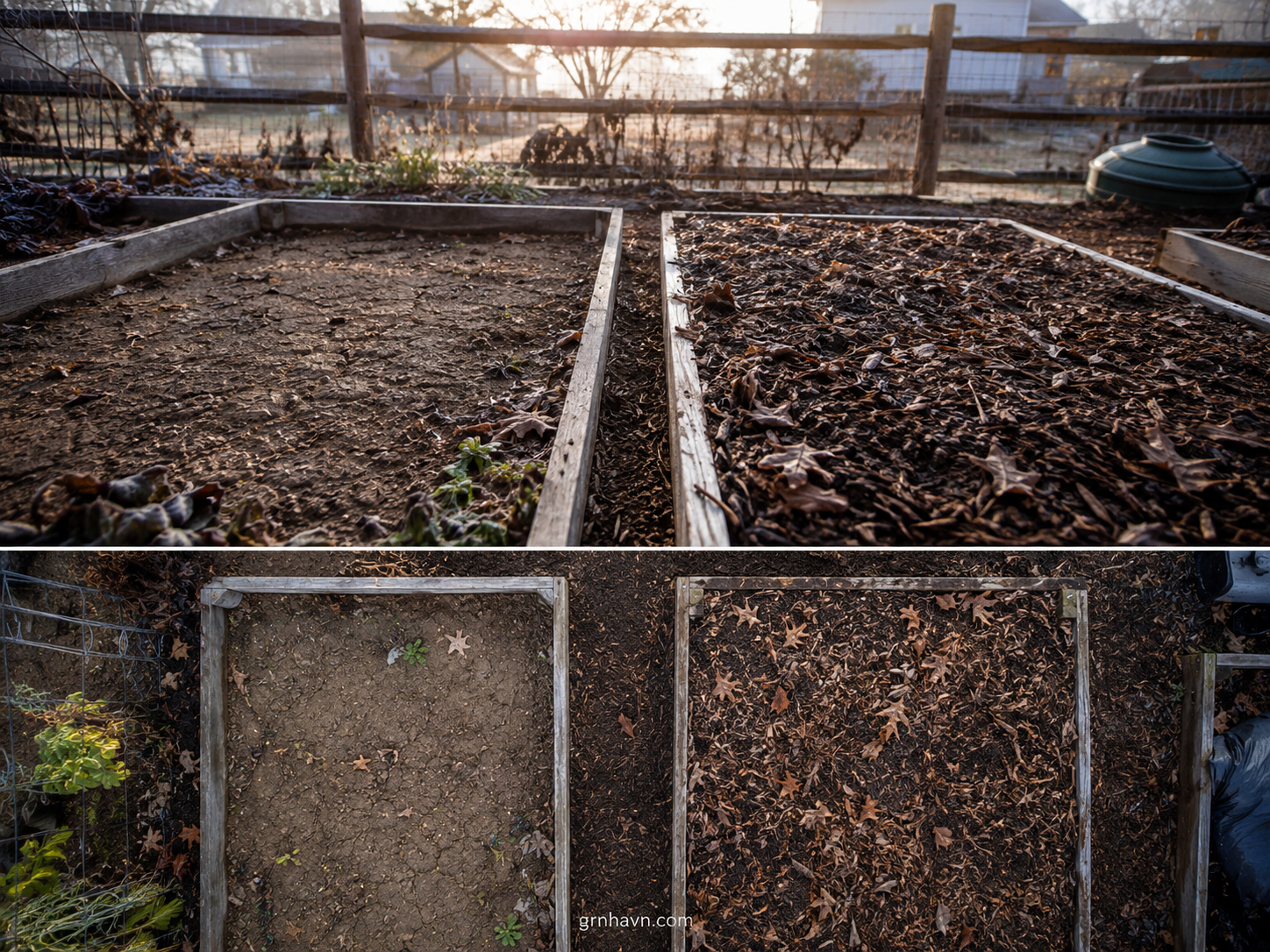
FAQ: Raised Bed Soil Mix & Fall Prep
Warm, practical answers from real raised-bed experience—so you can prep with confidence.
What is the best mixture for raised bed soil?
In my experience, the best mixture balances drainage and organic matter: a quality base soil plus finished compost for nutrients and microbial life. The key is texture—your bed should never turn into a dense, wet brick in winter. If it crumbles, it’s usually on the right track.
How do you prepare soil for a raised bed?
Start by gently clearing debris, then top-dress with compost and loosen only the surface layer if it’s crusting. After that, protect the bed with mulch or a cover crop depending on how long it will sit bare. This keeps structure stable through freezing cycles.
How to prepare a raised garden bed for fall planting?
Aim for soil that’s evenly moist but not soggy, then add compost before planting. In colder climates, plan your fall planting based on frost timing (USDA zone + frost-date logic, or Europe frost frequency). Good soil prep makes fall crops more resilient against temperature swings.
What to add to raised beds in fall?
Add finished organic compost as a top-dressing, then consider a cover crop if your bed will be bare. Mulch comes next when nights are consistently near 32°F / 0°C. That sequence prevents compaction and supports soil life.
What is the difference between garden soil and raised bed mix?
Garden soil can be inconsistent and may compact more easily, while raised bed mix is typically designed for drainage and texture stability in contained beds. Raised beds also lose nutrients faster, so compost and organic matter matter even more.
How to make the best soil mix?
Use a blend approach: a reliable base plus compost for biology and fertility. Add enough structure so it drains well and stays airy through winter freeze-thaw. If your bed compacts, adjust your texture mix rather than just replacing everything every year.
What not to fill a raised garden bed with?
Avoid fresh manure or anything that may be unstable/uncomposted into cold months. Also avoid dusty, fine components that pack into mud during wet weather. If it becomes dense when wet, it’s risky in winter.
What do you put in the bottom of a raised garden bed on soil?
Many gardeners don’t need “fill layers” at the bottom—focus on quality soil depth and consistent texture instead. If you have drainage concerns, use aerating materials appropriately and avoid creating barriers that trap water. In most raised beds, compost + good mix + cover protection is the smarter path.
What is the best way to prep your garden in the fall?
My best method: tidy gently, loosen the top layer only if needed, top-dress compost, then protect with mulch and/or cover crops. Time it to your first consistent frosts using USDA zone/frost dates or Europe’s frost patterns.
What vegetables should not be grown in a raised bed?
You usually can grow most vegetables in raised beds—however, avoid planting the same family repeatedly without planning rotation and soil refresh. In winter prep terms, also avoid leaving beds bare too long without protection, because exposed soil degrades faster.
Can you use regular potting soil in a raised bed?
You can, but it’s often expensive and sometimes designed primarily for containers rather than long-term bed structure. If you use it, blend it with compost and consider improving texture so it doesn’t compact.
How to fill a raised bed cheaply?
Combine compost top-dressing with a more economical base mix, then upgrade with quality organic compost for biology. The “cheap wins” come from smart layering and avoiding total replacement when a top-dress works.
Should I add anything to my garden soil in the fall?
Yes—compost is the most universally helpful addition. It improves structure and feeds microbes slowly. Then protect with mulch or cover crops depending on the length of bare time.
What two vegetables should not be planted together?
A classic example is keeping strong allelopathic or pest-attracting pairings separated—like some brassicas with problematic companions for your local pest cycles. Practically, I recommend rotating by family and using companion knowledge for your specific crops. The bigger soil-prep win is preventing disease buildup with rotation and cleanliness.
How do you prepare soil for autumn?
Autumn prep is about stability: compost top-dressing, gentle surface attention, then insulation (mulch/frost cloth) as temperatures approach consistent frost. Use your local frost logic—USDA zones + frost dates, or Europe’s frost frequency—so you protect at the right time.
Final Verdict
If I could summarize the whole guide in one warm sentence: Raised beds win in winter when you protect texture, not just temperature. I’ve learned that soil mix quality, compost top-dressing, and correct mulch timing matter more than “big projects.” When you prevent compaction and use simple winter essentials (like frost cloth secured with clips and thoughtful moisture awareness), your beds wake up in spring ready to grow—without you scrambling to repair what winter quietly changed.
Your Next Step: Winterize With Confidence..
Use the checklist above, then build a calm winter routine. If you want the step-by-step plan, start with the guides below.